
Related videos:
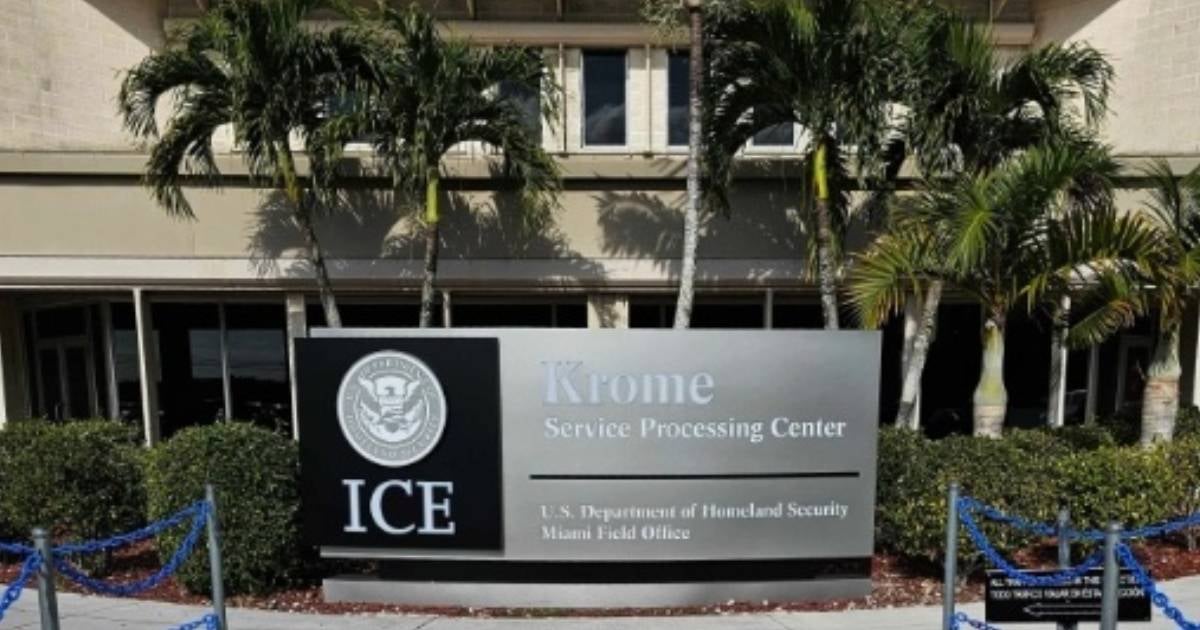
Octavio Pérez Rodríguez, a 36-year-old Cuban citizen, has been detained at the Krome Detention Center in Miami for over a month.
In a call to his wife, Midalys López Corrales, he expressed his desperation: "Titi, I'm dying, I'm in so much pain... you can't imagine what I'm going through.", reported the network Telemundo 51.
The distress is so great that the man has requested his deportation to Cuba, a demand deemed extreme, which is merely a reflection of the harsh conditions he is enduring, his wife mentions.
Pérez Rodríguez arrived in the United States in 2022 with his wife and two children, crossing the border in search of a better life.
While her family obtained residency, her immigration status remained pending due to a prior deportation in 2019.
On February 25, when reporting to an appointment with immigration authorities, he was unexpectedly detained.
Midalys denounces the conditions at Krome, stating that her husband slept on the floor for several days and has not received the necessary medical attention.
He went hoping to receive his paperwork. He is a hardworking man, he renewed his work permit and did not expect this, Midalys told Telemundo.
Furthermore, the woman claims that the household is filled with an atmosphere of distress, with her young son asking about his dad and the only response the mother can give is that he is working.
The overcrowding in ICE facilities has been acknowledged by the agency, which claims to be implementing measures to manage capacity and ensure humane treatment.
"Ensuring the security and well-being of individuals in our custody is an absolute priority. Some facilities are experiencing temporary overcrowding due to the recent increase in detainees. We are implementing measures to manage capacity while maintaining our commitment to humane treatment," reported the Immigration and Customs Enforcement (ICE).
Despite being aware that Pérez Rodríguez violated the laws by re-entering the United States illegally after a deportation, the family hopes that the authorities will reconsider his case and allow him to reunite with them, avoiding another separation.
I know she made that mistake, but there has to be a solution. It can't be that deportation is the only way out, concluded the woman.
In March 2025, the U.S. government revoked the humanitarian "parole" established by the previous administration, affecting over 530,000 migrants from countries such as Cuba, Haiti, Nicaragua, and Venezuela.
This revocation has generated uncertainty and concern among migrants, who face the possibility of deportation and the loss of work permits.
The Trump administration has argued that these programs exceeded the limits of federal law and emphasized the need to strengthen border security and limit immigration.
Additionally, permanent residency procedures for refugees and asylum seekers have been paused, which impacts thousands of immigrants who had already been approved for their applications.
The current immigration policy also includes the elimination of federal aid for undocumented immigrants and the implementation of mass deportations.
Frequently asked questions about the situation of Cubans detained in ICE centers in the U.S.
Why does Octavio Pérez Rodríguez request to be deported to Cuba?
Octavio Pérez Rodríguez has requested his deportation to Cuba due to the harsh conditions he faces at the Krome Detention Center. According to his wife, he has been sleeping on the floor and has not received the necessary medical attention, which has resulted in a significant deterioration of his health.
What are the conditions faced by detainees at the Krome Detention Center?
The detainees at the Krome Detention Center, such as Octavio Pérez Rodríguez, have expressed that they face precarious conditions, such as sleeping on the floor and lack of adequate medical care. Overcrowding is a problem acknowledged by ICE, which claims to be taking steps to ensure humane treatment.
How does the tightening of U.S. immigration policies affect Cubans with I-220A?
The tightening of immigration policies in the U.S. has generated uncertainty and fear among Cubans with I-220A, who face stricter monitoring and the risk of detention during their routine appointments with ICE. These measures are part of a more rigorous approach to supervising immigrants in irregular situations.
What is the I-220A form and what does it mean for Cuban migrants?
The I-220A form, known as "Order of Supervised Release," permits the release of individuals from federal custody under certain conditions, but it does not grant legal status in the U.S. This leaves beneficiaries in a legally uncertain situation and ineligible to adjust their status under the Cuban Adjustment Act.
Filed under: