
Related videos:
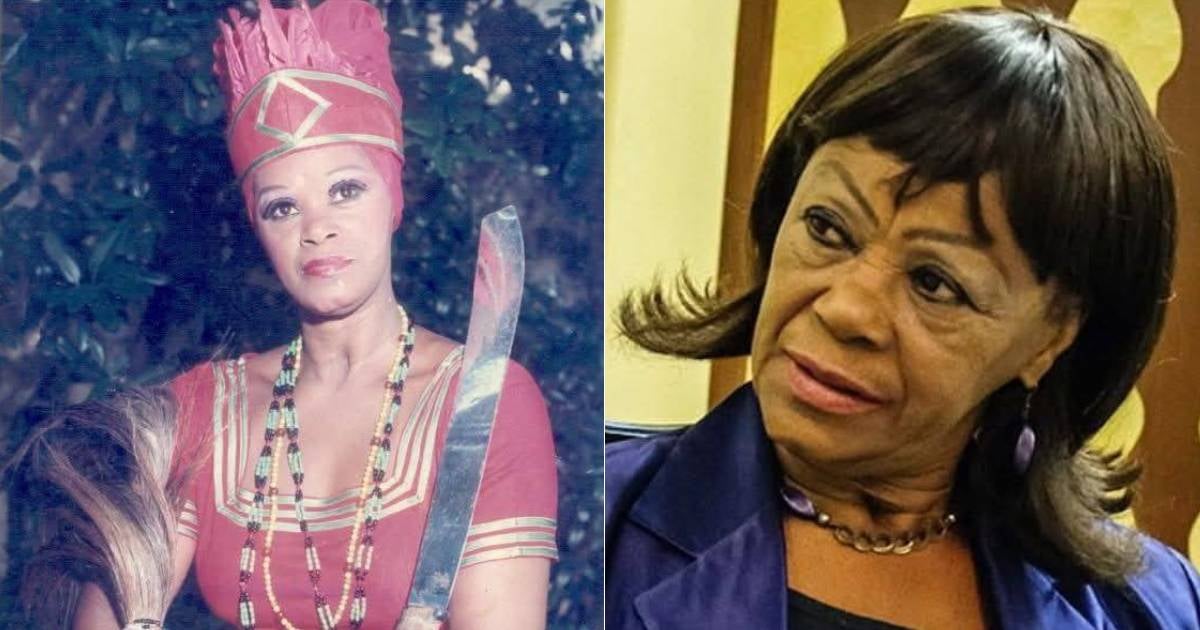
The principal dancer of the National Folkloric Company of Cuba and the 2014 National Dance Award winner, Silvina Fabars Guilall, passed away this Monday in Havana, as confirmed by official sources.
Fabars, known as the Goddess of Ebony, was born in Santiago de Cuba on February 22, 1944.
She was the founder of the Conjunto Folklórico de Oriente in 1959, being part of it until 1965. Later, in Santiago de Cuba, she created the Nuevo Flores dance group, named after the neighborhood where she lived, and subsequently founded the Shangó Abikolá group, participating with them in various festivals across the country. She was also a member of the Trío Nuevo Amanecer and the Excéntricos de Guantánamo.
After an accident affected her vocal cords, preventing her from continuing her singing career, Fabars became a virtuosic dancer, reaching one of the top categories in the Cuban National Folkloric Ensemble.
The solo performed in the “Ciclo Congo” and the character of Oshún in the staging of María Antonia, directed by Eugenio Hernández Espinosa and Roberto Blanco, among other roles, earned her the title of prima ballerina of the Company, where she participated in the great works of the foundational repertoire. Additionally, in 1970 she went on her first international tour across six countries, and to date, she has completed over 70 tours in 92 countries.
In the political sphere, he was a figure closely associated with the Castro regime since the age of 14 when he joined the Rebel Army. In 1961, he was part of the Literacy Brigades, and upon completing this campaign, he entered the National School of Art Instructors.
She was among the founders of the Misión Cultura en Venezuela Barrio Corazón Adentro, being selected as a distinguished collaborator. She also carried out internationalist missions in Cultural Brigades in Angola, Mozambique, Ghana, Algeria, Zambia, Nicaragua, and Iraq.
Following the news of his death, there have been numerous tributes to his artistic career. For instance, in Santiago de Cuba, they recalled his presence at the recent editions of the Dance Festival.
The professor from the Higher Institute of Art, Yoilan Maceo Cabrera, after sharing a photo with Fabars, said, "This is how we will remember you, teacher, with that beautiful and infectious smile."
Frequently Asked Questions about Silvina Fabars and Cuban Folklore
Who was Silvina Fabars and what was her contribution to Cuban folklore?
Silvina Fabars was an iconic Cuban dancer, recognized for being the prima ballerina of the National Folkloric Ensemble of Cuba and a winner of the National Dance Prize in 2014. Her legacy includes the founding of several folkloric groups and a significant participation in international festivals, which solidified her role in promoting Cuban folklore on a global scale.
What impact did Silvina Fabars have on Cuban dance and culture?
Silvina Fabars left an indelible legacy in Cuban dance, standing out for her performances in iconic roles such as the character of Oshún in "María Antonia." Her career included over 70 international tours in 92 countries, which helped to internationalize Cuban culture and folklore.
What was Silvina Fabars' relationship with the Cuban regime?
Silvina Fabars had a close relationship with the Castro regime, joining the Rebel Army at the age of 14 and participating in the Literacy Brigades in 1961. Her political commitment was evident in her involvement in cultural missions in countries such as Angola, Mozambique, and Venezuela.
Filed under: