
Related videos:
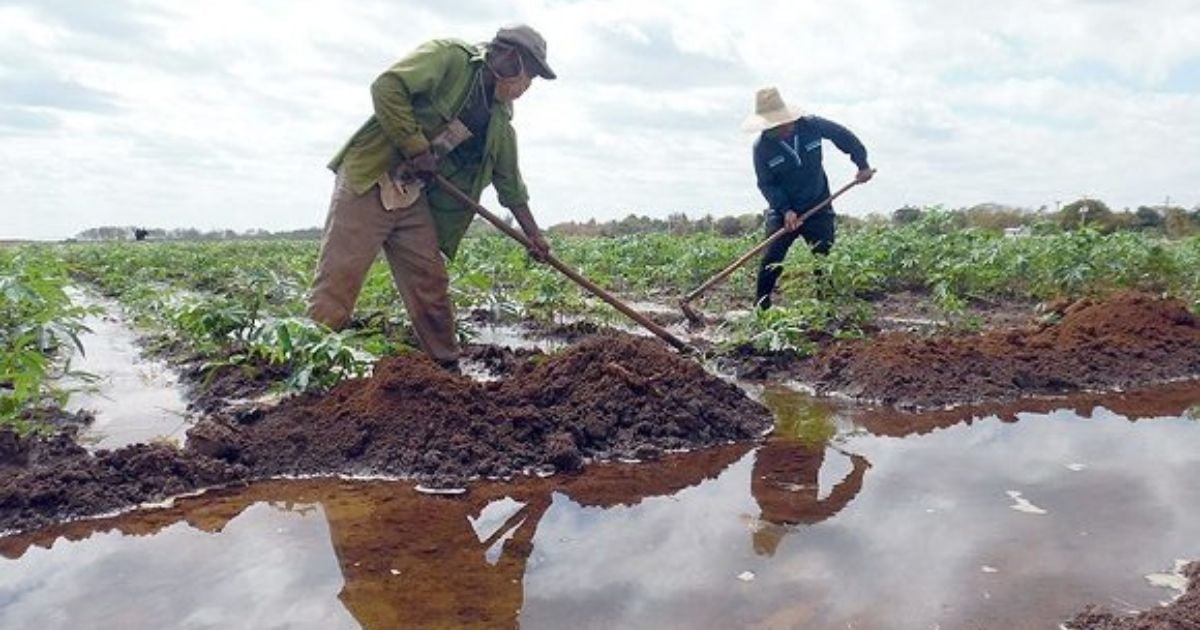
Hydraulic Resource authorities in Pinar del Río reported that farmers in the province are "tapping" the pipes of the hydraulic system to divert drinking water to their crops, amidst an increasingly tense situation regarding the water supply in several municipalities of the territory.
According to a report by the state newspaper Granma, the main impacts are concentrated in the four pipelines that supply the city of Pinar del Río, and the municipalities of Consolación del Sur and Viñales.
In the latter, it was recently discovered that an agricultural producer was diverting water intended for the Los Jazmines hotel and the nearby community to use for his crops.
Authorities indicated that this is not an isolated case and that the so-called “pinchazos” of hydraulic networks for agricultural purposes occur constantly.
"We must confront and resolve the illegalities," declared Julio César Rodríguez Pimentel, delegate of Hydraulic Resources in Vueltabajo, although he acknowledged that "the problem is that new ones always arise."
In November of last year, two illegal connections were detected in the Kilo 5 system, which supplies the northern part of the city—one of the areas with the longest water delivery cycles—and in January, two more were discovered, used for irrigating beans, bananas, and fruit trees.
The authorities explained that offenders operate in different ways: they either dig to access the underground pipes and illegally connect, or they break system valves to release water and channel it through ditches to the fields.
According to the authorities, these actions not only exacerbate the shortages but also undermine the hydraulic infrastructure of the province.
Engrasio Machín Iglesias, director of State Inspection at the Provincial Delegation of Hydraulic Resources, expressed regret that the fines for these types of violations remain low and ineffective as a deterrent.
Nevertheless, it was announced that joint actions are being carried out with the Comprehensive Supervision Directorate, which is authorized to impose stricter sanctions.
“This type of act cannot go unpunished,” warned the official, although the report from Granma does not specify how many people have been fined or prosecuted for these actions.
Meanwhile, the people of Pinar continue to face issues with access to drinking water, worsened by a combination of drought, deteriorating networks, and now, also, by these illegal practices that prioritize agricultural crops over the basic needs of the population.
Amid a growing wave of crime in Cuba, the regime has intensified its rhetoric and punitive actions aimed at exercising greater social control.
In March, the ruler Miguel Díaz-Canel announced during a national exercise against crime that exemplary trials would be applied for crimes committed especially within state institutions, such as theft, vandalism, and corruption.
This strategy, supported by the Ministry of the Interior and the Communist Party, aims to strengthen the role of the State in combating illegal activities amid a context of severe economic crisis and public discontent.
Few days later, the case of a citizen sentenced to 10 years in prison for attempting to steal computers from the Ernesto Guevara hospital in Las Tunas was reported.
The trial was used as an example by the state media to support the regime's judicial campaign. On the same day, in Santiago de Cuba, the police stopped a state vehicle transporting more than three million Cuban pesos in cash without legal justification, raising alarms about the misuse of state resources and possible financial crimes, although the authorities did not provide details about any measures taken.
Recently, Cuban authorities called on the public to report vandalism against public transport, following several stone-throwing attacks on buses in Havana.
These incidents, which damaged windows and endangered drivers and passengers, reflect not only an increase in urban violence but also the deterioration of public services and the lack of effective government responses.
Frequently Asked Questions about the Water Crisis and Illegal Practices in Pinar del Río
Why are the farmers in Pinar del Río "tapping" the water pipes?
Farmers in Pinar del Río are "tapping" into the water pipes to divert drinking water to their crops, due to the lack of adequate water resources and the impact of drought in the region. This illegal practice worsens the shortage of drinking water for the population and deteriorates the hydraulic infrastructure.
What impact does the water crisis have in Pinar del Río?
The water crisis in Pinar del Río has resulted in serious supply problems for the population, particularly in urban and rural areas. Illegal connections to divert water for crops have exacerbated the situation, impacting both access to drinking water and the quality of life for residents.
What measures are the authorities taking to stop the water "pinchazos"?
The authorities of Hydraulic Resources in Pinar del Río are working to impose harsher penalties on those who make these illegal connections. However, the effectiveness of these measures is limited due to low fines and the ongoing emergence of new violations.
How is the water problem affecting other provinces of Cuba?
In other provinces like Las Tunas, the water issue is also critical, with thefts of solar panels that affect access to drinking water in rural communities. This kind of problem reflects a broader crisis of infrastructure and resources across the island.
Filed under: