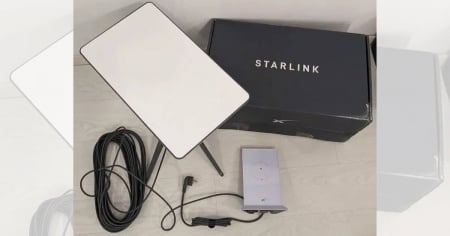
The Cuban regime warned this Wednesday about the illegal use of internet antennas, repeaters, and even the dreaded Starlink, that satellite heresy from Elon Musk that threatens ETECSA's monopoly on the island.
The official newspaper Granma published an article stating that the entry of these devices into the country—many of which are sold on the platform Revolico—constitutes "violations" that "threaten the quality and sovereignty of the radio spectrum" and "carry judicial repercussions under the Penal Code."
"The use of antennas and signal repeaters that have been illegally imported and marketed to enhance coverage in a restricted area negatively impacts the quality of the communication services, causing around 6% of the cells, nationwide, to experience interference," states the regime.
Kevin Castro Rodríguez, deputy director of the Operations Vice Presidency of the Telecommunications Company of Cuba s.a. (Etecsa), stated that using these "prohibited and non-certified" devices interferes with the radio bases and deteriorates, in specific areas, the quality of telephony and mobile networks.
Additionally, he stated that it is difficult to detect, urging the need to "increase vigilance to combat the crime, as well as more training and rigor for border personnel."
However, the use of these devices is becoming increasingly widespread in the Caribbean nation, as it means that "people are connecting without going through the government or watching the 8 o'clock news."
In the face of threats of fines, confiscations, and even imprisonment for those using these devices, several Cubans recalled on social media that there is no bread in Cuba, but there is indeed a Penal Code for everything. They emphasize that the regime's true concern is not technical but political.
In the midst of the government crusade against Starlink - the satellite internet service from SpaceX led by Elon Musk - the Cuban people continue to perform technological miracles on their rooftops, trying to watch a YouTube video without it freezing halfway.
Frequently Asked Questions about the Illegal Use of Antennas and Starlink in Cuba
Why does the Cuban government consider the use of antennas and repeaters illegal?
The Cuban government considers the use of antennas and repeaters illegal because, according to them, these devices "threaten the quality and sovereignty of the radio spectrum" and are subject to penalties under the Penal Code. They claim that these devices, by not being certified, cause interference with the radio base stations and degrade the quality of telecommunications services.
What does the use of Starlink in Cuba without authorization imply?
The use of Starlink in Cuba without authorization is considered illegal and may result in penalties such as confiscation of equipment and fines. The Cuban government asserts that Starlink operates without coordinating its use with local authorities, violating the country’s sovereignty over its radio spectrum and international regulations set by the ITU.
Why do Cubans turn to technologies like Starlink?
Cubans turn to technologies like Starlink to gain internet access without going through ETECSA, as it provides a faster and more stable connection. This is especially appealing for private businesses and entrepreneurs who require better internet services than those offered by the state-owned provider.
What are the consequences of using illegal equipment to improve connectivity in Cuba?
The use of illegal equipment to enhance connectivity in Cuba can lead to sanctions such as fines, confiscation of equipment, and even prison sentences. Additionally, the Cuban government claims that these devices cause interference that affects the quality of telecommunications service, exacerbating the country's economic and financial tensions.
Filed under: