
Related videos:
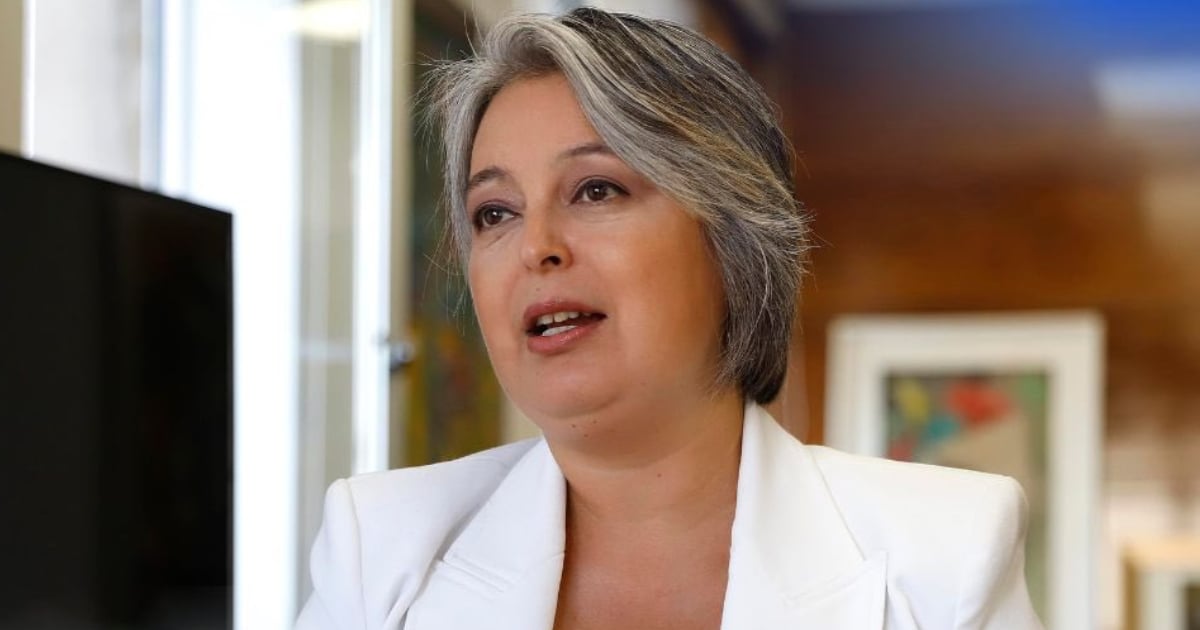
The presidential candidate of Chile, Jeannette Jara, a member of the Communist Party of that country (PCCh), has generated significant controversy following her statements in an interview with CNN, in which she denied the existence of a dictatorship in Cuba and defended the Castro regime by stating that “every people defines its government”.
In his words, Jara assured that “the case of Cuba is quite different” from that of other countries questioned for human rights violations, and attributed the current situation on the island to the consequences of the U.S. embargo.
"The main difficulty has been the blockade that has lasted for decades and has them suffocated," he stated.
The candidate from the PCCh contrasted this stance with her view on Venezuela, where she did acknowledge the existence of an "authoritarian regime" under the rule of the dictator Nicolás Maduro.
Jara, a lawyer and public administrator, served as Minister of Labor and Social Welfare from March 2022 until April 7, 2025, when she resigned from her position after being announced as the presidential candidate of the PCCh two days earlier.
Response from Carolina Tohá: "Cuba does not meet any requirements of a democracy."
Jara's statements quickly elicited reactions. The presidential candidate Carolina Tohá, former Minister of the Interior and representative of the Party for Democracy (PPD), distanced herself from them while in the city of Copiapó, during an interview on Radio ADN.
"I believe that the Cuban system does not meet any of the requirements of a democracy. People do not have different alternatives to choose from, and there has been no turnover in power from any perspective for a very long time," he stated.
Tohá went further and emphasized that the Cuban regime has brought the country to a state of extreme poverty that she described as “painful and inconceivable”. Furthermore, she noted that these kinds of differences within Chilean progressivism should be openly debated during the campaign.
"The citizenship will be able to choose democratically, because here there is indeed democracy, who they want to represent our candidacy as a sector in the presidential election," he stated.
A controversy with international resonance
Jara's statements revive a sensitive issue in Latin America: the stance of leftist sectors regarding the regime on the island, which some continue to defend as a "democratic alternative," despite systematic reports of repression, a lack of freedoms, and the absolute control of power by the Communist Party, without plural elections or separation of powers.
The debate also highlights the division within the Chilean progressive bloc, in the face of a presidential election where issues of human rights and regional governance models could gain prominence in the public agenda.
Frequently asked questions about Jeannette Jara's statements and the situation in Cuba
Does Jeannette Jara consider Cuba to be a dictatorship?
Jeannette Jara, candidate for the presidency of Chile, denies that Cuba is a dictatorship. In an interview with CNN, she stated that the Cuban system is a "democratic system different from ours" and attributed the island's difficulties to the U.S. embargo.
What was Carolina Tohá's reaction to Jeannette Jara's statements?
Carolina Tohá, also a Chilean presidential candidate, criticized the statements of Jeannette Jara, asserting that the Cuban system "does not meet any criteria for a democracy." Tohá emphasized the lack of power alternation and the extreme poverty in Cuba.
What impact do Jara's statements have in the Chilean political context?
The statements by Jeannette Jara spark a debate about the stance of left-wing sectors towards the Cuban regime. This debate highlights divisions within the Chilean progressive bloc, which could impact the presidential campaign, particularly on issues of human rights and regional governance models.
How does the international context position itself regarding the situation in Cuba?
In the international context, there are criticisms of the Cuban regime for its lack of democracy and human rights violations. Figures such as Rosa María Payá and entities like the IACHR have highlighted the repression in Cuba, and leaders like Pepe Mujica have expressed their disapproval of the Cuban system, deeming it ineffective.
Filed under: