The Cuban regime acknowledged mistakes in the assessment of the Government Program to correct distortions and boost the economy, with an emphasis on food production.
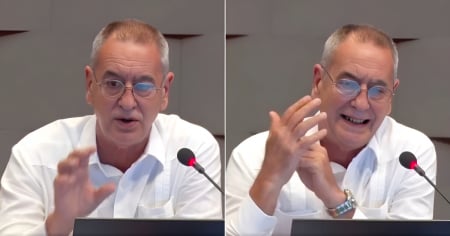
“We think we are doing well, but we are far from meeting the needs of the population,” acknowledged Vice Prime Minister José Luis Tapia Fonseca during a videoconference led by Prime Minister Manuel Marrero Cruz, with governors and local authorities.
This acknowledgment adds to a series of recent public admissions by the Cuban government regarding the ineffectiveness of its economic policies.
In December 2024, the authorities acknowledged the failure of the economic revitalization plan implemented a year earlier; and in April 2024 they admitted that the banking initiative and the official exchange rate for currencies did not meet their objectives, leading to even more distortions.
These problems are compounded by the lack of liquidity to pay salaries and pensions, as acknowledged by the government itself. In February 2025, the regime admitted that a monthly salary of 6,000 CUP was insufficient to cover basic needs.
They also acknowledged structural failures in key sectors such as healthcare —with shortages in hospitals— and in flagship projects like the Mariel Special Development Zone, whose impact has been virtually nonexistent.
Similarly, the government acknowledged the historical dimension of the migration crisis the country is experiencing, describing it as “the largest in its history,” while thousands of Cubans are leaving the island by sea or land in search of dignified living conditions.
Food scarcity: a persistent and deep crisis
One of the most serious and recurring elements of the Cuban crisis is the shortage of food, which has affected all levels of the population, from urban areas to rural regions.
The shortage of basic products such as rice, beans, oil, meat, milk, and bread has led to endless lines, a black market, and unaffordable prices in the private sector.
The decline in agricultural production has been sustained over the past few years, affected by the abandonment of the countryside, a lack of supplies, and a centralized planning system that has failed to ensure food for the population.
This is compounded by the inefficiency of state distribution and marketing systems, which often leave perishable products uncollected or unprocessed due to a lack of transportation or planning.
Farmers themselves have reported bureaucratic hurdles, unpaid state debts, and restrictions on freely marketing their products. Although the government has approved new measures to increase the participation of non-state actors, these have been insufficient or poorly implemented.
In popular neighborhoods and vulnerable communities, the situation is particularly critical. The regime has acknowledged that there are over 1,200 communities living in extreme poverty, where obtaining food is a daily challenge filled with uncertainty.
Despite attempts to justify the crisis due to external factors, more and more officials are acknowledging internal causes, such as poor management, unproductivity, and disorganization.
In recent years, food prices in informal markets have skyrocketed. Products like oil have reached prices of over 1,500 pesos per liter, and in some cases, resellers hide merchandise only to sell it at a markup later.
In response, Manuel Marrero announced that there will be direct confiscation of hidden goods, without the need for fines or higher-level authorizations, as reported by the National Television News (NTV).
A pattern of acknowledged failures
This acknowledgment of food scarcity is part of a broader pattern of public admissions that span from blackouts, inflation, the decline in real wages, to the failure of the so-called "economic realignment".
Even the leader Miguel Díaz-Canel has declared that the mistakes are because “we are not programmed robots”, a justification that offers little consolation to an increasingly disillusioned population.
Filed under: