
Related videos:
The municipality of Las Tunas is facing a severe water supply crisis, affecting nearly the entire city due to the alarming reduction in supply from the Piedra Hueca system, which currently operates with only one active well, delivering barely 50 liters per second.
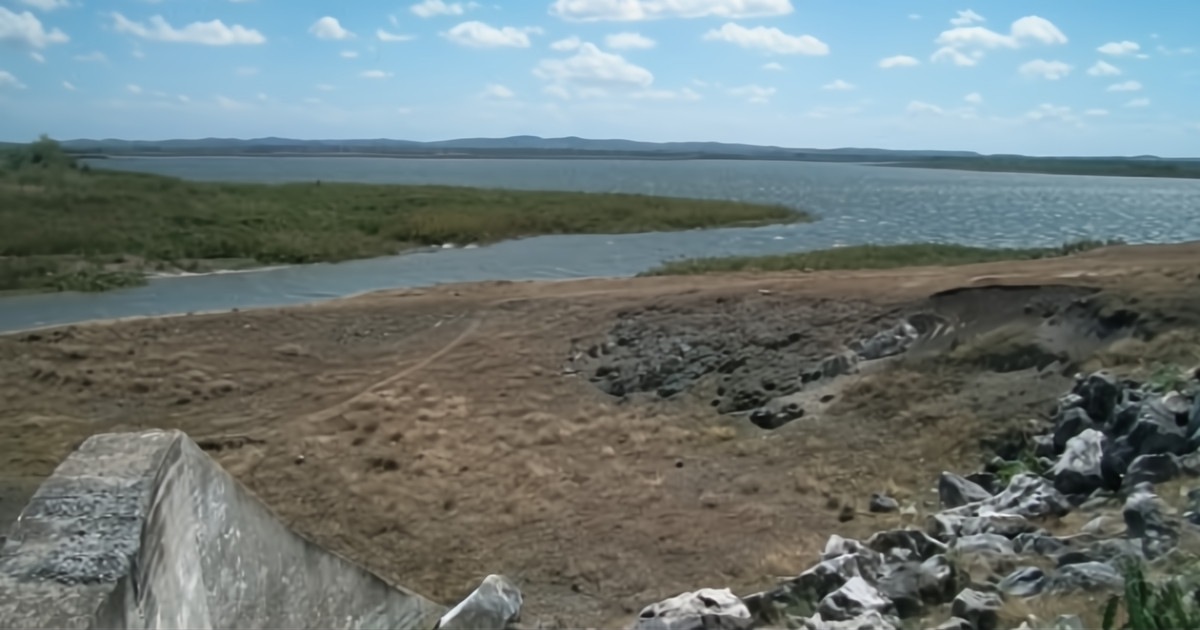
According to Piedad Herrera Núñez, director of Aqueduct and Sanitation in the provincial capital, in statements to the state media Tiempo 21, the situation is worsening due to the critical level of the El Rincón dam, which is practically the only source still providing water to the city.
Herrera detailed that El Rincón, with a storage capacity of 22 million cubic meters, currently has only seven million, reflecting the lack of rainfall during this time of year, which is considered the driest period in the Cuban climate calendar.
This emergency is compounded by frequent interruptions caused by ongoing investments on Camilo Avenue in the Buena Vista neighborhood, which has necessitated changes to the delivery schedules.
On April 15th, for example, service to circuit two was interrupted to prioritize areas more severely impacted, such as the Sosa neighborhoods and the Airport.
As a possible partial relief, Herrera announced that the repairs on the pumping equipment for two wells in the Piedra Hueca system are expected to be completed between April 16 and 17.
A specialized brigade from the province of Santiago de Cuba is also expected to arrive to restore the floating intake of the El Rincón dam.
However, the official acknowledged that, even with these measures, the service will not meet the actual needs of the population.
"For now, it is very difficult for water to reach the residences located above the second levels," he stated.
The situation in Las Tunas once again illustrates the fragility of the hydraulic infrastructure in Cuba and the critical dependence on natural sources depleted by drought and accumulated deterioration.
In recent months, the drought has severely affected several Cuban provinces, worsening the water supply crisis. A recent report revealed that Holguín is facing a 22% deficit in rainfall, classifying its entire territory as "very dry."
Municipalities like Antilla, Banes, and Moa have been experiencing extreme conditions for the past seven months, which has impacted both agriculture and water supply.
Meanwhile, in Ciego de Ávila, 69% of the last 51 months have recorded precipitation below the historical average, with reservoirs and aquifers unable to recover due to the persistence of high oceanic pressures and the climatic phenomenon known as El Niño.
This situation caused that in recent days, the water distribution cycle in Ciego de Ávila has been extended to nine days, a decision made by the regime due to the depletion of the Ruspoli aquifer.
Similarly, in the province of Sancti Spíritus, the situation is equally alarming. The number of people relying on water trucks for access to drinking water has doubled in one year, reaching nearly 82,000 residents.
The combination of drought, prolonged blackouts, and structural failures has left thousands of families without regular access to services. Municipalities like Fomento, Trinidad, and the provincial capital itself top the list of the most affected areas, with neighborhoods where services are distributed only every 15 days.
Frequently Asked Questions about the Water Crisis in Las Tunas, Cuba
What is the current situation of the water supply in Las Tunas?
The municipality of Las Tunas is facing a severe water supply crisis, with only one active well in the Piedra Hueca system, providing just 50 liters per second. The situation is exacerbated by the critically low level of the El Rincón reservoir, which is practically the only source still supplying water to the city.
What measures are the authorities taking to resolve the water crisis in Las Tunas?
The repair of the pumping equipment for two wells in the Piedra Hueca system is expected to be completed, and the floating intake of the El Rincón dam will be restored. However, authorities acknowledge that these measures will not be sufficient to meet the actual needs of the population.
How does drought affect Cuba's hydraulic infrastructure?
The lack of rainfall in Cuba has highlighted the fragility of the hydraulic infrastructure, which relies on increasingly depleted natural sources. This is exacerbated by accumulated deterioration and a lack of maintenance in the water supply systems.
What impact does the water crisis have on the daily lives of the people in Tunera?
The water crisis in Las Tunas primarily affects residences located on the second floors and above, where it is very difficult for water to reach. This creates a significant challenge for access to drinking water and impacts the quality of life for the residents.
Filed under: