
Related videos:
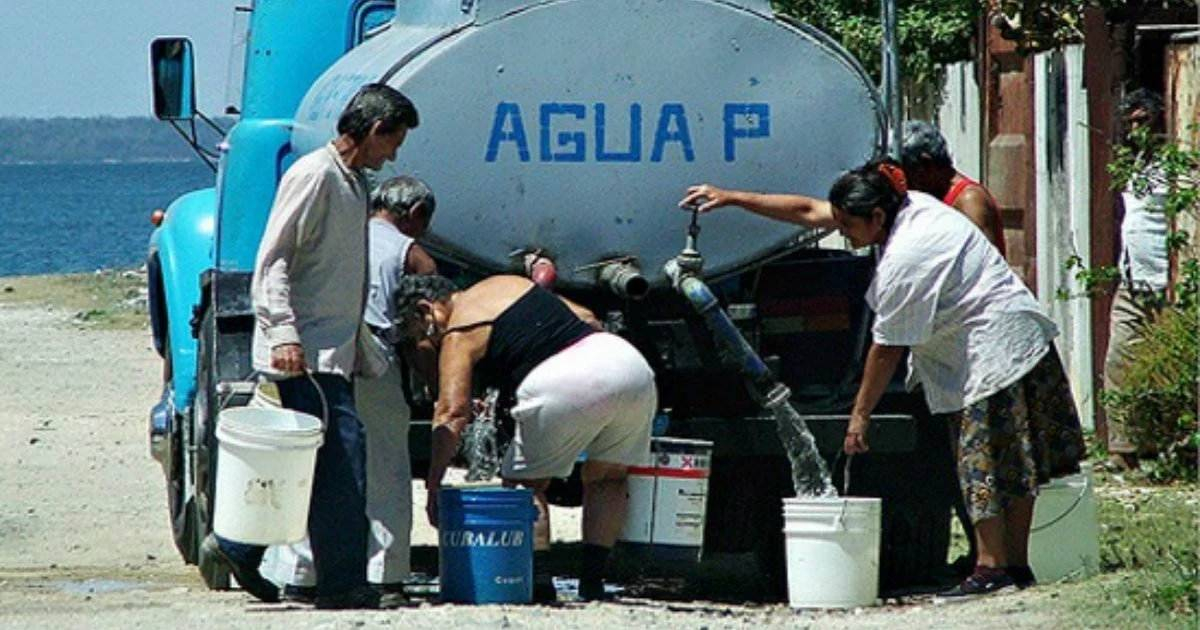
In just one year, the number of people receiving water through tanker trucks in the central province of Sancti Spíritus has doubled, from about 40,000 in May 2024 to nearly 82,000 currently.
This was confirmed by Roberto Nápoles Darias, provincial director of the Water and Sewerage Company, in statements to the official newspaper Escambray.
The water crisis is deepening in the province due to three factors: severe drought, power outages, and lack of infrastructure. Of the 81,838 affected residents, 51,216 do not receive water regularly due to prolonged blackouts, 24,120 because of the drought, and 6,502 due to breakdowns in pumping equipment, the official specified.
The tanker distribution program has expanded to all municipalities. Due to the impact of the drought, the most critical areas are Sancti Spíritus and Fomento, noted Nápoles. Areas such as La Junta in the provincial capital and several communities in Fomento top the list of the most affected territories.
In the municipality of Trinidad, the San Juan de Letrán area also stands out as the only supply source affected by this issue, according to the published data.
Pipes every 15 days or more
The provincial government allocates 2,750 liters of fuel per month for transporting water in trucks, with an average of 50 liters daily per person. According to the authorities, the distribution is conducted at least twice a month, although residents claim that the cycles can extend much longer.
In addition, 27 neighborhoods are considered "permanent" in the province, as they rely on tanker trucks year-round. This corresponds to approximately 17,260 people scattered across all municipalities, among which the provincial capital is the most represented on the list.
Nápoles specified that these communities "have been contracted for over a decade" because —he argued— "they lack hydraulic infrastructure and the country has not been able to connect them to the pipeline distribution system, although it is in the works." In this case, he mentioned the neighborhoods La Cueva de la Virgen, Acetileno, La Trinchera, Refugio, and Camino de las Cañas final, among others.
The official added to these the "communities currently experiencing electrical issues and where it is not possible to complete pumping within the established schedule," such as El Patio in Jatibonico, and emphasized that, for that reason, there are 51,216 affected residents from Sancti Spíritus.
The comments from residents on the Escambray post came in quickly. “The fourth floors (of buildings) in La Sierpe haven't received water properly since January 2nd. If the government would take the time to supply the liquid, it would reduce the discomfort, sadness, and anger of many of its inhabitants,” reported a reader identified as Niurka.
For his part, Norbey pointed out that even hotels are not escaping the crisis: "It has also been impossible to provide them with the hydraulic infrastructure."
In May 2024, the provincial newspaper reported that around 40,000 people were receiving water from trucks, due to a lack of rainfall and the irregularity with which the vital resource entered homes because of power outages.
Earlier, in April of the same year, it was revealed that in addition to the lack of water, another persistent issue was that the supplied water was of poor quality. In this regard, health authorities warned about the increase in diarrheal diseases, attributed to that cause.
The ongoing shortage of rainfall led to the fact that in that same month, the Zaza dam, the largest in Cuba, accumulated only 15% of its storage volume, which exceeds one billion cubic meters of water.
Currently, other provinces such as Holguín and Ciego de Ávila are facing a similar shortage.
Crisis dragged on for years
In October 2024, a significant breakdown in the 900-millimeter pipeline left the municipalities of Sancti Spíritus and Cabaiguán without drinking water service.
A year earlier, 30,000 residents of Sancti Spíritus were without access to drinking water. It was then noted that the situation was “more critical than the previous year” and that there were only 10 water trucks for the entire province.
Although the reservoirs maintained acceptable levels, in March 2019 there were 21 partially depleted supply sources due to the drought, which necessitated distributing water in trucks to around 24,500 residents in 20 locations in Sancti Spíritus.
Frequently Asked Questions about the Water Supply Crisis in Sancti Spíritus
Why has the number of people receiving water by truck in Sancti Spíritus increased?
The increase in the number of people receiving water in tank trucks in Sancti Spíritus is due to a water crisis exacerbated by drought, power outages, and a lack of infrastructure. These factors have resulted in nearly 82,000 people relying on the service of water trucks to receive water, doubling the figure compared to the previous year.
What are the main causes of the water crisis in Sancti Spíritus?
The water crisis in Sancti Spíritus is caused by a combination of severe drought, electrical failures, and infrastructure issues. These problems have led to many people not receiving water regularly, increasing their reliance on water trucks for supply.
What are the areas most affected by the water crisis in Sancti Spíritus?
The most affected areas in the province of Sancti Spíritus include communities in the main municipalities of Fomento and Trinidad, the latter being a crucial tourist hub in the region. In total, due to the drought, more than 24,120 residents are facing difficulties in accessing regular drinking water.
How does the lack of water impact the health of the people from Sancti Spíritus?
The lack of water affects the quality of the supply, increasing diarrheal diseases. In 2024, health authorities in Sancti Spíritus warned about the rise of these diseases due to the poor quality of water that reaches homes.
What measures is the Cuban government taking to address the water crisis in Sancti Spíritus?
The government has expanded the program for water distribution via trucks and has allocated fuel for transporting the liquid. However, residents point out that the distribution is insufficient and delivery cycles can extend beyond what was promised, highlighting ineffective management of the crisis.
Filed under: