
Related videos:
The inflation continues to be one of the main economic problems affecting the daily lives of Cubans, amidst a structural crisis that combines persistently rising prices with a decline in purchasing power and stagnation in productive activity.
According to economist Pedro Monreal, in his account on the social network X, inflation rose by 1.22% in March 2025, marking the first month in half a year where the monthly increase did not exceed that of the previous month.
However, Monreal warns that this figure corresponds to an annualized rate of 16%, which he qualifies as a "very high level indicating a state of macroeconomic imbalance."
Year-on-year inflation remains high, although it is declining
Monreal also emphasized that the year-on-year inflation rate continues to moderate: 20.62% in March compared to 24.02% recorded in February 2025. This gradual reduction has been consistent over the past 12 months, although the overall rate remains high, well above manageable standards for a healthy economy.
Tobacco and alcoholic beverages are leading the price increases
Just like in February, the greatest inflationary impact did not come from food —as is customary in the country— but from the category “alcoholic beverages and tobacco,” with a monthly increase of 7.05%, far exceeding the overall average.
This unusual effect is primarily explained by the increase in prices of tobacco products, which are relatively widespread among the population, although they are not essential.
Food prices: fluctuations and signs of stagnation
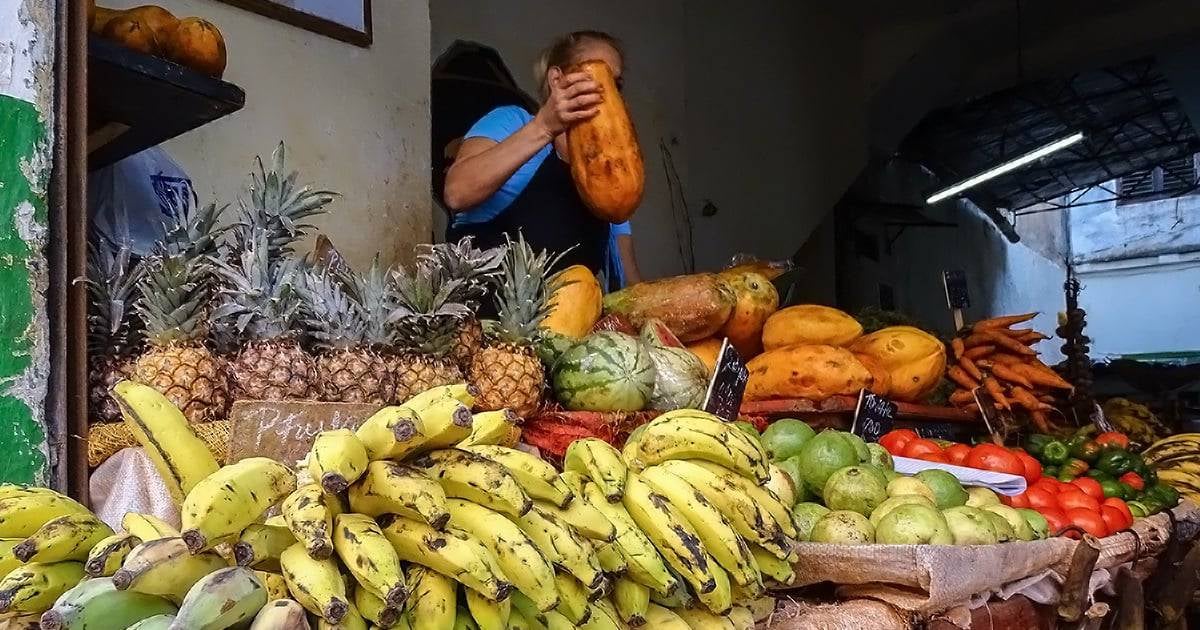
Although food remains a critical category, the price index shows a decreasing trend since January 2024, particularly in its year-on-year component. In March 2025, both increases and decreases were observed in imported and domestic products.
The reason for this moderation in prices does not appear to stem from the supply —for which there is insufficient data— but rather from the decline in demand due to widespread poverty and the compression of real wages, a phenomenon that the economist describes as a "forced moderating effect."
Between inflation and stagflation
According to the media Diario de Cuba, several experts agree that the country has been experiencing a period of stagflation since 2024, characterized by a combination of high inflation and prolonged economic stagnation. In addition, there is a shortage of cash in circulation, a deliberate measure by the government to curb consumption and ease pressure on prices, although it has severe collateral effects on the well-being of the population.
Insufficient salary increase in comparison to the cost of living
According to the cited source, the National Office of Statistics and Information (ONEI) recently reported that the average monthly salary in Cuba reached 5,839 pesos in 2024, an increase of 25.6% compared to the 4,654 pesos in 2023. However, this nominal increase has not represented a real improvement, considering that the year-on-year inflation in the formal market closed 2024 at 24.88%.
In practice, the salary increase has been offset by the rise in prices, deepening the sense of widespread precariousness among large sectors of the population, especially among state workers.
Conclusion: a crisis without a solution in sight
Although slight signs of deceleration are detected in some indicators, inflation remains high, consumption is depressed, and economic recovery still lacks concrete signs. For many economists, the root of the problem remains structural, and any temporary relief will be fragile as long as deep reforms are not undertaken to restore confidence, investment, and productive capacity to the country.
Frequently Asked Questions about Inflation and Economic Crisis in Cuba
What is the current situation of inflation in Cuba?
Inflation in Cuba remains high. In March 2025, inflation rose by 1.22%, which translates to an annualized rate of 16%. Although this figure shows a slowdown compared to previous months, it still indicates a state of macroeconomic imbalance that severely impacts the purchasing power of Cubans.
How does inflation affect basic goods in Cuba?
Inflation has significantly impacted the prices of basic goods. Tobacco and alcoholic beverages have experienced a monthly increase of 7.05%, while food prices show fluctuations, although there is a general trend towards decrease. However, the drop in demand due to mass poverty has served as a moderating factor for prices in some cases.
What is stagflation and how is it present in Cuba?
Stagflation is an economic phenomenon that combines high inflation with economic stagnation. In Cuba, since 2024, there has been high inflation alongside prolonged economic stagnation, which has worsened the living standards of citizens and weakened the country's ability to recover economically.
What measures has the Cuban government taken to control inflation?
The government has implemented measures such as restricting the money supply and applying price caps. However, these measures have not been effective in curbing rising prices and the economic crisis, as inflation remains high and the population continues to face limited access to basic goods.
Filed under: