
Related videos:
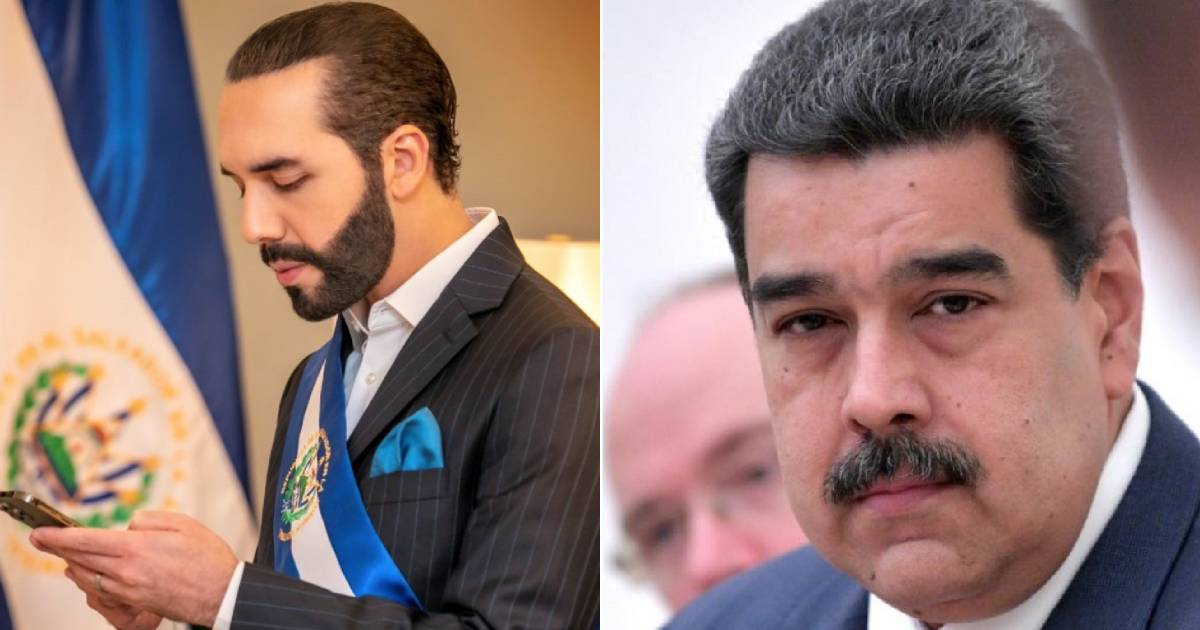
The president of El Salvador, Nayib Bukele, made a direct proposal to Venezuelan leader Nicolás Maduro, offering to repatriate 252 Venezuelans detained in his country in exchange for the release of an equivalent number of political prisoners in Venezuela.
Through a message posted on his account on the social network X, Bukele proposed what he referred to as a "humanitarian agreement" that would allow for the release of individuals imprisoned solely for political reasons, including journalists, activists, family members of opponents, and four asylum seekers at the Argentine embassy in Caracas.
"You want the Venezuelans back. I want justice for the political prisoners."
"Mr. Nicolás Maduro, you have stated on numerous occasions that you want Venezuelans to return and be free," Bukele wrote, before pointing out the differences between the reasons for detention in both countries.
The Salvadoran leader clarified that the Venezuelans in custody in El Salvador were detained as part of operations against organized crime (in the United States), specifically targeting structures such as the Tren de Aragua, and that they are not political prisoners.
On the contrary, he accused Maduro of keeping peaceful opponents imprisoned, whose only crime has been to oppose the regime and its electoral frauds.
Who would be released under the agreement?
Among the names proposed by Bukele for inclusion in the exchange are: Rafael Tudares, son-in-law of the opposing presidential candidate Edmundo González; journalist Roland Carreño; lawyer and human rights activist Rocío San Miguel; Corina Parisca de Machado, mother of opposition leader María Corina Machado; and the four political leaders who remain sheltered in the Argentine embassy in Caracas
Additionally, the Central American politician added that nearly 50 foreign citizens detained in Venezuela are from countries such as the United States, Germany, Argentina, France, Colombia, Italy, Ukraine, among others.
"God bless the people of Venezuela."
The publication concludes with the promise that the Salvadoran Foreign Ministry will send the formal proposal, and invokes a blessing for the Venezuelan people.
Bukele's gesture has been interpreted by some analysts as an unusual political and diplomatic move that puts pressure on Maduro's regime at a critical moment ahead of the 2025 presidential elections in Venezuela.
As of now, the government of Nicolás Maduro has not officially responded to the proposal from El Salvador.
In March, Bukele announced that 238 members of the Venezuelan criminal organization Tren de Aragua arrived in the country, sent by the United States, to be incarcerated in a maximum-security prison.
The criminals were immediately transferred to the Terrorist Detention Center (CECOT), where they will serve an initial detention of one year, extendable as determined by the Salvadoran government.
Trump and his proclamation
Donald Trump issued a declaration in March accusing Nicolás Maduro's regime of collaborating with drug trafficking and facilitating the operations of the criminal group Tren de Aragua in U.S. territory.
Trump invoked the proclamation of the Alien Enemies Act, a law that grants him broad powers to act against foreign nationals deemed a threat to national security.
In the document, the leader declared that the Tren de Aragua (TdA) is a foreign terrorist organization, responsible for waging an irregular war against the United States with the support of the Maduro regime and the Cártel de los Soles, a drug trafficking network linked to high-ranking Venezuelan officials.
As part of the statement, he ordered the immediate arrest and deportation of all members of Tren de Aragua in the U.S. who are not citizens or legal residents.
Frequently Asked Questions about Bukele's Proposal to Maduro and the Political Context
What did Nayib Bukele propose to Nicolás Maduro?
Nayib Bukele proposed to repatriate 252 Venezuelans detained in El Salvador in exchange for the release of an equivalent number of political prisoners in Venezuela. This offer aims to free individuals imprisoned for political reasons in Venezuela, including journalists, activists, and opponents of the Maduro regime.
Who are the Venezuelans detained in El Salvador?
The Venezuelans detained in El Salvador were arrested as part of operations against organized crime, particularly targeting the Tren de Aragua. They are not regarded as political prisoners by the Salvadoran government. Bukele emphasizes that these arrests are related to security and the fight against transnational crime.
How has Maduro's government responded to Bukele's proposal?
So far, the government of Nicolás Maduro has not officially responded to Nayib Bukele's proposal. Bukele's offer comes at a critical time, just before the presidential elections in Venezuela, which could influence the response of the Venezuelan regime.
What is the impact of Trump and Bukele's actions against the Tren de Aragua?
Donald Trump has designated the Tren de Aragua as a foreign terrorist organization, which has enabled a more aggressive action against its members. El Salvador has welcomed over 250 members of this criminal gang deported from the United States. These actions aim to diminish the influence of the Tren de Aragua and enhance security in the region.
What is the relationship between Trump and Bukele regarding security issues?
The relationship between Trump and Bukele has strengthened through cooperation agreements in security and migration. El Salvador has agreed to accept deportees from other nationalities, including dangerous criminals, as part of these agreements. This collaboration aims to combat transnational crime and has been praised by Trump as an example of leadership in the region.
Filed under: