
Related videos:
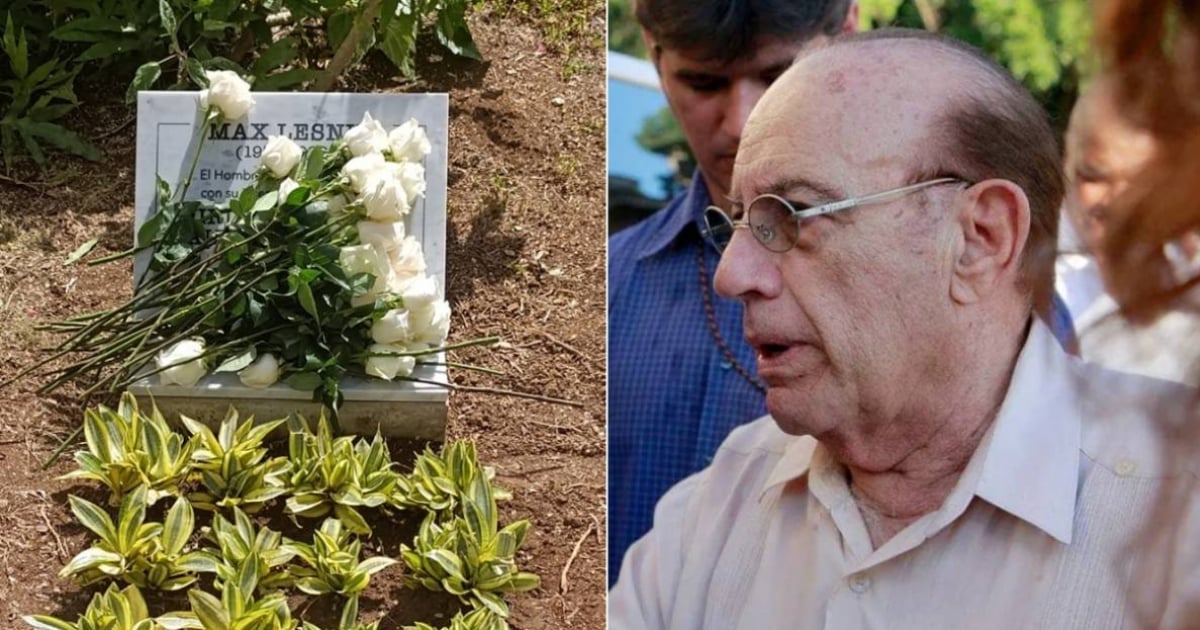
The ashes of the Cuban journalist Max Lesnik and his wife Miriam were brought to Cuba and buried in the Garden of Mother Teresa of Calcutta, next to the Basilica of San Francisco de Asís, in Old Havana.
The event was attended by figures from the regime such as José Ramón Machado Ventura and Abel Prieto. The ceremony included offerings from General Raúl Castro and the current leader Miguel Díaz-Canel.
Lesnik passed away in Miami in March, at the age of 94. The journalist was a deeply controversial figure. Founder of the magazine Réplica in 1968 and creator of Radio Miami, he became a fervent advocate for the Cuban regime from exile, maintaining close ties with Havana.
In his early political career, he was active in the Orthodox Youth and opposed Batista. However, he went into exile in Miami in 1961 due to his disagreement with certain aspects of the communist regime. Over time, he adopted a supportive stance towards Fidel Castro, which earned him disapproval within the exiled community in the United States.
The social media of the Cuban government were flooded this Wednesday with messages praising the activist. Abel Prieto described him as a loyal "patriot," while Fernando González Llort, one of the Cuban spies, thanked him for his role in the campaign for "the liberation of the Five."
The burial ceremony turned into an event with a strong political and symbolic charge, featuring figures from the regime praising their role in promoting Castroism from Miami. The speeches avoided any critical mention of repression, forced exile, or human rights violations that Lesnik refused to acknowledge until his death.
Despite his attempts to promote a rapprochement between the U.S. and Cuba, Lesnik was viewed by many as an ideological collaborator of Castroism.
On several occasions, he was the target of protests in Miami, and his headquarters at Alianza Martiana was attacked by anti-Castro groups. Part of the Cuban exile questioned him for being the face of unilateral dialogue with a dictatorship.
His symbolic return to Cuba marks the conclusion of a life of a figure who chose to overlook criticisms of the regime's human rights violations.
Frequently asked questions about Max Lesnik and his legacy
Who was Max Lesnik and what was his relationship with the Cuban regime?
Max Lesnik was a Cuban journalist known for his support of the Havana regime, despite having lived in exile in Miami. He initially opposed the Batista government and supported the Cuban revolution, but he went into exile in 1961 due to differences with the communist regime. However, over time he became a defender of Castrism and advocated for the normalization of relations between Cuba and the United States, which earned him criticism from the Cuban exile community.
How was the death of Max Lesnik received in Cuba and Miami?
The passing of Max Lesnik sparked divided reactions. In Cuba, he was praised as a "patriot" and defender of the regime, while in Miami, his death was met with criticism from the exiled community, who viewed him as a collaborator with Castroism. On social media, his supporters bid him a positive farewell, but there were also those who remembered his controversial role in the recent history between Cuba and the United States.
Why were Max Lesnik's ashes buried in Cuba?
The ashes of Max Lesnik were buried in Cuba as a symbolic return to the land he fervently supported throughout his life. Despite his exile in Miami, Lesnik maintained close ties with the Cuban regime and was considered a proponent of Castroism, which is why his remains now rest in Havana.
What impact did Max Lesnik have on the Cuban community in Miami?
Max Lesnik had a significant impact on the Cuban community in Miami, being a divisive figure due to his defense of the Cuban regime. He founded media outlets such as the magazine "Réplica" and Radio Miami, from where he promoted Castroism, which led to rejection and hostility from sectors of the anti-Castro exile community. His stance in favor of dialogue with Havana and his role as a defender of the regime made him a target of protests and criticism in Miami.
Filed under: