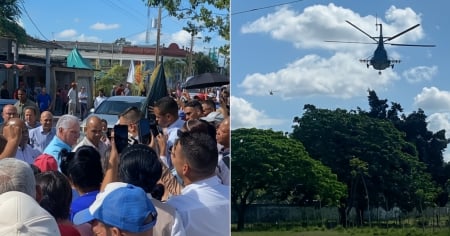
Miguel Díaz-Canel celebrated this Wednesday at the Plaza de la Revolución in Havana the attendance at the march called for International Workers' Day. “We are already at the Plaza. It’s dawn, and expectations are confirmed: Cuba can always surpass itself,” he wrote on his social media, accompanied by his wife, Lis Cuesta, both dressed in Cuba t-shirts and Palestinian scarves.
Díaz-Canel took the opportunity to quote Raúl Castro: “What kind of people do we have,” referring to the participation that the regime views as popular support. The mobilization, however, took place amid a context of deep economic and social crisis, marked by constant blackouts, widespread shortages of basic goods, and a severe lack of fuel.
Despite that situation, the government organized the mass transfer of workers and students early in the morning to the emblematic Plaza. As has occurred in previous years, refusing to attend may have consequences in workplaces and educational institutions.
On social media, many Cubans expressed their rejection of the march and criticized the official narrative. “The only thing you can feel in Cuba is blackout,” users responded to the government’s call to celebrate the supposed “achievements of socialism,” as Díaz-Canel himself announced in his invitation, even acknowledging that the parade would take place “amid the most severe shortages.”
Frequently Asked Questions about the May Day March in Cuba and the Economic Crisis
Why is the May Day march relevant in Cuba?
The May Day march is a symbolic event that the Cuban government uses to supposedly display popular support for the regime, despite the economic and social crisis the country is facing. Participation is seen as an act of support for socialism amid blackouts and shortages of basic resources.
How does the economic crisis affect participation in the May Day march?
The economic crisis in Cuba, characterized by power outages, food shortages, and lack of fuel, presents a challenging context for the celebration of the march. Despite this, attendance is often coerced, as refusing to participate may lead to repercussions in employment or education.
What criticisms does the Cuban government face regarding the May Day march?
The Cuban government has been heavily criticized for organizing the march as a propaganda event instead of addressing the urgent needs of the people. Many see the march as a distraction from the severe economic and social crisis the country is experiencing.
How does the discontent of the Cuban population manifest in light of the current situation?
The discontent of the Cuban population is expressed through criticisms on social media and sporadic protests. People convey their frustration over the shortage of basic resources and the lack of effective solutions from the government, which fuels a growing social unrest.
Filed under: