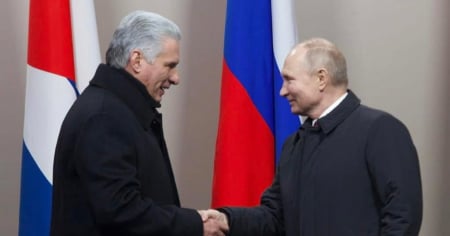
Miguel Díaz-Canel emphasized that obtaining foreign currency should be the top economic priority, in the context of increasing financial precariousness in Cuba.
His statements were made on Monday during a session of the Council of Ministers held at the Palace of the Revolution, before his trip to Russia.
"We need to focus on finding more foreign currency income. In my view, the actions must go in two directions: one is to see how we can increase foreign currency income, not just through traditional means. We need to do different things; the other is to see how we can use the income more efficiently," stated Díaz-Canel.
He suggested exploring new sources of income, such as the export of IT products, as well as promoting national manufacturing not only for export but also to supply the domestic market.
In this regard, he called for a change in approach. Now, Cuban state-owned enterprises must begin to see "the internal market as a source of development".
He also reiterated the urgency of attracting foreign investment, regulating the exchange market, and advancing the banking process, elements that he believes will allow for better management of the scarce resources available on the island.
Tourism in decline, a failed harvest, and exports below target
Díaz-Canel's statements highlight the serious liquidity crisis the country is experiencing. Cuba is facing a sustained decline in its foreign currency revenues, impacting its ability to import food, medicine, and fuel.
The Minister of Economy, Joaquín Alonso Vásquez, revealed that exports of goods did not meet the expected plan, despite a slight increase compared to the previous month.
The tourism situation is even more alarming. Service exports in this sector fell by 22% compared to the same period in 2024.
The sugar harvest remains in a critical situation, and the statistics on agricultural production show some achievements; however, these are not reflected in the actual food availability, worsening the shortages in Cuban markets.
The search for foreign currency at any cost
In December, the Cuban government approved a document that regulates the "partial dollarization of the economy." Prime Minister Manuel Marrero Cruz took the opportunity during the fourth ordinary session of the National Assembly to announce the measure.
This hinted at the increasing influence of the US dollar and the euro in the country. The regime seeks (for the umpteenth time) to reorganize key sectors of the economy while attempting to control, with limited success, the impact of the informal currency market.
Also, before the end of 2024, the Cuban Telecommunications Company (ETECSA) announced that it would be raising internet rates in 2025 and that it had approved the introduction of new packages and services in foreign currency. Its goal was to generate foreign exchange.
However, the biggest blow came in January 2025, with the opening in Havana of the new supermarket at 3rd and 70, in front of the old one that operated in Freely Convertible Currency (MLC) and became understocked.
Since then, stores selling foreign currency have been revived and are growing in Cuba. These establishments remain well-stocked with both national and foreign products. They accept cash in dollars or cards linked to foreign currency accounts, leaving the majority of Cubans without access to these essential goods.
Frequently Asked Questions about the Economic Crisis in Cuba
Why does Miguel Díaz-Canel emphasize the need to increase foreign currency revenues?
Díaz-Canel emphasizes the importance of increasing revenue in foreign currency due to the severe liquidity crisis facing Cuba. The decline in key sectors such as tourism and the sugar harvest has significantly diminished the country's income, affecting its ability to import essential goods such as food, medicine, and fuels.
What measures has the Cuban government suggested to overcome the economic crisis?
The Cuban government has proposed to increase foreign investment, regulate the currency market, advance banking integration, and strengthen domestic production. However, these measures do not address structural issues such as economic centralization and the lack of deep reforms.
How is the economic crisis affecting the daily lives of Cubans?
The economic crisis in Cuba is reflected in the scarcity of food, medicine, and fuel, as well as frequent blackouts and uncontrolled inflation. These conditions have significantly worsened the quality of life for the population, who are facing high prices and limited access to basic goods.
What is the current situation of the tourism sector in Cuba?
The tourism sector in Cuba is facing a significant decline, with a 22% decrease in tourism service exports compared to the previous year. This has severely impacted one of the country's economic pillars and has contributed to the foreign currency crisis.
Filed under: