
Related videos:
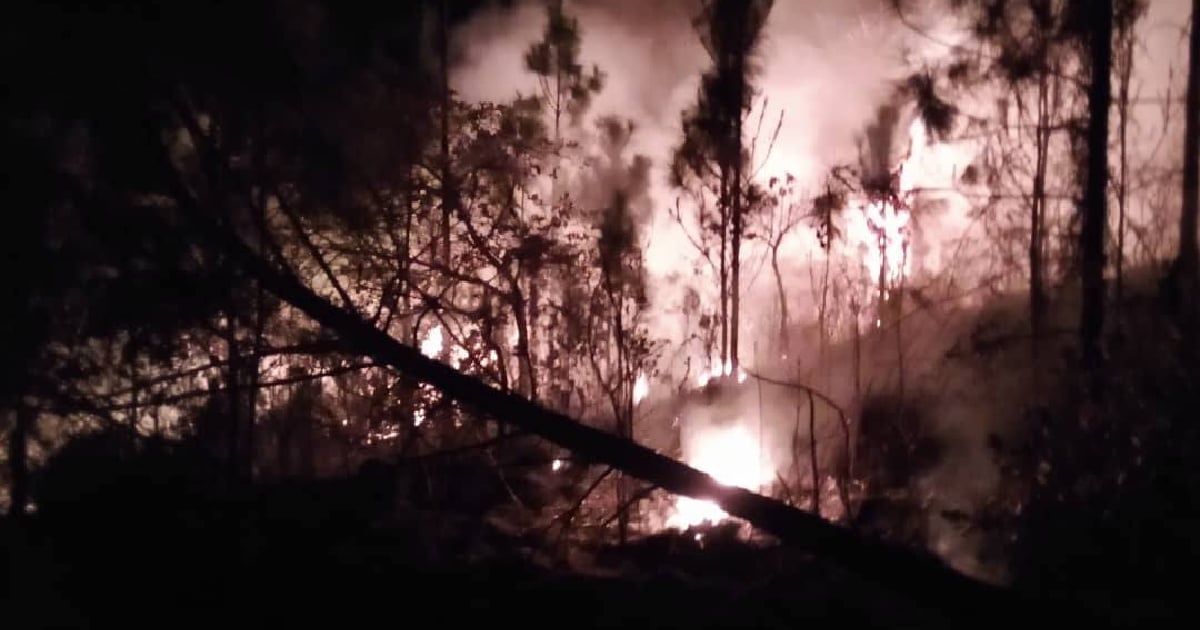
A new forest fire that broke out this week in the municipality of Minas de Matahambre, in Pinar del Río, has caused devastation to approximately 200 hectares of forests and could spread due to the speed of the wind and the terrain conditions.
The fire originated last Thursday and is spreading from the vicinity of Pinillo to Loma de Corazones, while authorities estimate that there are "favorable conditions for its expansion," according to a note published by the local broadcaster Radio Minas on social media.
Ibrahim Verdecia González, head of the Circuit of Forest Rangers (CGB) in the municipality, reported that as of Saturday, there were preliminary damages estimated at about 150 to 200 hectares of forests.
The day before, firebreaks were created and backburning was implemented to halt the advance of the flames on two of the three fronts being worked on, the radio station's report indicated.
The forces suppressing the fire consist of two brigades from the CGB of Minas de Matahambre and one from Viñales, along with forestry workers, aided by a bulldozer and a collector-extractor from the Agroforestal Company, and another bulldozer from Emincar (Caribbean Mixed Mining Company).
This disaster, which could reach significant proportions, is once again affecting the region of Minas de Matahambre, where just two weeks ago a large-scale forest fire was brought under control that spread to San Juan and Martínez, and in just nine days devastated 3,240 hectares of forests in both municipalities.
Due to its scale and consequences, the event was classified as the worst natural disaster of its kind this year in the country.
During those days, several active wildfires were reported in the province of Pinar del Río, causing a significant environmental impact.
At the end of April, a large-scale disaster in the forest areas of the Viñales municipality once again raised alarms in the western province. The fire affected 100 hectares of pine forests.
Since the beginning of the year until mid-April, 43 wildfires had been recorded in that Cuban territory, destroying over 500 hectares, primarily of pine forests. However, by the end of the month, around 67 had already been counted, according to updated reports from Lieutenant Colonel Alexander Pereda Burón, head of the Forest Rangers in Pinar del Río.
According to the official source, most of the fires were caused by human activity, while a small percentage originated from natural causes, such as electrical discharges during thunderstorms.
Frequently Asked Questions about Wildfires in Pinar del Río
How many hectares have been affected by the recent fire in Minas de Matahambre?
The recent fire in Minas de Matahambre has affected around 200 hectares of forest. This fire is part of a series of incidents that have severely impacted the province of Pinar del Río in recent weeks, with several fires still active and adverse weather conditions complicating their management.
What are the main causes of wildfires in Pinar del Río?
The majority of wildfires in Pinar del Río are caused by human actions. Only a small percentage originate from natural causes, such as lightning during storms. Dangerous human practices, like uncontrolled agricultural burning and discarding lit cigarette butts, are significant contributing factors.
What measures are being taken to control the fires in Pinar del Río?
To control the fires in Pinar del Río, techniques such as the construction of firebreaks and the application of controlled burns are being used. Additionally, brigades from the Forest Ranger Corps and forestry workers have been mobilized, supported by heavy machinery, to combat the flames. Authorities are also urging the public to take extra preventive measures.
What impact are the fires having on the environment of Pinar del Río?
The wildfires are having a significant environmental impact in Pinar del Río, destroying vast areas of pine forests. This not only threatens local biodiversity, but also endangers the protection of water resources. The loss of these valuable forests negatively affects the region's ecosystem.
Filed under: