
Related videos:
The President of the United States, Donald Trump, publicly distanced himself from European leaders by strongly supporting a possible meeting between the presidents of Russia and Ukraine in Istanbul, scheduled for this Thursday, May 15th.
Trump even suggested this Monday that he might personally participate in the meeting proposed by Vladimir Putin to counter the initiative of European leaders, which would mark an unexpected turn in international efforts to achieve a ceasefire in the war.
Through his network Truth Social, Trump stated that the Russian president "does not want an immediate ceasefire agreement," but is willing to negotiate an end to the "bloodbath" with a meeting in Turkey.
“Ukraine should accept this, immediately!”, wrote the American president, suggesting that the meeting would allow all parties to understand “where they stand” and act accordingly.
The comment contrasts with the stance of several European governments that have pressured Moscow to accept an unconditional 30-day ceasefire as a prerequisite for any dialogue.
Germany, in particular, issued an ultimatum to Russia to accept it by midnight on May 12, under the threat of new sanctions. The Kremlin rejected this demand, labeling it as "unacceptable."
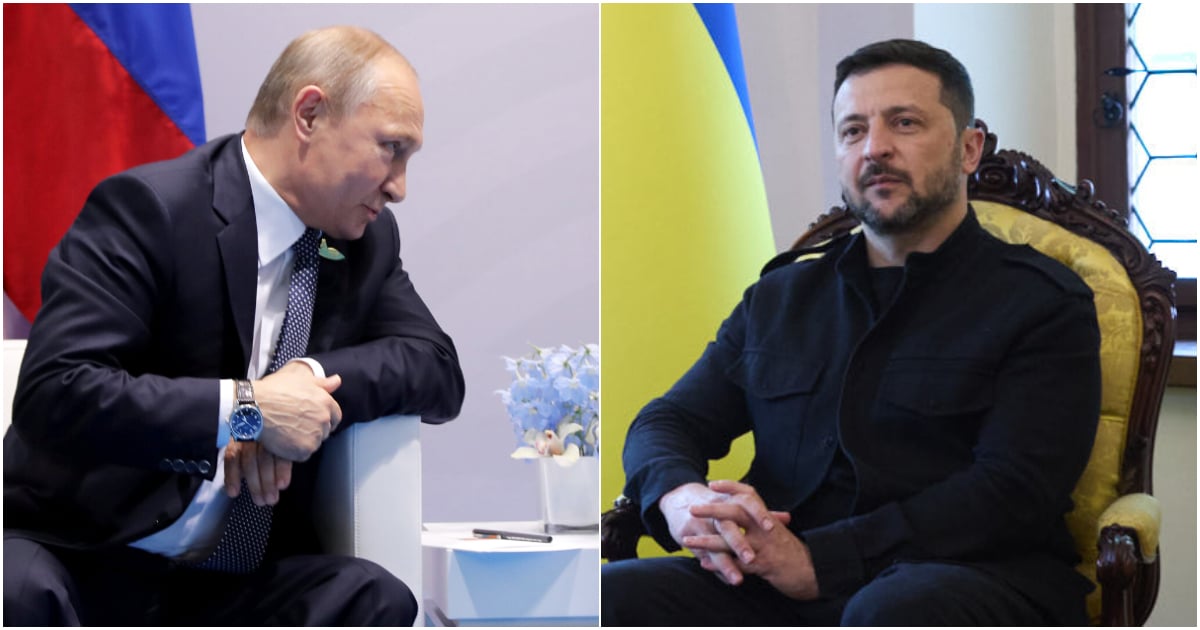
Meanwhile, the Ukrainian president expressed willingness to meet directly with Putin, confirming that he will attend in Istanbul. In a post on social media platform X, Zelensky supported the possible participation of Trump in the dialogue, calling it "the right idea."
In statements to the press, reported by Newsweek, Trump emphasized the significance of the meeting in Turkey and acknowledged that he is considering traveling to the region, although he clarified that he has prior commitments in the Middle East. "Don't underestimate Thursday in Turkey. President Erdogan is a great host," he said.
Putin, for his part, reiterated that he is willing to engage in "serious negotiations" without preconditions, although he expressed skepticism about an immediate ceasefire, arguing that Ukraine could use it to rearm.
The potential meeting would mark the first direct encounter between the Russian and Ukrainian leaders since 2019. If it happens, it would open a new phase in the discussions aimed at ending a conflict that has ravaged Eastern Europe since 2022.
Amid rising diplomatic tensions and conflicting signals regarding the terms of peace, Trump's stance introduces an unexpected variable and could redefine Washington's role in the Ukrainian conflict.
Trump balances the board and gives Putin a breath of fresh air
Trump's involvement in the peace process between Russia and Ukraine not only shakes international diplomacy but also rekindles old tensions between the American president and Zelensky.
Since the beginning of the war, Trump has maintained an ambiguous stance that often aligns with Moscow's interests. His rhetoric has fluctuated between praising Putin—whom he has referred to on several occasions as "smart" and a "great strategist"—and adopting a clearly disparaging tone toward Ukrainian leadership, whom he has even portrayed as a "dictator".
The admonitory tone of his recent post on Truth Social recalls earlier episodes, such as that famous and tense moment in the White House when he shot back at Zelensky: “You have no cards,” highlighting his perception of weakness or subordination of the Ukrainian government, which he took the opportunity to impose an agreement on the exploitation of rare earths and minerals on Kiev.
Now, by urging Ukraine to "immediately" accept negotiations with Putin without prior guarantees of a ceasefire, Trump once again imposes his unilateral vision and disregards Europe's collective stance, which demands a truce as a condition for any dialogue.
This disdain for European diplomacy is a constant theme in his discourse: in his message, he not only ignores the ultimatum issued by Germany but also effectively discredits it by suggesting that only an unconditional meeting can resolve the conflict.
By doing so, Trump is reinstating Putin's prominence, reducing international pressure and providing a diplomatic escape route that could weaken Western sanctions. In other words, it rebalances the playing field in favor of the Kremlin.
Furthermore, his doubts about Ukraine's ability to reach an agreement serve as a veiled way to ridicule Ukrainian leadership and undermine its motives in the midst of war.
In this scenario, Trump’s stance not only interferes with the pressure campaign led by Europe and the U.S. during his previous administration but also reconfigures geopolitical dynamics with a clear message: only he can lead a way out, even if that means weakening Ukraine or empowering Moscow.
His eventual appearance in Istanbul as a central figure in the dialogue, beyond its symbolic value, represents a strategic concession to Putin and a gesture of disdain towards his traditional allies.
Filed under: