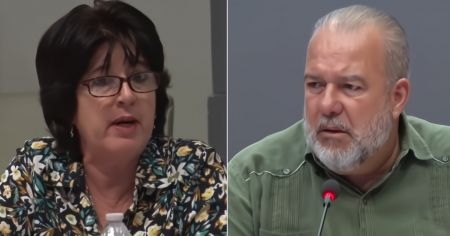
In an extraordinary meeting of the Council of Ministers of Cuba, chaired by Prime Minister Manuel Marrero Cruz, four draft laws were approved that will impact various social sectors of the country.
The proposals range from the protection of children to the modernization of the Civil Registry, covering the sports system and a new regime for administrative infractions, reported the Presidencia de Cuba on its website.
Although these regulations are presented as legislative advancements, their true impact will depend on their implementation and social acceptance.
What draft bills were approved?
- Code of Childhood, Adolescence, and Youth:
This draft aims to ensure the comprehensive development of girls, boys, adolescents, and young adults, promoting full respect for their rights. According to the Minister of Education, Naima Ariatne Trujillo Barreto, the text is the result of an extensive consultation process that involved key social actors. The Code is presented as inclusive, comprehensive, and representative, with the goal of promoting participation, inclusion, and social development for minors.
However, questions arise about the effectiveness of its implementation in a context where public policies towards youth have historically been a contentious issue. How will the effective protection of rights be ensured when the social reality faces structural and economic challenges that limit its reach?
- Civil Registry Law:
The Minister of Justice, Oscar Silvera Martínez, emphasized that this law aims to modernize the Civil Registry, digitize its operations, and strengthen its institutional framework. Additionally, it proposes a specific disciplinary regime for civil registrars, which seeks to correct the current legislative fragmentation.
Although the project proposes significant advancements in document management and the handling of personal data, there are concerns about the actual capacity for implementation in a country where technological infrastructure still faces multiple challenges. Is it possible to guarantee computerization in all provinces?
- Law on the General Regime of Offenses and Administrative Sanctions:
This draft aims to unify and clarify the administrative sanctioning regime in Cuba. Oscar Silvera mentioned that the existing regulatory dispersion makes it difficult to understand the infractions and their consequences. This new law is intended to be a comprehensive tool for managing violations.
However, its approval raises concerns about the use of this tool in an authoritarian context where administrative sanctions can be employed as a means of social control. Does this regulation guarantee fair and equitable treatment, or will it open the door to more punitive measures against the civilian population?
- Law of the Cuban Sports System:
According to Osvaldo Vento Montiller, president of the Institute of Sports, Physical Education, and Recreation (INDER), this is the first regulation of its kind in the country. The document aims to establish a legal framework for sports in Cuba, aligning its principles and operations with the historical ideals of the revolutionary sports system.
Despite its inclusive and transparent approach, there remains doubt as to whether this law will be able to rescue Cuba's sports legacy amidst the economic crisis and the exodus of high-performance athletes. Will a modern regulation be enough to reverse the decline of Cuban sports?
Real changes or symbolic reforms?
Although the four draft bills have been presented as significant advancements, the Cuban social and political context necessitates a critical view on their real impact. The approval of regulations does not, by itself, guarantee an effective transformation in the country.
On one hand, the legal update can help modernize certain areas of the Cuban social system, such as sports and civil registration. However, material limitations, access to technology, and state control may hinder its effective implementation.
On the other hand, the Contraventions Regime Law raises concerns about its potential use to reinforce social control in a context where recent protests have been met with repressive measures.
Similarly, although the Children’s Code aims to guarantee fundamental rights, its implementation will largely depend on political will and institutional support.
Ultimately, the next steps will determine whether these proposed laws will be mere expressions of good intentions or if they will truly represent progress for Cuban society.
Citizens and the affected sectors will be attentive to how these issues materialize in daily life, while demands for greater transparency and participation in the legislative process continue.
Frequently Asked Questions about the New Draft Bills in Cuba
What are the four draft bills approved by the Council of Ministers of Cuba?
The four draft bills approved by the Council of Ministers of Cuba are: the Code of Children, Adolescents, and Youth; the Civil Registry Law; the General Law on Contraventions and Administrative Sanctions; and the Cuban Sports System Law.
What does the new Code of Childhood in Cuba seek?
The new Childhood Code in Cuba aims to ensure the comprehensive development of girls, boys, adolescents, and young people, promoting full respect for their rights. However, there are concerns that it may be used as a tool for ideological indoctrination and social control, limiting the development of critical thinking in new generations.
What changes does the Civil Registry Law propose in Cuba?
The Civil Registry Law aims to modernize the Cuban Civil Registry, digitalize its operations, and strengthen its institutional framework. However, there are concerns about the actual capacity for implementation due to the technological limitations in the country.
What implications does the General Law on Offenses and Administrative Sanctions have?
The Law on the General Regime of Offenses and Administrative Sanctions seeks to unify and clarify the administrative sanctions regime in Cuba. However, there are concerns about its potential use to reinforce social control in an authoritarian context, where administrative sanctions could be used as a means of repression.
How does the new Law of the Cuban Sports System affect sports on the island?
The Law of the Cuban Sports System aims to establish a legal framework for sports in Cuba, aligning its principles with the ideals of the revolutionary sports system. Although it presents itself as inclusive and transparent, there are questions about its ability to preserve the sporting legacy amidst the economic crisis and the exodus of athletes.
Filed under: