Donald Trump announced this Friday, during a business roundtable held in the United Arab Emirates, that he could soon break the trade truce established just over a month ago.
Trump warned that "in the next two or three weeks," the White House will begin officially notifying the affected countries how much they will have to pay to trade with the United States, regardless of whether they have reached bilateral agreements or not.
"We have 150 countries that want to reach an agreement at the same time, but we do not have the capacity to see them all," said Trump, acknowledging an operational limitation that he believes compels him to take unilateral action.
The president argued that his administration simply does not have enough personnel or the necessary time to negotiate individually with all the nations affected by its tariff policies.
This recognition introduces a significant shift in the narrative that has until now been defended: that of a country in a position of strength capable of negotiating favorable conditions one by one.
From the "Day of Liberation" to the threat of chaos
The origin of this commercial strategy dates back to April 2, which Trump named the "Day of Liberation."
On that day, the White House announced an ambitious policy of "reciprocal tariffs," aimed at over 150 trading partners, with the intention of rebalancing the trade balance and protecting the U.S. industry.
The measure included tariffs of up to 145% on certain imported products, affecting both countries with which the United States has a trade deficit and others deemed strategically important.
However, just a week later, on April 9, Trump temporarily suspended the implementation of these tariffs for 90 days, allowing the affected nations to negotiate new agreements with his administration.
It was a self-imposed truce intended to be pragmatic, but it now seems to be coming to an untimely end.
The president himself has confirmed it: "I suppose they could appeal the measure, but overall I believe we will be very fair," he said, referring to the future tariffs while warning that the timeline for negotiations is drastically shortening.
Unequal negotiations and internal contradictions
Despite the president's firm tone, the truth is that the negotiations are progressing unevenly.
So far, only the United Kingdom has managed to reach a formal agreement with Washington, and it is a pact described by analysts as "minimal".
A temporary agreement on mutual tariff reduction was reached with China, the major trade adversary of the United States: from 145% to 30% on the U.S. side, and from 125% to 10% on the Chinese side, lasting 90 days.
In parallel, Trump has publicly stated that he has "many agreements in the works. In the end, we'll just be signing the rest," and that "we have four or five more agreements that will arrive immediately."
However, many of those statements have not been officially supported.
It is the case, for example, of a supposed agreement with Vietnam, which was never confirmed, or a proposal from India to eliminate tariffs that the government of New Delhi denied shortly thereafter.
This dissonance between the presidential rhetoric and the concrete facts is exacerbated by his own statements.
At the end of April, Trump told Time magazine that he had "closed 200 deals" that would be announced in a matter of weeks.
However, the claim that their administration "cannot negotiate with all countries at once" directly contradicts that figure and reveals a level of improvisation and logistical overload that threatens to overwhelm the initial plans of the White House.
A new phase: Letters as an ultimatum
The new direction announced by Trump is based on formal notifications through the Department of the Treasury and the Department of Commerce.
It will be the Secretary of the Treasury, Scott Bessent, and the Secretary of Commerce, Howard Lutnick, who will sign the letters that will be sent to the affected countries.
These letters, as the president himself explained, “will basically state how much they will have to pay to do business in the United States.”
It would indeed involve tariffs imposed unilaterally, without waiting for the outcome of negotiations.
Although Trump stated that these measures would be "very fair," he did not specify what criteria would be used to set the levies, nor whether there would be any mechanism for appeal or review.
This lack of transparency and clear planning has heightened uncertainty among both foreign governments and financial markets, which had shown an apparent calm during the ceasefire period.
The internal impact: inflation, businesses, and warnings
The consequences of this strategy not only affect the United States' trade partners but also its own internal economy.
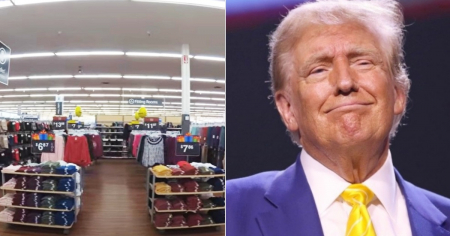
Companies like Walmart have already announced that they will have to raise the prices of various products due to the increase in import costs.
This is compounded by the concerns of economic experts such as Jerome Powell, chairman of the Federal Reserve, who has warned of the risk of an inflationary spiral and a possible recession if tariff policies are not adjusted.
The U.S. business sector is therefore in a state of increasing uncertainty.
While some industries may benefit from protectionist barriers, many others—especially those that rely on international supply chains—could face rising costs, product shortages, and loss of competitiveness.
A Geopolitical Puzzle: Priorities and Exclusions
According to reports such as the one from The Guardian, the Trump administration is prioritizing negotiations with Asian countries, placing South Korea at the top of the list.
The channel with the European Union, Japan, and even India remains open, despite recent disagreements.
It is worth noting that Russia has been excluded from these negotiations, a striking decision given the breadth of the package of measures.
China, for its part, was not included in the initial truce on April 9, although it was part of the subsequent mutual tariff suspension agreement.
In the coming weeks, the international business landscape could change radically. The cards are about to be dealt, deadlines are running out, and the whole world is waiting for the outcome of a truce that seems to be on the verge of collapse.
Frequently Asked Questions About Trump's Tariff Policy
Why is Donald Trump threatening to break the trade truce?
Donald Trump believes that his administration does not have enough staff or time to negotiate with all the affected nations. This has led him to consider the possibility of imposing unilateral tariffs without waiting for bilateral agreements. Trump argues that there are operational limitations that force him to take unilateral actions to protect the U.S. industry and rebalance the trade balance.
How does Trump's tariff policy affect American companies?
American companies, particularly those that rely on international supply chains, could face rising costs, product shortages, and a loss of competitiveness. Tariff policies can increase import prices, which would lead to higher consumer prices and potentially a recession if not properly managed.
Which countries have reached trade agreements with the United States under the Trump administration?
So far, only the United Kingdom has managed to finalize a formal agreement with the United States. This agreement has been described by analysts as "minimal." With China, a temporary agreement for mutual tariff reduction was reached, but many other agreements mentioned by Trump have not been officially confirmed.
What measures does Trump plan to implement regarding tariffs in the near future?
Trump plans to send letters to the affected countries notifying them of how much they will need to pay to trade with the United States. These notifications will be signed by the Secretary of the Treasury, Scott Bessent, and the Secretary of Commerce, Howard Lutnick. The Trump administration intends to impose unilateral tariffs without waiting for the outcome of negotiations.
Filed under: