With the publication of Decree 124/2025 in the Official Gazette, the Cuban government reaffirmed the monopoly of the Telecommunications Company of Cuba S.A. (ETECSA) in public telecommunications services until December 31, 2036.
The concession, approved by the Council of Ministers, includes the possibility of extending until 2066, in two successive periods of 15 years each, provided that the state-owned enterprise requests it three years in advance and does not incur in breaches.
The new regulation repeals the previous Decree 321 of 2013 and establishes a more unified legal framework for the exclusive operation of ETECSA in services such as fixed telephony, mobile telephony (2G, 3G, and later technologies), data transmission, and internet access.
The company must pay 5% of its net profits annually to the state budget and is obliged to prioritize services for institutions such as the Armed Forces and the Ministry of the Interior.
Key aspects of Decree 124/2025:
- Exclusive concession: ETECSA will maintain the monopoly until 2036, extendable until 2051 and 2066, respectively. (Articles 4 and 5)
- Canon to the State: The company will pay 5% of its net profits annually to the State budget in Cuban pesos starting in 2025. (Article 7).
- State control of rates: The Ministry of Communications, and in some cases, the Ministry of Finance and Prices, will continue to approve maximum rates. The company may lower prices but cannot raise them without authorization. (Articles 19-26)
- Frequency regulation: The text repeals Decree 321 of 2013 and several resolutions that assigned frequencies to ETECSA, unifying its legal framework. Although the Ministry of Communications may assign frequencies to third parties, these cannot compete with ETECSA while its exclusivity lasts. (Single annex)
- Reversion of assets: Once the concession is concluded, the infrastructure and equipment will revert to the State, except for the residual value of fixed assets. (Article 43)
Persistent criticism of the current model
The new decree reaffirms the continuity of a monopolistic scheme, despite citizens' demands for greater diversity of options, more affordable prices, and improvements in service quality.
The regulations do not provide for licenses for alternative operators, nor for public consultation mechanisms to review rates, which can take up to 180 business days, according to Article 28.
In addition, the State retains the discretionary power to deny extensions if ETECSA fails to comply, without clearly defining the criteria or procedures for evaluating its performance.
With this measure, the government secures the exclusive dominance of ETECSA in the telecommunications sector for at least the next 11 years, and potentially until 2066. While the decree reinforces state control over infrastructure deemed strategic, it also prolongs a model that is criticized for its low efficiency, high prices, and lack of alternatives for consumers.
ETECSA receives ongoing criticism for the excessive prices of international calls, both incoming and outgoing from the country, as well as for internet access. The hashtag #bajenlospreciosdeinternet has become popular among Cuban social media users, as this is a persistent demand from the population.
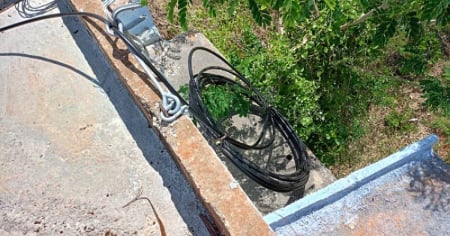
The entity has reported acts of vandalism against the company’s networks in Las Tunas, Holguín and other provinces, as well as similar disruptions in telephone services in Habana del Este, Marianao, and Centro Habana.
In April, authorities from the company blamed individuals using illegal equipment, as well as social indiscipline and vandalism, for the deterioration of the quality of telephone and mobile network service in the country, amidst a backdrop of severe economic and financial tensions.
The Cuban regime has warned about the illegal use of internet antennas, repeaters, and even the dreaded Starlink, the satellite internet service from SpaceX directed by Elon Musk that threatens ETECSA's monopoly on the island.
Meanwhile, amidst the government crusade against Starlink, the Cuban people continue to perform technological miracles on their rooftops, trying to watch a YouTube video without it freezing halfway through.
Officials have claimed that the entity lacks sufficient financial resources to modernize its infrastructure.
The interruption of telecommunications services directly affects the daily lives of Cuban citizens, who rely on public telephony and internet access for communication and work. The absence or inefficiency of these services adds another layer of difficulty to the already existing challenges of daily life in Cuba.
Frequently Asked Questions about the ETECSA Monopoly and Its Implications in Cuba
Until when will the monopoly of ETECSA in Cuba last?
The ETECSA monopoly will extend until December 31, 2036, with the possibility of extending it until 2066 in successive terms of 15 years, as long as the company does not incur in defaults.
What obligations does ETECSA have under the new Decree 124/2025?
Under Decree 124/2025, ETECSA must annually contribute 5% of its net profits to the State Budget and prioritize services for institutions such as the Armed Forces and the Ministry of the Interior.
How does ETECSA's monopoly affect Cuban consumers?
ETECSA's monopoly limits the diversity of options for consumers, leading to high prices and poor service quality, with no alternatives available for users due to the lack of competition.
What criticisms does ETECSA and the Cuban government face regarding the management of telecommunications?
ETECSA and the Cuban government are facing criticism for maintaining a monopolistic model that proves to be inefficient, with high rates and no alternative options for consumers, as well as a lack of transparency in rate management.
Filed under: