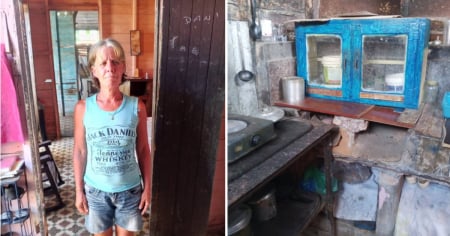
Official academics acknowledged the increase in the inequality gap in Cuba due to the polycrisis the country has been experiencing over the past five years.
Three Cuban sociologists told EFE in a joint interview that social inequalities have widened across economic, racial, territorial, age, and gender divides.
Inequality is the main effect of the polycrisis,” stated Enrique Gómez Cabezas, coordinator of the Social Policy and Inequalities Group.
Gómez Cabezas and other experts from the state-run Center for Psychological and Sociological Research (CIPS) acknowledged that this phenomenon creates tensions in a country characterized for decades by strong egalitarianism and the government's responsibility to seek new solutions to overcome it.
"The recognition of migration as an alternative for economic improvement has grown," adds Gómez Cabezas.
This state sociologist believes that the regime needs to update its social policies, which are now insufficient for the reality of the island.
"Although they are universal policies, they are not enough to prevent inequalities from reproducing. There are sectors that are in better conditions and will seize the best opportunities for themselves. Meanwhile, other sectors will be left behind, which reproduces and amplifies those disadvantages," he justifies.
"We must acknowledge the existing inequality," she concludes.
For Mirlena Rojas Piedrahita, coordinator of the Network of Sociological Studies on Work, what she refers to as "polycrisis" is a "trait of the era" that "imprints a fundamental characteristic on today's Cuban society."
"Sometimes the word resilience feels too small for me. I still haven't found the word that one might use when facing survival strategies," the sociologist questions.
Rojas Piedrahita also states that this context generates an "uncertainty" that "produces and reproduces" states of stress.
"There are those who have been able to access the most dynamic and well-paid private sector, who can afford a generator for power outages,... and who have the resources to leave for another country," he adds.
For her part, Jusmary Gómez Arencibia, coordinator of the Cuban Network of Social and Solidarity Economy and Corporate Social Responsibility, states that the "deterioration" of education and healthcare has become another reason for emigration.
According to the officialist experts interviewed by EFE, inequalities began in 2011 with Raúl Castro's reforms, known as the "updating."
Experts indicate that the Gini coefficient, the main indicator of social inequality, increased from 0.25 (on a scale with a maximum of 1) in 1989 to between 0.4 and 0.5 currently, according to government figures.
In this way, Cuba would rank, if we believe the regime's figures, in the average of Latin American countries.
But for these pro-government experts, the island cannot be compared to Latin American countries. “We approach some realities, but we are still distant,” they assert.
Poverty in Cuba
Last year, the Cuban Observatory of Human Rights (OCDH) stated in a report that "89% of Cuban families suffer from extreme poverty"
One of the most significant pieces of information highlights that “7 out of every 10 Cubans have stopped having breakfast, lunch, or dinner, due to a lack of money or food shortages.”
In 2023, furthermore, Cuba was ranked as the country with the most miserable economy in the world, according to the Annual Index compiled by American economist Steve H. Hanke, a professor at Johns Hopkins University.
To the extent that the regime itself has been forced to recognize the misery in which its population lives.
According to the Minister of Labor and Social Security, Marta Elena Feitó Cabrera, before Miguel Díaz-Canel, in February 2024, there are, as of that date, 1,236 communities in Cuba living in misery
Frequently Asked Questions About Inequality and the Crisis in Cuba
Why has inequality increased in Cuba in recent years?
The increase in inequality in Cuba is due to a policrisis that has affected the country in the last five years. According to official academics, inequality has widened in economic, racial, territorial, age, and gender aspects. This phenomenon has generated tensions in a society that has historically been characterized by significant egalitarianism. Furthermore, the economic reforms implemented since 2011 have not succeeded in mitigating inequalities; instead, they have created sectors in better conditions that monopolize the best opportunities, while others are left behind.
What role does migration play in the current Cuban economy?
Migration has been recognized as an alternative for economic improvement in Cuba. Faced with a shortage of opportunities and the decline of services such as education and healthcare, many Cubans choose to emigrate in search of better living conditions. This phenomenon has been highlighted by experts such as Enrique Gómez Cabezas, who points out that migration is seen as a viable solution to the country’s economic crisis.
How is the economic crisis affecting basic services in Cuba?
The economic crisis has significantly deteriorated education and healthcare in Cuba. Jusmary Gómez Arencibia, coordinator of the Cuban Network of Social and Solidarity Economy, points out that the decline of these essential services is one of the reasons that drive Cubans to seek better opportunities abroad. The lack of investment and poor management have contributed to making these services less accessible and of lower quality for the population.
What are the consequences of the economic "updating" of 2011 in Cuba?
The "economic update" of 2011 has contributed to the increase in inequality in Cuba. The reforms driven by Raúl Castro aimed to improve economic efficiency, but have resulted in a widening of social disparities. The Gini coefficient, which measures inequality, has risen, placing Cuba at the average level of inequality among Latin American countries. However, official experts argue that Cuba cannot be directly compared to other nations in the region due to the particularities of its economic and social system.
Filed under: