
Related videos:
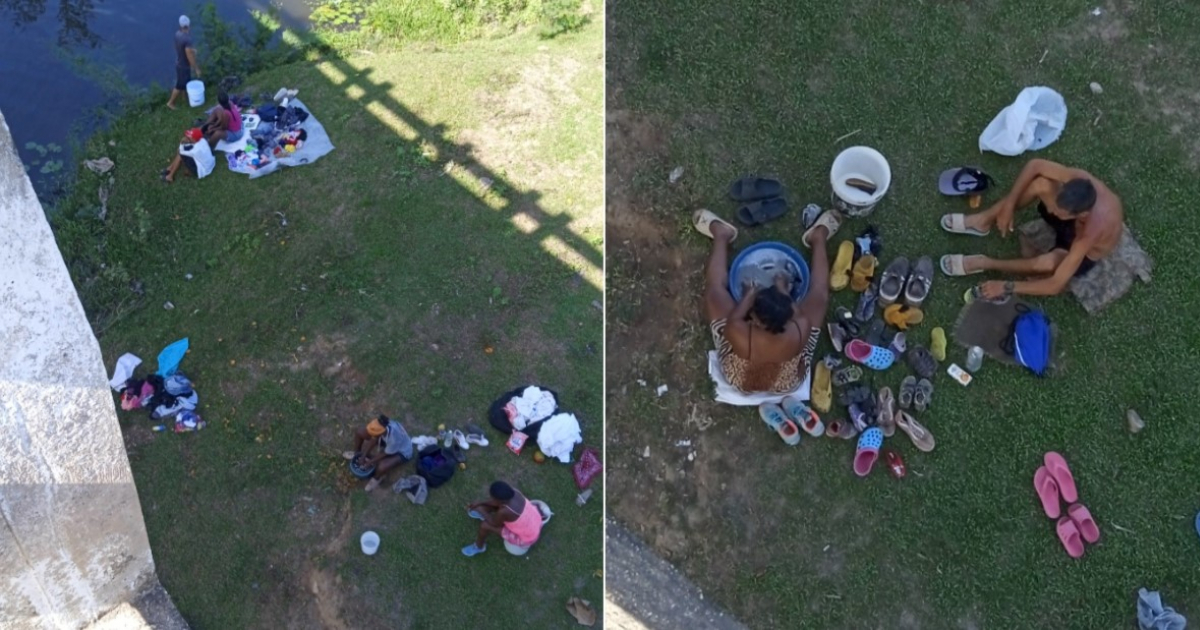
The desperation due to the lack of drinking water has driven dozens of residents from the Pinareño municipality of San Juan y Martínez to wash their clothes in the river.
The scene, more typical of a rural area lacking basic infrastructure, has sparked outrage on social media, where users report that they have been without water in their homes for over 15 days.
"This is not Haiti or Africa, this is San Juan and Martínez, Pinar del Río province," denounced the activist Michael Cala Valladares, who shared images of the situation on his Facebook account.
The photos show entire families, including women and children, by the river with buckets and soap, in the 21st century and under temperatures exceeding 30 degrees.
The complaint goes beyond the water shortage.
Cala, a human rights defender, also harshly criticized the local government for its silence and lack of response, accusing it of prioritizing its own interests over the needs of the people.
"When a government cannot provide water to the people or collect the trash, it has only one option left: to relinquish power," he stated.
Residents of the La Astrea neighborhood confirm that the service is completely shut down.
"It's been over two weeks since a drop of water has come into our homes. The only option is to go to the river or pay for water trucks at prices that no state salary can afford," reported a resident.
In addition to the lack of water, there is urban neglect. Behind a nine-story building that once had parking, tons of garbage are now piling up. "That place has turned into a dump," Cala explained.
The responsible institutions have not taken action, while health risks continue to worsen in the area.
Official promises do not resolve the crisis
At the beginning of the month, the official newspaper Granma acknowledged the complex situation regarding water supply in the province and outlined an investment plan of 112 million pesos to address it.
According to the authorities, new pumping equipment has been installed and efforts are underway to eliminate illegal connections. However, solutions are not reaching many communities.
In San Juan y Martínez, for example, the water distribution cycles—which used to be 40 days and are now 20—remain unacceptable for a population that relies on this basic service to live with dignity.
Vladimir Matos Moya, vice president of the National Institute of Hydraulic Resources (INRH), stated that the improvement plan is ongoing, but he admitted that "reducing the delivery frequency is not enough."
Engrasio Machín Iglesias, the state inspection director of INRH in Pinar del Río, reported the existence of numerous irregularities such as illegal taps in the water supply lines and diversions of water to agricultural crops that continue due to fines that are "too low to be deterrent."
Distant reality from the official discourse
While projects are announced and promises are repeated, the situation is deteriorating in practice.
Consolación del Sur, the second most populous municipality in the province, is facing the most serious water situation: the supply cycles are very long, and the pumps frequently burn out.
"I don't see any families of leaders in this situation," Cala sarcastically remarked in his post.
Her complaint adds to a growing chorus of voices calling for structural change in the management of public services. "We want a government that responds to the needs of the people, not to its personal benefits," she concluded.
Meanwhile, in San Juan and Martínez, washing in the river is no longer an alternative option: it is the only way to survive in a community where water does not reach and the authorities look the other way.
Frequently Asked Questions about the Water Crisis in Cuba
Why are the residents of San Juan and Martínez in Pinar del Río forced to wash in the river?
Residents of San Juan and Martínez are forced to wash in the river due to the lack of drinking water in their homes, a situation that has lasted for more than 15 days. The water shortage has led families to seek desperate alternatives to meet their basic hygiene needs.
What has the Cuban government done to resolve the water crisis in Pinar del Río?
The Cuban government has announced an investment plan of 112 million pesos to improve water supply in Pinar del Río, including the installation of new pumping equipment and the removal of illegal connections. However, these solutions have not reached many communities, and the situation remains critical.
How does the lack of water affect the daily life of Cubans in other provinces, such as Santiago de Cuba?
In Santiago de Cuba, some areas have been without water supply for over four months. This forces families to seek alternative sources of supply, which increases challenges and severely impacts hygiene and public health. The situation reflects a structural problem in the water supply system in Cuba.
What are the main causes of the water crisis in Cuba?
The water crisis in Cuba is due to a combination of factors, including prolonged drought, the energy crisis affecting water pumping, and the deterioration of hydraulic infrastructure. Additionally, issues such as illegal connections and lack of investment worsen the situation, leaving thousands of people without regular access to drinking water.
Filed under: