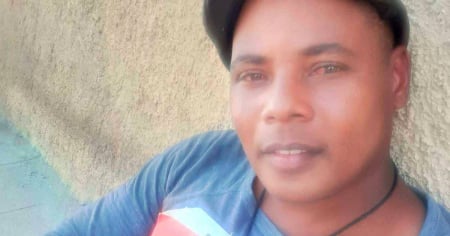
The prison authorities denied the political prisoner Eider Frómeta Allen his transfer to a prison in Guantánamo, his home province, where his family resides.
According to the report from Cubalex, Colonel Juan Manuel Fernández Peña, known as “Habanita” and the second-in-command of the prison authority in Guantánamo, stated that “he did not want him in the province.”
This decision is once again a clear act of retaliation for his peaceful activism and for the reports that Eider has made regarding the living conditions in prison, the complaint states.
According to Cubalex, "Eider's grandmother is in critical condition after suffering a cerebral ischemia, which represents a profound emotional burden for her family, not only because of the severity of her condition but also due to the precarious conditions of the healthcare system in the province."
"Refusing Eider Frómeta's transfer in this context not only increases the suffering of his family but also reinforces the pattern of reprisals. Additionally, he has been denied access to a minimum-security regime and to parole," the organization denounces.
Cubalex also detailed that the elderly woman is currently in the observation room of the Provincial Hospital "Dr. Agostinho Neto," unable to be transferred to the specialized unit due to the elevators being out of service.
"They cannot climb stairs, and the orderlies assigned in the hospital—who are mostly inmates transferred from prison—lack the training, equipment, and conditions necessary to carry out these procedures safely," they assert.
The UNPACU member, imprisoned since 2019, has been subjected to constant reprisals in prison.
Repression in 2024
In April of last year, Gricelia Allen, mother of political prisoner Frómeta Allen, reported the critical state of health of her son, who was not receiving medical care in the Boniato prison in Santiago de Cuba, where he is being held.
As a result of this situation, Frómeta lost about 15 kilograms in weight.
In March of that same year, a state security officer threatened Frómeta's wife with taking away custody of their two children and monitoring her.
Additionally, the oppressor sexually harassed her and labeled the political prisoner a "counter-revolutionary" and "criminal."
Additionally, in January, during a conjugal visit in prison, the opposition member protested for the authorities of the Boniato prison to allow access for his wife.
Gricelia Allen, mother of Frómeta, reported that in February her son was tortured in the Kilo 8 prison in Camagüey.
The political prisoner was in a punishment cell, on a hunger strike, and when he was denied a mattress, he complained.
The repressors tied him hand and foot, beat him, broke his forehead, and accused him of contempt.
Frequently Asked Questions about the Repression of Political Prisoners in Cuba
Why was the political prisoner Eider Frómeta Allen not transferred to Guantánamo?
The prison authorities denied the transfer of Eider Frómeta to Guantánamo as retaliation for his peaceful activism and reports on the living conditions in prison. Lieutenant Colonel Juan Manuel Fernández Peña, known as "Habanita," stated that he did not want him in the province, which reinforces the pattern of retaliation against him.
How does the denial of transfer affect the political prisoner Eider Frómeta and his family?
Denial of Eider Frómeta's transfer to Guantánamo increases the emotional suffering of his family, particularly because his grandmother is in critical health condition. The family faces not only the distance but also the precarious conditions of the healthcare system in the province, which exacerbates their emotional and logistical situation.
What complaints has Eider Frómeta made about the conditions in prison?
Eider Frómeta has reported the poor living conditions in prison, including the lack of adequate medical care and constant retaliation from the prison authorities. These allegations have been supported by organizations such as Cubalex, which also highlight other similar cases of repression and neglect in Cuba.
What other forms of repression do political prisoners face in Cuba?
Political prisoners in Cuba face inhumane conditions, lack of medical attention, and reprisals from authorities. Examples include Leoncio Rodríguez Ponce, imprisoned for 36 years, and Dixán Gaínza Moré, who has started a hunger strike in protest of his treatment in prison.
Filed under: