In a viral video shared on TikTok, a young Cuban recounted the arduous efforts that citizens must undertake to obtain liquefied gas on the Island, an essential resource for cooking food.
According to his testimony, the process of acquiring gas has become a true odyssey due to chronic shortages and the complicated regulations imposed by the regime.
"It's not easy at all; first, you have to wait for gas to be available, and then you have to go through the whole procedure," Briana Matancera began.
The first step is to install the Transfermóvil app on the mobile phone, through which users must obtain an appointment to buy gas. However, this process is not free, as the app requires a payment of 10 Cuban pesos to secure the appointment.
Once the system confirms the appointment and notifies the user of their number in the queue, citizens must wait patiently, repeatedly visiting the point of sale to check on the progress of the queue.
"You have to wait, my love - because not everything is that easy - for the gas to come in at the point, and you have to keep moving around the little spot to see what number the line is at," she said with irony.
The young woman also pointed out the scarcity of electricity as a factor that further complicates the situation, leading many Cubans to resort to alternative cooking methods such as charcoal or firewood.
"That's why you'll see many Cubans constantly cooking with charcoal, because there is rarely electricity, which makes it very difficult to buy gas," he concluded.
Briana's testimony reflects the feelings of many Cubans who live daily with the uncertainty of when they will be able to acquire this vital resource.
The shortage of liquefied gas has been a constant issue since late 2024, with long lines and limited supplies available. Many households have been without gas for months, forcing the population to adapt to increasingly precarious situations.
Liquefied gas crisis in Cuba: an unsustainable situation
The shortage of liquefied gas (LPG) in Cuba has intensified in recent months, reflecting not only a collapse in the distribution system but also the effects of the country's economic crisis.
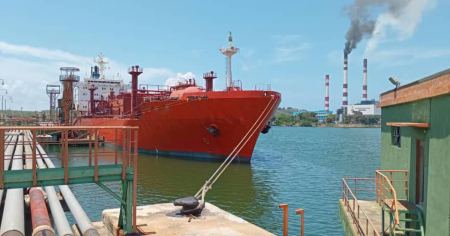
The Minister of Energy and Mines, Vicente de la O Levy, admitted this week that a gas-laden ship was anchored off the coast of Santiago de Cuba for nearly four months due to a lack of funding and the inability to make international payments, a situation that underscores the deep financial crisis affecting the Cuban regime.
According to De la O Levy, during the first 117 days of the year, Cuba had no access to gas, a situation that highlighted the serious failures in the country's logistical and financial system.
Although the government has stated that it managed to gather the necessary funds to pay for the supply, international restrictions complicated the process, and the ship carrying 1,300 tons of LPG remained docked for several months.
The shortage of gas and other essential resources has forced thousands of households to resort to cooking methods such as firewood or charcoal, which are less efficient, more polluting, and above all, much more labor-intensive.
The population faces enormous difficulties in accessing a basic necessity, another indication of the acute energy and economic crisis that Cuba is experiencing, characterized by frequent blackouts, fuel shortages, and growing public discontent.
The complaints from citizens, like that of Briana Matancera, continue to be a cry of desperation in the face of the lack of immediate solutions and the scarcity of resources to address the basic issues of daily life.
Frequently Asked Questions about the Liquefied Gas Crisis in Cuba
Why is there a shortage of liquefied gas in Cuba?
The shortage of liquefied gas in Cuba is due to financial and logistical issues that have hindered payments to international suppliers and caused delays in distribution. Furthermore, international restrictions and the lack of financing have worsened this situation, leaving many families without access to this essential resource for cooking.
How are Cubans cooking in the absence of liquefied gas?
Due to the lack of liquefied gas, many Cubans have turned to alternative methods such as charcoal and firewood for cooking. However, these methods are less efficient, more polluting, and pose risks to health and safety. The use of these resources has also raised environmental concerns due to deforestation for charcoal production.
What measures has the Cuban government taken to address the gas crisis?
The Cuban government has promised progressive solutions with the arrival of new tanker ships and a prioritized distribution in some regions. However, these measures have been insufficient to meet the high demand, and the population continues to face long lines and uncertainty regarding the regularization of liquefied gas supply.
What is the impact of the gas crisis on the daily lives of Cubans?
The liquefied gas crisis has significantly impacted the daily lives of Cubans, forcing many families to cook using alternative methods such as charcoal and firewood. This has led to an increase in the prices of these resources and has raised health and environmental concerns. Furthermore, the gas shortage is linked to broader economic and social issues in the country, including frequent blackouts and food shortages.
Filed under: