
Related videos:
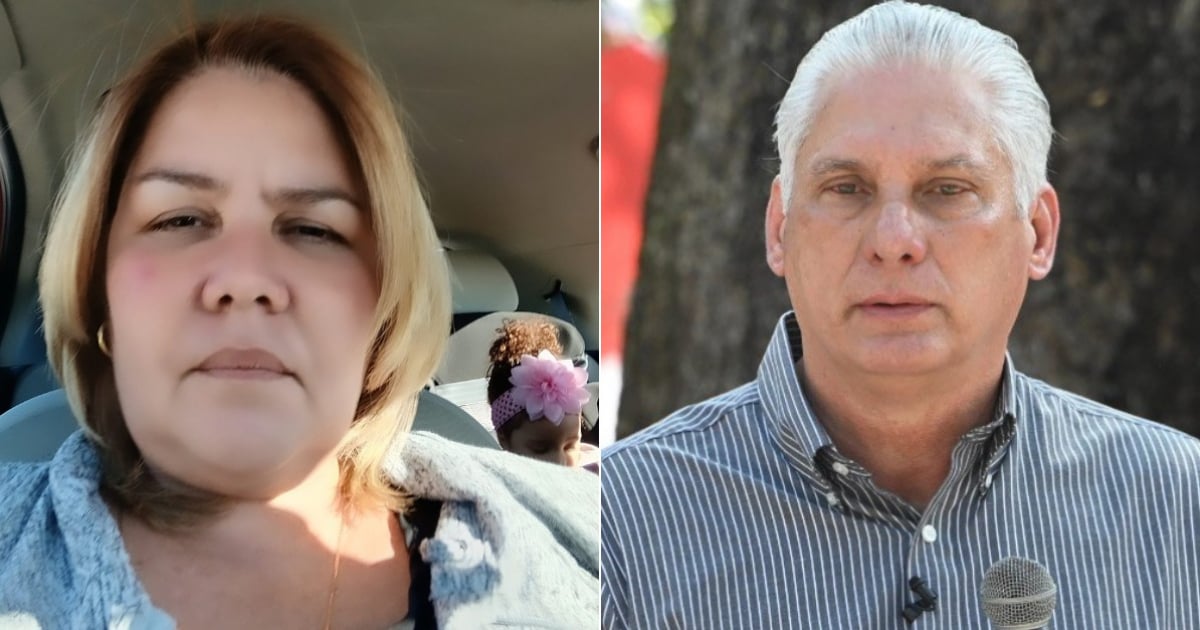
The Cuban activist Idelisa Diasniurka Salcedo Verdecia, exiled in the United States, delivered a powerful message to the leader Miguel Díaz-Canel, following his congratulations on International Children's Day, which many consider hypocritical and disconnected from the harsh reality faced by children in Cuba.
"Sir, wipe your mouth before talking about Cuban children," Salcedo wrote in a Facebook post that quickly went viral among Cubans both on and off the Island.
"What childhood, what rights? What happiness? What cynicism on your part!" he added. In his post, he also mentioned speaking on behalf of "all the mothers who cannot express their feelings from Cuba."
Salcedo's emotional outburst comes in direct response to a post on the social media platform X, where Díaz-Canel celebrated Children's Day with an optimistic message: "Where resources are lacking, let imagination prevail. The future deserves it. Long live International Children's Day."
The phrase, which aimed to inspire creativity amid scarcity, has been harshly criticized by those who remind the leader that in Cuba, children face a starkly opposite reality: chronic shortages of food, medicine, school supplies, and even snacks, along with increasing social precariousness.
Paradoxically, the government itself has recently had to acknowledge the existence of child labor and begging, phenomena that, according to the official narrative for decades, had been eradicated by the Revolution.
Instead of assuming direct responsibility, Díaz-Canel blamed families for what he described as acts of "shamelessness," thus avoiding reference to the collapse of the country's social and economic system.
Stories like that of Pablo, a 16-year-old who produces charcoal to support his family, or Cristian, a minor who cuts grass to sell, illustrate the extreme conditions many Cuban children face to survive.
Idelisa Salcedo's critique concludes with a message full of indignation and warning: "You are a being as deceitful as you are unpleasant and despicable. The end is approaching, and you know it. You will pay for all the crimes committed! You will find no forgiveness!"
In the midst of the economic and social crisis affecting the Island, voices like Salcedo's reflect the pain, helplessness, and anger of thousands of Cuban mothers who, although silenced within the country, find resonance in exile and on social media.
Filed under: