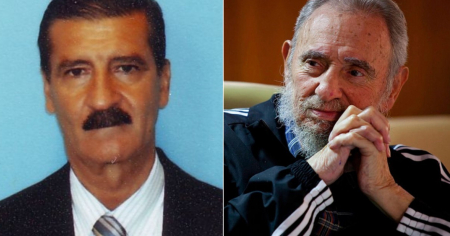
Army General Raúl Castro Ruz turns 94 this Tuesday, still clinging to his role as a symbolic leader of the Cuban regime, in a country mired in one of the worst economic crises of its recent history.
Congratulations came swiftly. Miguel Díaz-Canel, the designated successor and current president, wrote on the social media platform X (formerly Twitter), “Today marks the 95th year of life for General Raúl Castro Ruz, leader of the Revolution and an indispensable guide…”
The Communist Party and Chancellor Bruno Rodríguez also joined in the celebration, calling it an "extraordinary revolutionary" and "an example of socialist victory."
In March, during an event at the VI National Conference of the Association of Combatants of the Cuban Revolution, Castro addressed those present with a phrase that was both provocative and revealing: “I’m still young! Does anyone have any doubts?”
The gesture, broadcast by state television, was interpreted by many as a sign that, despite his formal retirement, the veteran leader still sees himself as the true guarantor of the country's political direction.
However, the official commemorations contrast with the reality faced by the island, where the population is dealing with rampant inflation, chronic shortages, insufficient wages, and a wave of emigration that already surpasses the figures recorded during the Mariel crisis or the balseros exodus.
Castro's promise in 2007 that "every Cuban would have a glass of milk" remains unfulfilled. On the contrary, today milk is an unattainable luxury for most, especially for the elderly and children.
Although he formally left the presidency in 2018 and the leadership of the Communist Party in 2021, Raúl Castro continues to wield political and symbolic influence.
His role as a "historical leader" remains active, especially at key moments when the so-called "continuity" needs legitimization.
His political heir, Miguel Díaz-Canel, has mirrored the discourse and governing style of his predecessors, maintaining absolute control over the state apparatus, intensifying repression against critical voices, and promoting cosmetic reforms that have not reversed the economic collapse.
Despite the control still exerted by Castroism, the legitimacy of the model faces increasing challenges. The protests of July 2021 marked a turning point, and the massive emigration reveals a deep loss of faith in the regime's promises.
Raúl Castro, a key figure of the so-called "state capitalism" in Cuba —a system of privileges controlled by military and business elites grouped within GAESA— appears determined to ensure the perpetuity of the model through his family networks and inner circle.
At 94 years old, Raúl Castro insists that he still has youth to offer. However, for many both inside and outside the island, his figure symbolizes the end of an era.
His legacy is characterized by a controlled transition, a failed attempt at economic opening, and the consolidation of a military oligarchy that controls a significant portion of the national economy.
Frequently Asked Questions About Raúl Castro and the Economic Situation in Cuba
What is Raúl Castro's current role in Cuban politics?
Raúl Castro continues to exert significant influence in Cuban politics despite having formally stepped down from the presidency in 2018 and the leadership of the Communist Party in 2021. His figure is viewed as a pillar of continuity and stability within the regime, especially during critical times for Cuba.
Why has Raúl Castro increased his public appearances recently?
Raúl Castro has increased his public appearances coinciding with the worsening of the economic and social crisis in Cuba. This increase aims to project an image of continuity and control at a time when the legitimacy of the Cuban regime is facing growing challenges and social discontent.
How does the current economic crisis affect the Cuban population?
The economic crisis in Cuba has led to rampant inflation, chronic shortages, and insufficient wages. The population is struggling to access basic products and essential services, which has resulted in a significant migratory exodus and increasing social discontent.
What does the figure of Raúl Castro symbolize for the Cuban regime?
Raúl Castro symbolizes the continuity of the regime and the legacy of the Cuban Revolution. Despite his formal retirement, his figure continues to be used to legitimize the current government and maintain the narrative of resistance against external and internal adversities.
What impact does Raúl Castro's leadership have on the Cuban economy?
Raúl Castro's leadership has been characterized by unfulfilled promises and an ineffective economic model, such as the promise of a "glass of milk for every Cuban" that was never fulfilled. His approach has been to consolidate a military oligarchy that controls a significant portion of the economy, without managing to reverse the economic collapse affecting the country.
Filed under: