
Related videos:
The Electric Union of Cuba (UNE) predicted for this Tuesday a deficit lower than the more than 1,500 MW recorded in recent weeks, due to the likely entry of unit 3 of the Cienfuegos thermoelectric plant, which would contribute 158 MW, coinciding with the 94th birthday of former Cuban president Raúl Castro.
According to the official notice published by the state entity, the Monday session ended with a maximum impact of 1,526 MW at 8:20 PM, during the peak demand hour.
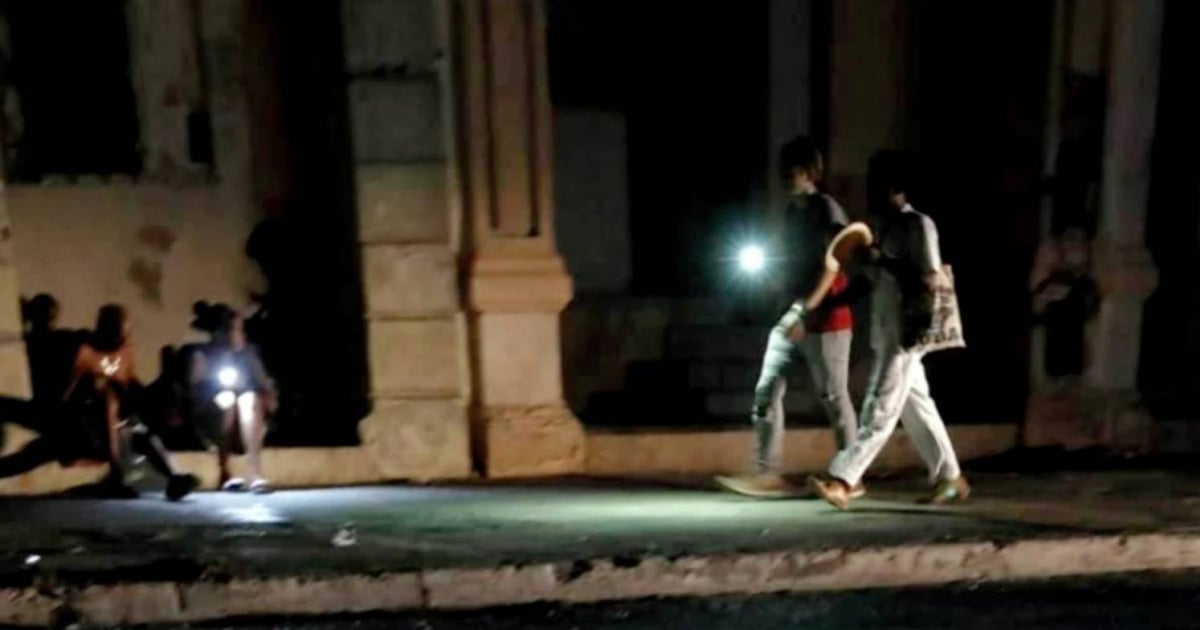
In the early morning, the blackouts continued relentlessly, and the forecasts for the rest of the day offer little relief.
At 7:00 a.m., the National Electric System (SEN) recorded a capacity of only 2,040 MW, against a demand of 2,920 MW. The result: 911 MW affected by a capacity deficit.
For the night of this Tuesday, a deficit of 1,202 MW is expected, with an impact of up to 1,272 MW if conditions remain the same. Even the 12 new solar parks that contributed 675 MWh yesterday are unable to ease the critical load.
What is going wrong? Practically everything
The UNE indicated that at this time a total of six thermoelectric generation blocks are out of service: three due to breakdowns and three for maintenance.
The SEN is experiencing malfunctions in unit 3 of the CTE Cienfuegos, unit 2 of Felton (Holguín), and unit 6 of Renté (Santiago de Cuba). Additionally, there are ongoing maintenance activities for unit 2 of Santa Cruz del Norte (Mayabeque), unit 4 of Cienfuegos, and unit 5 of Renté. Furthermore, there are 378 MW of thermal capacity out of service due to various technical limitations.
The situation worsens with the fuel problems. 44 distributed generation plants are paralyzed due to a lack of fuel (260 MW), and others are down due to a lack of oil in the engines (126 MW), totaling 386 MW out of the system for this reason.
Although the entry of unit 3 in Cienfuegos with 158 MW is expected, the relief is minimal against an estimated demand of 3,400 MW for the nighttime peak. The reality is clear: the system is overwhelmed, and power outages will continue to be a daily reality for millions of Cubans.
The Electric Company of Havana also published on its Facebook profile the four-hour outage schedule for the five blocks into which the capital of the country is divided.
He specified that "if the conditions of the SEN so require, the electric service will be affected after midnight, when the blocks will be rotated in the same order as they were during the day. It will start with those circuits that have NOT been affected during the scheduled hours. In this case, the duration of the outage would be up to one hour on average."
On Sunday, a malfunction at the Energas plant took that facility in Boca de Jaruco (Mayabeque) offline and increased power outages across the nation, including Havana, where demonstrations with pots and pans were reported in areas of Vedado, Playa, and Alamar.
The situation is so unstable that the authorities of the province of Camagüey warned that it is not possible to guarantee a fixed blackout schedule, although "the aim is to adhere to a rotation of nine hours of outages for three hours with electricity."
The Cuban regime admitted last Thursday that it is facing issues with petroleum supply from Venezuela, one of the island's main oil suppliers. President Miguel Díaz-Canel has blamed the current energy crisis on what he refers to as a "financial and energy persecution" by the United States.
According to Energy Minister Vicente de la O Levy, several reasons lie behind the prolonged blackouts that are troubling the Cuban population. One of them is that, in the first five months of this year, Cuba spent 2.5 months receiving "zero diesel" and zero liquefied gas, and 1.4 months without fuel.
Due to the lack of gas, users who cannot afford 10,000 pesos for a gas cylinder are cooking with electricity, and this, according to the regime, is the reason for the surge in electricity demand in a country that has lost two million inhabitants.
Authorities also acknowledge other factors, such as the 14 state agencies that are not meeting their consumption plans and, above all, the province of Havana, which exceeds its limits. In this case, they attribute the high consumption to the private sector in the capital, as the other provinces "are making adjustments."
Frequently Asked Questions about the Energy Crisis in Cuba
Why is Cuba facing constant blackouts?
Cuba faces constant blackouts due to a deficit in electricity generation that fails to meet the country's demand. The situation is exacerbated by multiple breakdowns and maintenance issues at the thermal power plants, as well as a lack of fuel that restricts the operation of distributed generation plants.
What measures has the Cuban government taken to address the electricity crisis?
The Cuban government has attempted to alleviate the electrical crisis through the scheduling of rotating blackouts and the incorporation of new photovoltaic solar parks. However, these measures have not been sufficient to stabilize the power supply, and the population continues to face prolonged blackouts.
What is the impact of power outages on the daily lives of Cubans?
Power outages severely impact the quality of life for Cubans, affecting essential activities such as cooking, using appliances, and food preservation. Furthermore, the uncertainty surrounding the duration of this crisis generates frustration and social discontent.
How does the lack of fuel affect the energy crisis in Cuba?
The lack of fuel is one of the main causes of blackouts in Cuba. Many distributed generation plants are out of service due to the fuel shortage, which further limits generation capacity and exacerbates the electricity deficit.
Filed under: