
Related videos:
Amid a wave of student discontent that has led to an academic strike called by students from the University of Havana, which has spread to several provinces, the Cuban government and the Communist Party of Cuba (PCC) issued a call on Wednesday to "close ranks" against what they consider a new "destabilizing maneuver" promoted by "enemies of the system."
In an official statement, the Secretary of Organization of the PCC, Roberto Morales Ojeda, asserted that “there are not few media manipulations nor opportunistic distortions” that aim to “sow chaos, promote violence, and fracture the peace of our Homeland.”
"The media war is not a game; it is a weapon of destabilization aimed not only at our political system but also at the true urgencies of our people," he warned in a message published on Facebook, where, as is common in the Cuban regime, he attempted to delegitimize the student protest.
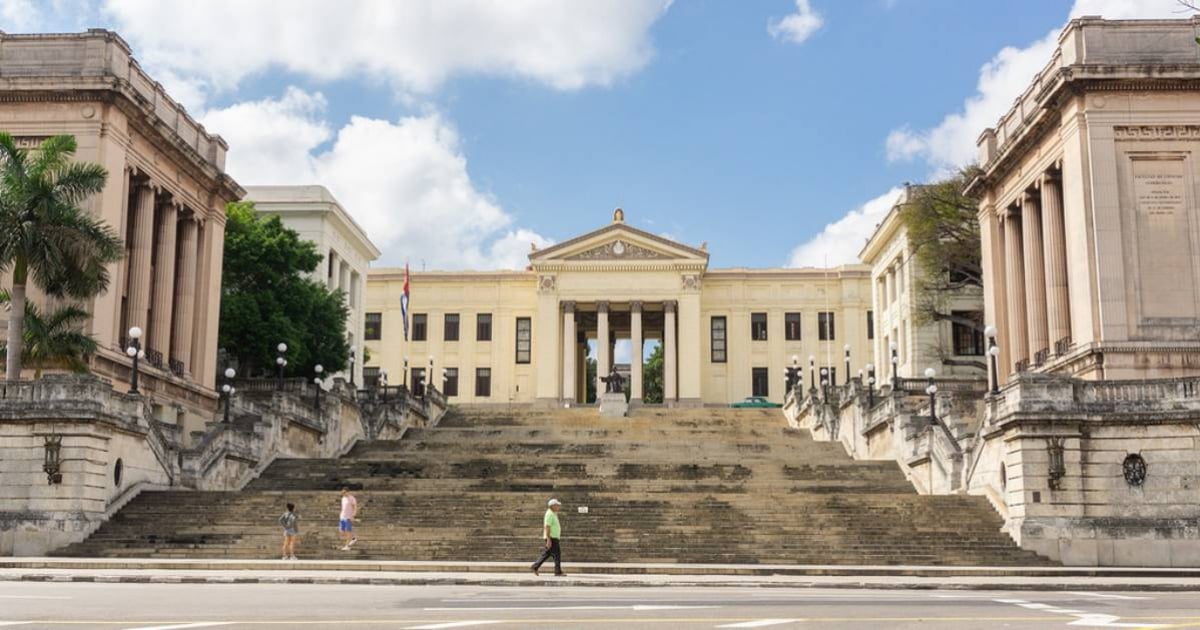
The call comes in response to a strike action for an indefinite university strike, initiated by students from the Faculty of Mathematics and Computer Science, which has been joined by other faculties such as Philosophy, History, Sociology, Social Work, and the University of Las Villas.
The protest is triggered by the recent restrictions imposed by ETECSA, which limit access to the internet in national currency while favoring offers in foreign currency.
The leadership of the University Student Federation (FEU) and the Young Communist League (UJC) also intensified their rhetoric against the protesters, as the regime typically does in times of crisis.
In a statement, the FEU rejected the strike and denounced that independent media and "puppets of opinion" are promoting hatred and division. However, following this announcement, the discontented students demanded the resignation of the president of that organization that should represent them.
Although ETECSA attempted to alleviate the crisis with an additional package of 6 GB for 360 CUP and free access to over 40 educational sites, students find the measure insufficient and demand equitable access to the internet for the entire population, not just for university students.
The conflict has highlighted a generational and ideological rift within the Cuban educational system.
While the authorities insist on rhetoric of external confrontation, students are calling for horizontal dialogue, social justice, and participation without oversight.
Analysts believe that this episode marks a turning point in the relationship between Cuban youth and the traditional power structures on the island.
The academic José Raúl Gallego recently remarked, “I hope the university regains the place it once held in the history of Cuba.”
Meanwhile, the university strike continues to gain support and raise the tone of a protest that, for the first time in decades, openly challenges the authority of the FEU and the institutional control over academic life on the island.
Frequently asked questions about the student strike in Cuba and ETECSA's measures
What motivated the student strike at the University of Havana?
The student strike at the University of Havana was prompted by the recent restrictions imposed by ETECSA, which limit access to the internet in the national currency and favor offers in foreign currencies. This measure has generated discontent among students, who believe it negatively impacts their academic and professional development, and they have demanded equitable access to the internet for the entire Cuban population.
What has been the Cuban government's response to the student protest?
The Cuban government, through the Communist Party of Cuba (PCC), has labeled the student protest as a "destabilizing maneuver" promoted by "enemies of the system." Authorities have called to "close ranks" and maintain institutional stability, insisting that the protest is manipulated by external actors with destabilizing intentions.
What measures has ETECSA taken in response to the students' criticisms?
ETECSA has tried to ease discontent by expanding the data offerings for university students, allowing them to purchase a second package of 6 GB for an additional 360 CUP, bringing the total to 12 GB per month for 720 CUP. Additionally, it has granted free access to over 40 educational websites. However, these measures have not reversed the restrictions on the monthly 360 CUP recharges in national currency.
How has the University Student Federation (FEU) reacted to the situation?
The FEU initially took a critical stance, rejecting ETECSA's rate hike and demanding equal access to the internet. However, after a meeting with ETECSA and other government entities, the FEU issued a more conciliatory statement, praising the "spaces for dialogue" and criticizing the "manipulation" of protests by "enemies of the Revolution," which has led to criticism and distrust among students.
Filed under: