
Related videos:
The Cuban singer and songwriter Haydée Milanés stated that her father, the iconic singer-songwriter Pablo Milanés, would be deeply affected by the current situation in Cuba, which she described as "chaotic," with "absolute misery," hunger, blackouts, repression, and "a great desperation from the majority of Cubans."
“My father would be horrified and very saddened,” the artist stated in remarks to the EFE agency from Madrid, the city that has welcomed her in exile. “Things are getting worse and worse,” she lamented.
In the interview, held on the occasion of the presentation of the documentary miniseries "Son para despertar a una negrita," which pays tribute to the figure of the troubadour, Haydée recalled that her father took a critical and confrontational stance against the Cuban regime since the 1990s.
He said it was a failed system, she emphasized, adding that Pablo, regarded as one of the founders of the Nueva Trova Cubana, was deeply pained that the very government imprisoned the same Cubans who had supported the revolutionary project for decades.
It seemed unbelievable to her that the government would oppress Cubans who have been so noble and have given everything for a revolution and a project that has failed,” she denounced.
Regarding her departure from the country, Haydée made it clear that exile was a decision imposed by circumstances.
"Nobody wants to leave their homeland; it’s something very difficult and traumatic," he stated, and in the case of his father, he explained, "it was for a medical reason," adding firmly that "he would have never left Cuba, despite his critical stance."
She herself faced the consequences of speaking her mind: “I said many things that were happening, I stood by repressed people and just causes,” she recalled.
As a result, his career was “completely strangled” until he eventually left the country.
“[He/She] was always someone who spoke their mind, a rebellious person, and that is punished in Cuba,” [he/she] stated in reference to Pablo Milanés, but also about [his/her] own experience.
Despite the pain and concern she feels for what is happening on the island, Haydée keeps alive the hope that the Cuban people will move past what she describes as “one of their darkest moments” and will soon witness “a true flourishing.”
The miniseries "Son para despertar a una negrita," directed by Alejandro Gutiérrez Morales, premiered at the Casa de América in Madrid and was originally conceived as 14 episodes, although due to budget limitations, only seven could be produced.
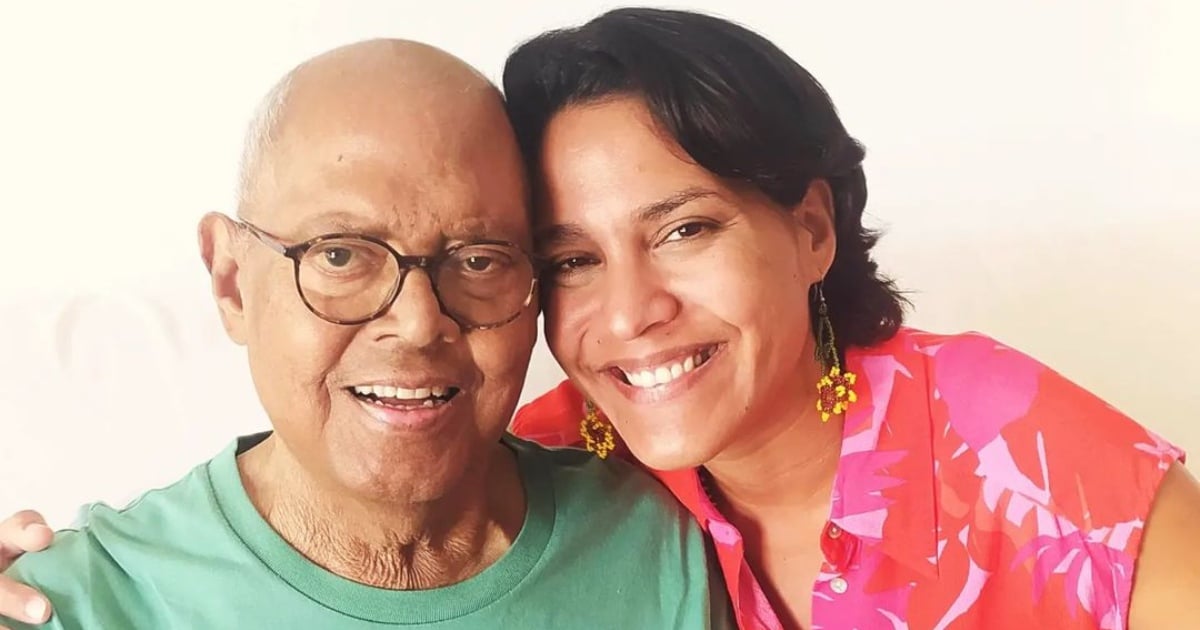
The series aims to portray the more intimate side of Pablo—his role as a father, a poet, and a Cuban—beyond the public figure and the artist admired by thousands.
"I had the desire to share, express, and document who my father was beyond the public figure, the singer admired by thousands and thousands of people, how he was at home with me," she explained.
When asked what her father would think of the project, she replied that he would surely have liked it, though she believes he would have been surprised to confirm "all the love" she felt for him and the influence he had on her life.
From all of Pablo Milanés' repertoire, Haydée chose the song "Amor," dedicated to her mother, Zoe Álvarez, as the one that is most intimate for her: “It reflects an intense relationship, with moments of happiness as well as pain. That song resonates with me a lot,” she concluded.
As a show of support for the Cuban citizenry, Cuban singer expressed her support for the university strike this Wednesday, as a demonstration of rejection against the price increase imposed by the Telecommunications Company of Cuba (ETECSA).
Frequently asked questions about the situation in Cuba and the legacy of Pablo Milanés
How did Haydée Milanés describe the current situation in Cuba?
Haydée Milanés described the current situation in Cuba as "chaotic," with "absolute misery," hunger, blackouts, repression, and a great sense of despair among the majority of Cubans. She expressed that her father, Pablo Milanés, would be horrified and deeply saddened if he saw how things are now on the island.
What was Pablo Milanés' stance on the Cuban regime before his passing?
Pablo Milanés, recognized for his contribution to the Cuban Nueva Trova, took a critical and direct stance against the Cuban regime since the 1990s. He believed it was a failed system and was deeply pained by the imprisonment of Cubans who had supported the revolutionary project. Milanés passed away with the sorrow of having sung for a project that, in his view, turned out to be a deception.
Why did Haydée Milanés decide to go into exile from Cuba?
Haydée Milanés decided to exile herself from Cuba due to the repression and censorship she faced for expressing her critical views on the regime. Her career was stifled, and she encountered numerous restrictions in the official media, which led her to make the difficult decision to leave her homeland in order to continue her career and speak freely.
How do independent media contribute to the situation in Cuba according to Haydée Milanés?
Haydée Milanés has expressed her support for independent media for their essential role in countering censorship in Cuba. These media outlets have allowed her art and that of her father to continue reaching their audience despite the restrictions imposed by the regime. Milanés has emphasized the importance of these platforms in highlighting the Cuban reality beyond the official narrative.
Filed under: