
Related videos:
The youth unrest that erupted in Cuba following the increase in mobile rates imposed by the state-owned ETECSA has reached the international press, where students have stated that the strike was necessary.
In an unprecedented expression of civic protest, university students declared to the international press their strong rejection of what they have termed an “unjustified rate hike” and announced an academic strike as a sign of peaceful resistance.
“An interruption is necessary,” several of them said in statements to AFP and Reuters, after the new mobile browsing conditions, in effect since May 30, drastically reduced internet access and partially dollarized the service.
The measures have been justified by the government as an economic necessity, but the youth see them as an additional punishment in a country where the average salary is around 20 dollars per month.
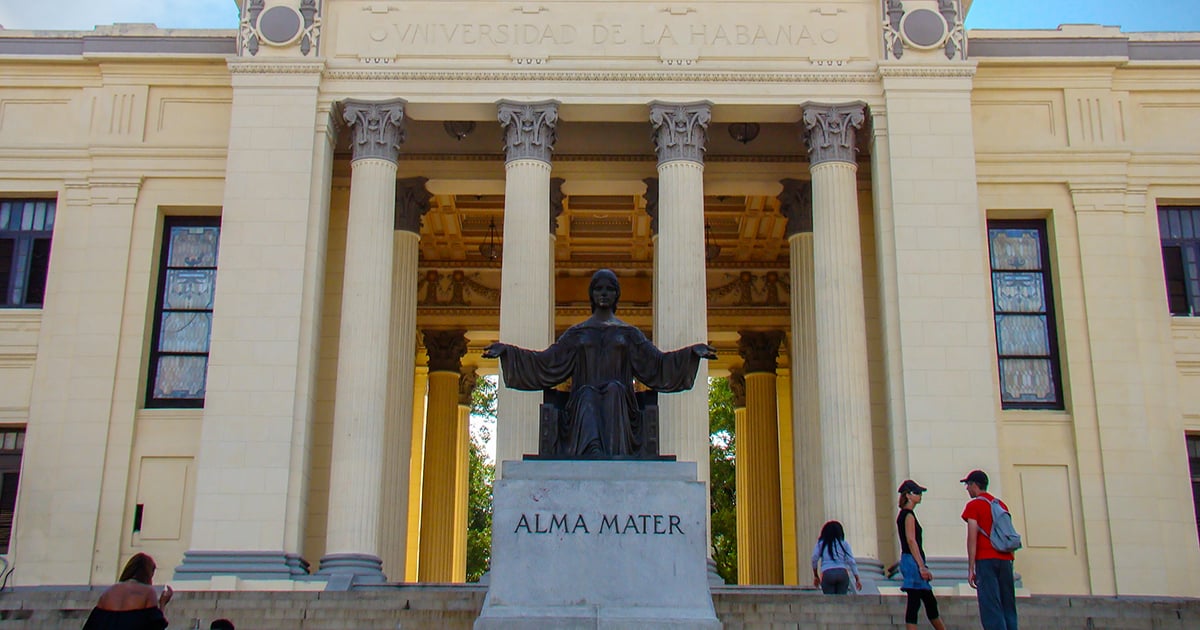
Rafael Gómez, an 18-year-old student, voiced his frustration with the University of Havana: “This decision does not benefit any of us. Before, we could recharge prepaid balances; now we are limited to a basic package that isn’t enough for anything. If you need more data, it costs more than a month's salary,” he noted.
ETECSA set the subsidized monthly package at 6 GB for 360 pesos (approximately 2 dollars), but any additional consumption skyrockets to over 3,000 pesos, an amount unattainable for many.
Despite a minor concession from ETECSA, which offered university students two monthly top-ups in national currency, several student groups consider the response inadequate.
The FEU of the Faculty of Mathematics and Computer Science called for a strike starting Wednesday, June 4, and demanded that the University recognize the protest as legitimate.
Facultades como Filosofía, Sociología y Artes y Letras también se sumaron, mientras profesores del Departamento de Sociología respaldaron públicamente a los estudiantes alegando que “Tienen reclamos justos”.
The administration of the University of Havana rejected the strike and warned that "it will not allow interruptions in its teaching processes," while also reaffirming its unconditional support for the Communist Party of Cuba (PCC).
José Almeida, national president of the FEU, acknowledged that while he does not support the strike, he respects the students who defend it. "There will never be a confrontation among students," he assured.
According to Reuters, although class attendance on Wednesday was partially normal, the atmosphere on campus remains tense and new actions cannot be ruled out.
Haydee Fernández, 28, said, "You can't study without access to updated information. If classes need to be suspended, then they should be suspended until there is a logical response."
In a Cuba battered by inflation, the collapse of services, and a youth exodus, this student protest represents a new chapter of social discontent that neither the government nor ETECSA can continue to ignore.
Frequently Asked Questions about Student Protests in Cuba Regarding ETECSA's Rate Increase
Why are Cuban students protesting against ETECSA?
Cuban students are protesting against ETECSA due to the new mobile data rates that they deem unfair and which limit access to the internet, a fundamental resource for their education. The rates imposed by ETECSA restrict recharges to 360 CUP per month, providing only 6 GB, with exorbitant additional costs for more data, which is unattainable for many in the country. Furthermore, this situation occurs within the context of an economic crisis in Cuba, where the average salary does not meet these basic needs.
What has been the response of the universities and the FEU to the protests?
The response from the universities has been mixed. The University of Havana has rejected the strike and reaffirmed its loyalty to the Communist Party of Cuba, while the FEU from several faculties has supported the protests and demanded changes in ETECSA's rates. Some departments and faculties have expressed their solidarity with the students, while the university administration has maintained an official stance.
What solutions has ETECSA proposed to calm the student protests?
ETECSA has attempted to quell the protests by offering a second data package of 6 GB for an additional 360 CUP, reaching a total of 12 GB per month. They have also made over 40 educational sites accessible so that students can access them without consuming their mobile data. However, these measures have not eliminated the limit of 360 CUP per month for national top-ups, which continues to be widely criticized.
How have other entities and society reacted to the rate hike and the protests?
In addition to universities, other entities such as the Asociación Hermanos Saíz have expressed their concern about the impact of the rates on internet access. The society has shown widespread rejection of the rate increase, viewing it as a form of digital exclusion that affects the most vulnerable sectors. Protests have garnered international attention, highlighting the tension between the needs of young Cubans and government policies.
Filed under: