
Related videos:
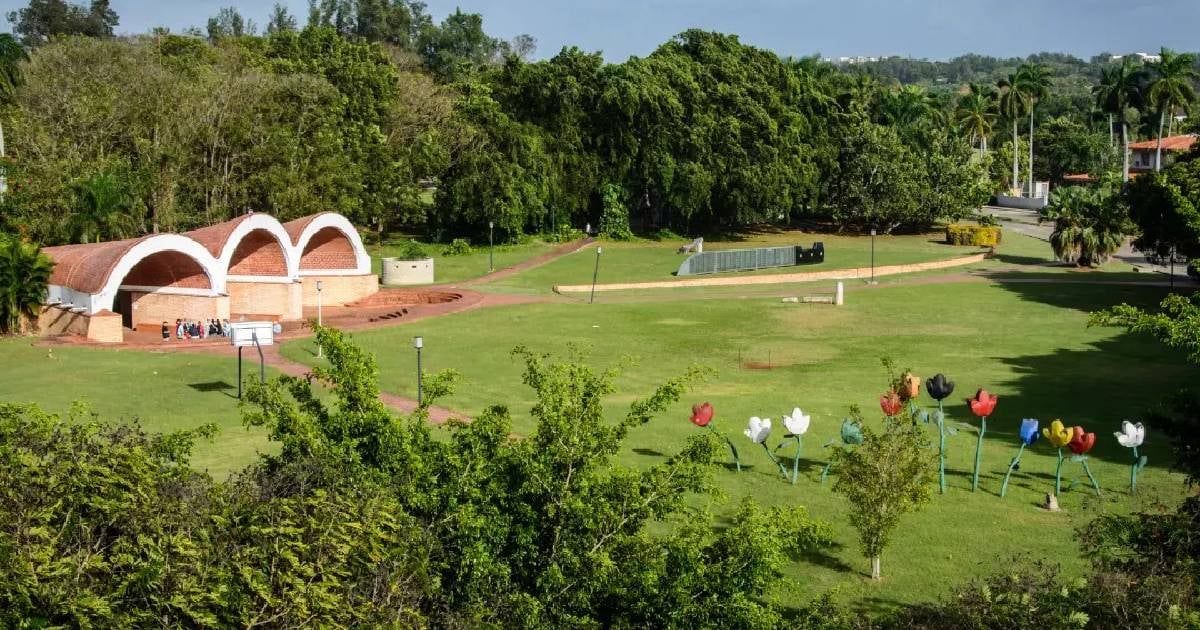
A group of graduates from the Instituto Superior de Arte (ISA) in Cuba expressed their strong and public support for the university students leading protests and strikes on the island, in response to the price increase imposed by the Telecommunications Company (ETECSA) and in defense of the people's rights.
In an open letter shared this Wednesday on Facebook, the graduates expressed that they felt deeply moved by the civic commitment of the students, whom they described as a new rebellious and conscious generation, a worthy heir to those in the past who also raised their voices “in the service of social justice, freedom of thought, and citizen dignity.”
"We know that raising our voices in the current context is not easy. It requires courage, conviction, and a deep love for Cuba, for Cubans, and for justice," the text states, affirming that the acts of resistance emerging within Cuban universities demonstrate that these institutions not only educate professionals but also foster critical awareness, civic responsibility, and a genuine commitment to the nation.
The graduates, including the director and photographer who published the post, not only expressed their support but also their explicit desire to become actively involved: “We want to be part of it. We want to accompany you. Where and how can we be more useful?”, they ask, in a direct call for coordination and solidarity both within and outside of Cuba.
The letter concludes with a powerful statement: “Know that you are not alone. Both inside and outside the country, we stand with you. We beat in rhythm with your steps and dream alongside you of a more just, freer, and more dignified Cuba.”
This gesture of artistic and generational solidarity adds to a wave of statements both inside and outside of Cuba against the new internet rates imposed by ETECSA, which have been widely rejected by academics, teachers, students, artists, and ordinary citizens as an exclusionary and profoundly unfair measure in the midst of the severe crisis the island is experiencing.
Other statements
The faculty of the Department of Sociology and Social Work at the University of Havana (UH) also publicly expressed its discontent with the new imposed fees in a statement that represents one of the strongest positions from a Cuban academic institution against recent state decisions.
In the statement published on Facebook, the educators expressed that the measure was taken without prior public consultation, which they consider a lack of institutional sensitivity regarding the serious economic crisis facing the country.
They warned that the rise in prices not only affects students and workers but also exacerbates the inequality between urban and rural areas, where internet access was already limited and uneven.
The faculty warned about the negative consequences of these measures for academic life, research, teaching, and communication with more vulnerable communities.
In addition, they pointed out that the new pricing policy does not reflect the will or well-being of the Cuban people, but rather responds to a logic that is foreign to the social commitment that should govern public institutions.
The statement also strengthens the call for citizen participation and critique from academic spaces, in defense of the right to fair, accessible connectivity that aligns with the social realities of the country.
The growing wave of opposition to ETECSA's price hike has escalated to a new level of confrontation within the student movement itself.
On June 3rd, the Faculty of Philosophy, History, Sociology, and Social Work (FEU-FHS) of the University of Havana issued an unprecedented statement in which it demanded the immediate resignation of the national president of the University Student Federation (FEU), Ricardo Rodríguez González, citing his failure to represent the interests of the student body during the current crisis.
Students also reported the lack of clear responses from the company executives following a meeting with university authorities, and demanded the complete revocation of the measures or, at the very least, the removal of the 360 CUP monthly recharge limit.
Despite the stance of various faculties, UH issued an official statement in which it asserted that it will not allow interruptions in its teaching processes, clearly referring to the academic strike called by students from the Faculty of Mathematics and Computer Science, and reaffirmed its unconditional support for the Communist Party of Cuba (PCC).
"Nothing and no one will interrupt our teaching processes with calls that are completely disconnected from the spirit that has inspired exchanges with student and youth organizations. The University of Havana does not yield in its revolutionary essence and its mission to accompany the Communist Party of Cuba and the Government," says the statement.
The conflict has gone beyond the realms of access to technology and has turned into an open dispute over youth representation in Cuba.
In a country where youth has historically been instrumentalized as a pillar of political legitimacy, the questioning of the leadership of the FEU presents an unprecedented challenge.
For the first time in years, students from an emblematic faculty like Humanities are publicly demanding the resignation of their top representative, who is now also a member of the State Council led by Miguel Díaz-Canel.
While other faculties continue to join the opposition to the price hike and critical voices are growing both inside and outside the University of Havana, the national leadership of the FEU is facing an unprecedented crisis of authority and trust.
The future of this confrontation remains uncertain, but one thing has become clear: the new generation of students is ready to defend their rights and their voice, even if that means questioning those who, until now, spoke on their behalf with words dictated by the power of the totalitarian regime.
Frequently Asked Questions about the Student Protests in Cuba Against ETECSA's Price Hike
Why are university students in Cuba protesting against ETECSA?
University students in Cuba are protesting against ETECSA due to the new imposed tariffs, which limit internet access and are seen as exclusionary and unjust. The measure has been widely rejected because it affects access to information, education, and communication, fundamental rights for the academic and professional development of students on the island.
What impact do the new ETECSA rates have on the Cuban population?
The new rates from ETECSA negatively impact the Cuban population by hindering access to the internet, deepening the inequality between urban and rural areas and limiting access to information and communication. These measures are perceived as a form of social control and economic repression, particularly affecting students, professionals, and vulnerable sectors that rely on connectivity for their daily activities.
How have Cuban universities responded to the protests against ETECSA's price hike?
Cuban universities have shown significant support for the protests against ETECSA's price hike. Several faculties, including those of Philosophy, History, Sociology, and Social Work, have issued statements rejecting the rates and demanding fairer measures. Some universities have even called for academic strikes in solidarity with the student movement, emphasizing the need for transparent dialogue and inclusive solutions.
What has been the response of the Cuban government and ETECSA to the student protests?
The Cuban government and ETECSA have attempted to justify the increase in fees as necessary to sustain technological infrastructure. However, they have not provided concrete solutions to student demands. ETECSA has promised to work on more suitable connectivity schemes for students, but without offering specific details or timelines, which has been perceived as inadequate by the protesters.
Filed under: