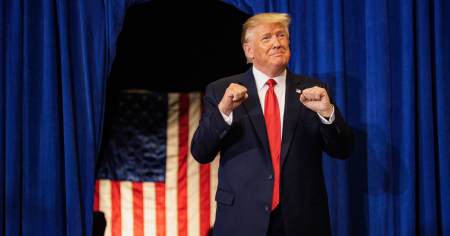
The recent executive order by President Donald Trump that restricts travel for Cuban citizens to the United States has reignited the anguish of thousands of families waiting to be reunited with their loved ones.
Among the most affected are the Cubans who are in family reunification processes, especially those whose cases have been submitted by legal permanent residents in the U.S., a group that is now virtually blocked by the new measure.
The measure, announced on June 4 and coming into effect next Monday, June 9, 2025, suspends the issuance of immigrant visas for Cuban and Venezuelan citizens, with only a few exceptions.
According to immigration lawyer Armando Olmedo, consulted by Univision, this means that “a person seeking an immigrant visa will not receive it if they are a citizen or national of Cuba”.
What changes with this measure?
The presidential proclamation suspends the issuance of new visas to Cuban citizens in categories B1 (business), B2 (tourism), F (students), M (technical studies), and J (cultural exchange). The measure was justified for national security reasons and due to the lack of cooperation from the Cuban government in consular matters and deportations.
Furthermore, it is noted that Cuba was included as a sanctioned country for being considered a “state sponsor of terrorism”, and for having high rates of illegal residency in the U.S., particularly with tourist visas (7.69%) and student or exchange visas (up to 18.75%).
The testimony of a Cuban mother and the analysis of the experts
A case that illustrates this reality is that of Milena Gómez, a Cuban resident in the U.S. whose husband began the process to bring their four-year-old daughter from Cuba.
“My husband filed a complaint a year and a half ago regarding our daughter, whom we expected to be with us next year, and now this changes everything. We don’t know what’s going to happen,” Milena told the news program Noticias 23.
On the other hand, according to the explanation given by immigration lawyer Willy Allen in an interview with journalist Daniel Benítez, although they have not been formally canceled, the family claims of permanent residents remain in a legal gray area that, in practice, can result in indefinite suspensions or delays.
These categories are not included in the clear exceptions that do benefit immediate relatives of U.S. citizens (IR1, IR2, IR5), leaving thousands of people with their cases frozen or awaiting consular interpretation.
Allen warns that, although the administrative process may continue, "the moment of the consular interview and visa stamping will become much more difficult and slower", especially since, for months now, cases have already been denied based on previous employment ties with the Cuban government or political affiliations, even without clear evidence.
The proclamation by Trump also affects the historic agreement between the U.S. and Cuba to issue at least 20,000 annual visas to Cubans. With these new restrictions, that number, which has already been difficult to meet in recent years, becomes even more unattainable, creating uncertainty for those who have been patiently waiting for a response for years.
The lawyer Olmedo warns that it remains to be seen how this policy will be implemented in practice, as different agencies, such as the Department of State and the Department of Homeland Security, must coordinate its execution.
In line with these warnings, attorney Allen, who although remains optimistic that "family claims can still be made", acknowledges that an official interpretation from the State Department will need to be awaited.
Meanwhile, consulates like the one in Havana could interpret the regulation more restrictively, denying or postponing interviews, especially for the relatives of permanent residents.
What do the authorities say?
However, the spokesperson for the State Department for South Florida, Natalia Molano, confirmed to the media Martí Noticias that the proclamation will be implemented “to the letter” and warned that entry into the United States “is never 100% guaranteed”, even with a valid visa. Regarding humanitarian cases, she clarified that the proclamation does not include any explicit exceptions.
It was also confirmed that permanent residents with a Cuban passport will be able to return to the U.S., although they may face more rigorous questioning from border agents.
Filed under: