
Related videos:
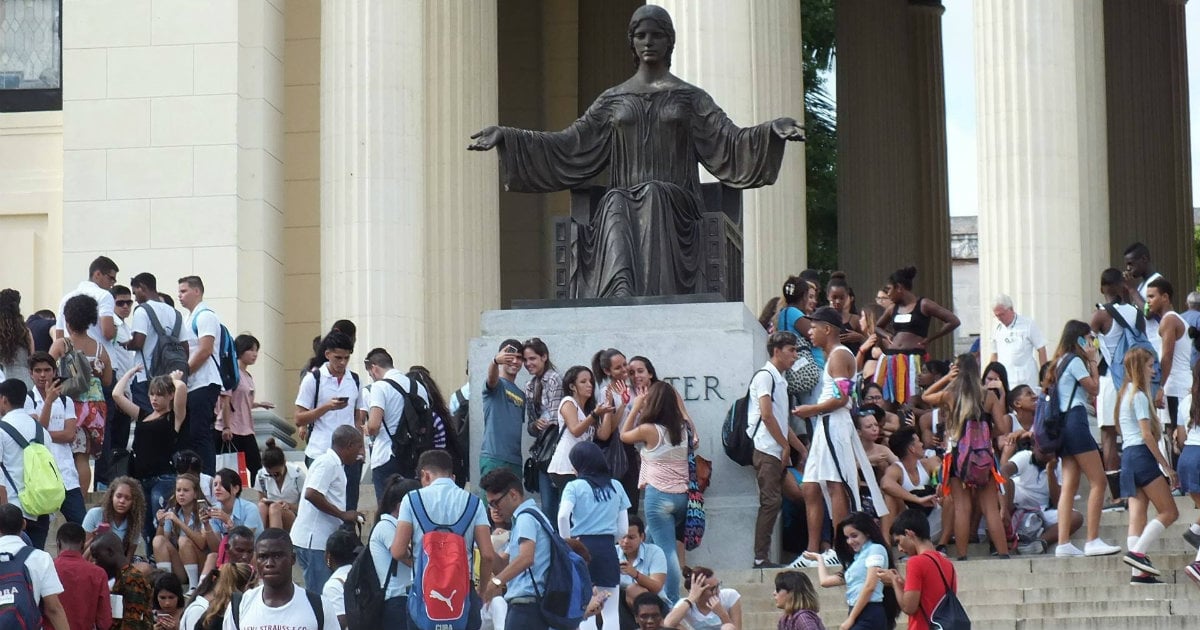
More than a hundred Cuban academics, artists, journalists, and intellectuals, both on and off the Island, have publicly issued a letter of support for university students who have recently led protests and called for an academic strike in response to the increase in fees by ETECSA, the Cuban telecommunications monopoly.
The widely criticized measure requires payment in U.S. dollars for basic Internet access services, effectively leaving thousands of people without access to foreign currency cut off from communication.
The text of the letter was sent to CiberCuba by its promoters, who claim that the young protesters have begun to be victims of threats and reprisals from the government.
Among the signatories are prominent figures from the academic, cultural, and media fields in Cuba and other countries, including professors from universities such as Harvard, Stanford, CUNY, FIU, and El Colegio de México.
Also, teachers and journalists who have been victims of repression by the Cuban regime, as well as activists and artists such as Tania Bruguera, Cirenaica Moreira, Geandy Pavón, and Juan Carlos Alom.
"Cuba is experiencing a catastrophic situation after 66 years of government repression, extortion, and exile," the letter states.
"It is not just about a sudden increase in communication rates or costs, but rather the burden of paying for a national public service being shifted to an exile community that also provides the essentials for meeting the basic needs of medicine and food for many residents on the island," he adds.
The authors denounce not only the "disproportionate" increase in rates but also the regime's strategy to criminalize and silence any expression of dissent.
"The Cuban student body [...] has raised its voice against the abuses, even calling for a nationwide university strike. This has made it a target of the regime's repressive machinery," the text states, recalling the protests of July 11 and anticipating a "similar persecution" against today’s youth.
The signatories call on the international community, both academic and non-academic, to speak out in defense of Cuban university students and to reject governmental repression.
Below, CiberCuba reproduces the full text of the document and the names of the signatories.
Cuba is experiencing a catastrophic situation after 66 years of governmental repression, extortion, and exile. Today, once again, instead of alleviating the desperate situation of the Cuban people, who lack the most basic rights and services, the regime on the island has disproportionately increased the phone rates controlled by the state monopoly Etecsa, which will now have to be paid in U.S. dollars. This is not just an increase in communication costs, but a shift in the payment of a national public service to an exile community that also provides essential support for basic needs such as medicine and food for many residents on the island. Furthermore, this measure will leave those without a relative abroad who can pay the new rates cut off from communication.
For the first time in decades, Cuban students, honoring old republican traditions of participation in political and social affairs, have raised their voices against repression, even calling for a national university strike. This has turned them into a target for the regime's repressive machinery, which has already initiated an information manipulation campaign, leading to concerns that a wave of persecution similar to that used against the protests of July 2021 will be unleashed against them, for which hundreds of people are still imprisoned.
The signatories of this letter, academics and intellectuals from around the world, wish to express our support and solidarity with the students on the island, and to call on the international community to defend the students and professors from the reprisals they are facing for voicing their demands.
Signatures:
Achy Obejas, writer
Adrián Morales Rodríguez, musician and visual artist
Ahmel Echevarría Peré, writer and critic of art and literature
Alejandro Alonso, Brooklyn College
Alejandro de la Fuente, Harvard University
Alejandro González Acosta, National Autonomous University of Mexico
Alexis Romay, writer
Alfredo Triff, University of Miami
Alina Bárbara López, historian and activist
Alicia Llarena, University of Las Palmas de Gran Canaria
Anabel López-García, New York University
Anamely Ramos González, University of Illinois (UIC)
Anastasia Valecce, Spelman College
Anke Birkenmaier, Indiana University, Bloomington
Ana Belén Martín Sevillano, University of Montreal
Aníbal Pérez López, writer and journalist
Ariel Arjona Hernandez, University of Minnesota
Ariel Ruiz Urquiola, University of Bern
Armando Chaguaceda, political scientist
Arsenio Rodríguez Quintana, writer
Boris González Arenas, journalist
Caridad Brioso, engineer
Carlos A. Aguilera, writer
Carlos Manuel Álvarez, journalist
Carla Gloria Colomé, journalist
Caterina Camastra, National Autonomous University of Mexico–Morelia
Cecilia Borroto López, University of Houston
Cirenaica Moreira, artist
Ciro Quintana, artist
Claudia González Marrero, historian
Coco Fusco, The Cooper Union for the Advancement of Science and Art
Consuelo Martínez-Reyes, Macquarie University
Daniel Cruces, writer
Dairen Zamora, University of Florida
Damaris Puñales, Case Western Reserve University
Daylet Domínguez, University of California, Berkeley
Dean Luis Reyes, film critic and educator
Dennys Matos, curator and essayist
Desiree Diaz, Swarthmore College
Diley Hernández, Georgia Institute of Technology
Dunielys Díaz, University of Concepción
Eduardo López-Collazo, UNIE University and AC Latin American
Elaine Acosta González, Florida International University
Elaine Díaz, journalist
Elena González, Federal University of Rio de Janeiro
Elena Martínez, Baruch College, CUNY
Elena Valdez, Christopher Newport University
Elzbieta Sklodowska, Washington University
Enrico Mario Santí, essayist and writer
Enrique Del Risco, New York University
Ernesto Menéndez-Conde, Hunter College, CUNY
Esther María Hernández Arocha, Claremont McKenna College
Evelyn Sosa, photographer
Eyda Merediz, University of Maryland
Francisco García González, writer
Geandy Pavón, artist
Gerardo Fernández Fe, writer
Gleyvis Coro Montanet, Antonio de Nebrija University
Guillermina de Ferrari, University of Wisconsin–Madison
Haroldo Dilla, Arturo Prat University
Hugo García González, Western Washington University
Hugo Pezzini, writer
Idalia Morejón Arnaiz, University of São Paulo
Indira Pupo, editor
Ivette Falcón, Belen Jesuit Preparatory School
Ivette Leyva, journalist
Jacobo Machover, Avignon University
Jeannine Diego, Virginia Commonwealth University
Jenny Victoria Pantoja Torres, anthropologist
Jorge Brioso, Carleton College
Jorge Ferrer, writer
Jorge Fernández Era, writer
Jorge Salcedo Maspons, writer
José del Valle, The Graduate Center, CUNY
José Jasán Nieves, journalist
José María Herrera, writer
José Raúl Gallego Ramos, journalist
José Ramón Ruisánchez, University of Houston
Juan Carlos Alom, photographer
Juan Carlos Quintero Herencia, University of Maryland
Juan Miguel Pozo, artist
Julio Llopiz-Casal, artist
Justo Planas, Le Moyne College
Katie Coldiron, Florida International University
Kelly Martínez-Grandall, writer
Kenya C. Dworkin, Carnegie Mellon University
Lázaro González, University of California, Berkeley
Legna Rodríguez Iglesias, writer
Leonardo M. Fernández Otaño, University of Alcalá, Academic Freedom Observatory
Leticia Sánchez, artist
Lisa Surwillo, Stanford University
Lizabel Monica, writer
Lleny Díaz, writer
Lourdes Davila, New York University
Luis Felipe Rojas, journalist
Mabel Cuesta, University of Houston
Maite Hernández-Lorenzo, University of Miami
Manuel Barcia, University of Bath
María A. Cabrera Arús, New York University
María Caridad Cumaná, Tulane University
María Elena Hernández Caballero, writer
María Hernández, Hunter College, City University of New York
María Isabel Alfonso, St. Joseph’s University
María Moreno, Metropolitan Autonomous University–Cuajimalpa
Marial Iglesias Utset, Harvard University
Marlene Azor Hernández, academic and activist
Maybel Mesa, Lycoming College
Melissa C. Novo, University of Guadalajara
Michel Mendoza, City University of New York
Mireya Goñi, writer
Mirta Suquet, Susquehanna University
Mónica Baró, University of Miami
Monica Simal, Providence College
Néstor Arenas, artist
Nils Longueira, California State University, Fullerton
Olga Romero Mestas, Florida State University
Omara I. Ruiz Urquiola, Academic Freedom Observatory (OLA)
Orlando Luis Pardo Lazo, writer
Osvaldo Cleger, Georgia Institute of Technology
Pablo J. Hernández González, Interamerican University of Puerto Rico
Pablo Ruiz, Tufts University
Patricia Quintana Lantigua, Autonomous University of San Luis Potosí
Pavel Giroud, filmmaker
Rafael Díaz Casas, art critic and curator
Rafael Rojas, The College of Mexico
Rafael de la Uz, photographer
Rachel Hynson, historian
Ricardo Ramos Tremolada, writer
Roberto García, engineer
Rolando Sánchez Mejías, writer
Rosa Marquetti, music historian
Rubén Cruces, artist
Sharina Maillo-Pozo, researcher professor
Silvia López, Carleton College
Tania Bruguera, Harvard University
Tania Pérez Cano, University of Massachusetts, Dartmouth
Ted Henken, Baruch College, CUNY
Teresa Arsuaga, lawyer
Teresa Ayuso Morales, artist
Vincent Bloch, Fordham University
Vilma Vidal, Concordia University
Walfrido Dorta, Susquehanna University
Wilfredo Cancio Isla, journalist
William Kelly, historian
Xavier Tavera Castro, Carleton College
Yansi Pérez, Carleton College
Yoandy Cabrera, Rockford University
Frequently Asked Questions about the Student Protests in Cuba over the ETECSA Rate Hike
Why are Cuban students protesting against ETECSA?
Cuban students are protesting against the disproportionate increase in ETECSA's rates, which requires payment in dollars for Internet access services. They believe these measures are unfair and exclusionary, as they exacerbate inequality and leave many people without access to foreign currency disconnected. Furthermore, these rates limit access to information and education, severely impacting the university community.
How has the Cuban government responded to the student protests?
The Cuban government has responded to the student protests with threats and reprisals. The protesters have been victims of threats from the regime, and an information manipulation campaign has begun to silence any expression of dissent. Furthermore, university authorities have rejected the strikes and reaffirmed their support for the Communist Party of Cuba, attempting to delegitimize the protests.
What demands have Cuban students made in response to ETECSA's price increase?
Cuban students have demanded the immediate repeal of the tariff measures imposed by ETECSA, along with improvements to the university Wi-Fi service and the removal of download limits. They also call for a public audit of ETECSA, transparency in the use of its revenues, and the establishment of a multidisciplinary commission to redesign connectivity policy.
What support have Cuban students received in their protests against ETECSA?
Cuban students have received support from academics, artists, and intellectuals both inside and outside the Island. More than one hundred renowned individuals have signed a letter of support for the students, denouncing government repression and calling on the international community to speak out in defense of the university students. Furthermore, the Academic Freedom Observatory has backed the students' demands and warned of possible reprisals.
Filed under: