
Related videos:
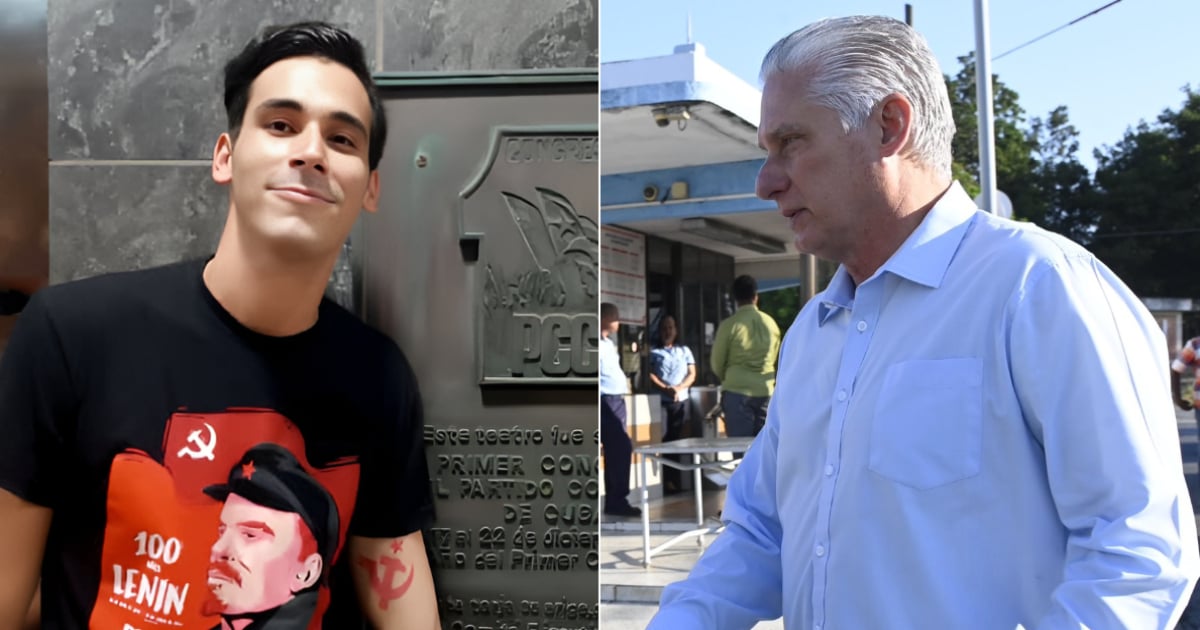
The national president of the University Student Federation (FEU), Ricardo Rodríguez González, publicly reaffirmed his support for the justifications provided by the Cuban regime regarding the increase in ETECSA rates, aligning seamlessly with the government's narrative.
In a post published on social media following the televised appearance of the ruler Miguel Díaz-Canel on the podcast Desde la Presidencia, Rodríguez stated: “It was communicated clearly, the mistakes made were acknowledged, and the necessity of implementing the measure was explained due to the complex situation.”
These words have been interpreted as an act of servility and disloyalty towards the student body, precisely amidst a wave of university discontent that has sparked statements, academic strikes, and a strong demand for the resignation of Rodríguez González himself.
A revealing post about loyalties
In his post, the also member of the State Council not only endorsed the explanations provided by Díaz-Canel, but also reaffirmed the supposed legitimacy of the dialogue process between students and authorities, stating that “the Cuban university student body is heard” and that it will not be manipulated “by the enemies of the Revolution”.
Furthermore, he proposed —as a reparative measure— the creation of a multidisciplinary group with students and specialists from ETECSA, to alleviate the impact of the rate hike. However, he did not address the specific demands raised by students from various faculties, such as the removal of the monthly recharge limit or the revocation of measures that affect the entire citizenry.
Rodríguez's response overlooks the true reasons for the protest: the rising costs of telecommunications services amid a severe economic crisis affecting all Cubans, especially the youth, as well as the lack of transparency and prior consultation with university communities.
His emphasis on delegitimizing expressions of dissent—attributing them to "enemies of the Revolution"—positions him as a functional part of the official discourse.
Student rejection and demands for resignation
The reaction from the student body has not been long in coming. On June 4, the Faculty of Philosophy, History, Sociology, and Social Work at the University of Havana issued a direct statement where it demanded his immediate resignation due to his "passive and uncritical" attitude, as well as his inability to represent the real interests of the students in the informative program Mesa Redonda on Cuban Television.
This institutional rejection adds to the widespread discontent on social media and within the university spaces themselves, where there are complaints about the lack of transparency in the process of approving the new rates, as well as the indifference of student representatives towards grassroots demands.
In the podcast Desde la Presidencia, Díaz-Canel blamed “paid media campaigns” for fueling student protests and public outrage over ETECSA's price hike, asserting that there is a “political intent” behind the protests and student demands.
Far from calming tensions, his statement reinforced the perception that the regime systematically avoids its responsibilities and criminalizes any expression of dissent, even when it comes from historically aligned spaces with the official institutions, such as universities.
More spokesperson than representative
The attitude of the president of the FEU confirms the role that this organization has taken on since the triumph of the so-called Castro "revolution" and the violent establishment of the "revolutionary power."
Devoid of autonomy and politically subordinate, the FEU transitioned from being one of the most active civil society organizations in the Republic to becoming an organic structure of the totalitarian regime built by the dictator Fidel Castro.
Far from acting as a legitimate mediator, Rodríguez González has chosen to become a spokesperson for the power, repeating the same narrative frameworks that the regime has historically used to demobilize dissent.
Instead of addressing the demands of the student body, their statement serves as an attempt at neutralization, shifting attention away from the real causes of discontent and reducing the protests to mere episodes manipulated from outside.
A crisis of representation
The president of the FEU's alignment with Díaz-Canel's speech deepens the legitimacy crisis of this student organization.
As youth voices demanding structural reforms and greater democratic participation grow louder, the leadership retreats into old dogmas, fearing any expression of autonomy.
In a country where youth is one of the most affected sectors by the economic crisis, ETECSA's rate hike has been merely the spark of a much deeper dissatisfaction.
The alignment of the president of the FEU with the regime not only constitutes a betrayal of the representative mandate that he should fulfill but also demonstrates the organization's absolute subordination to the state apparatus.
Filed under: