
Related videos:
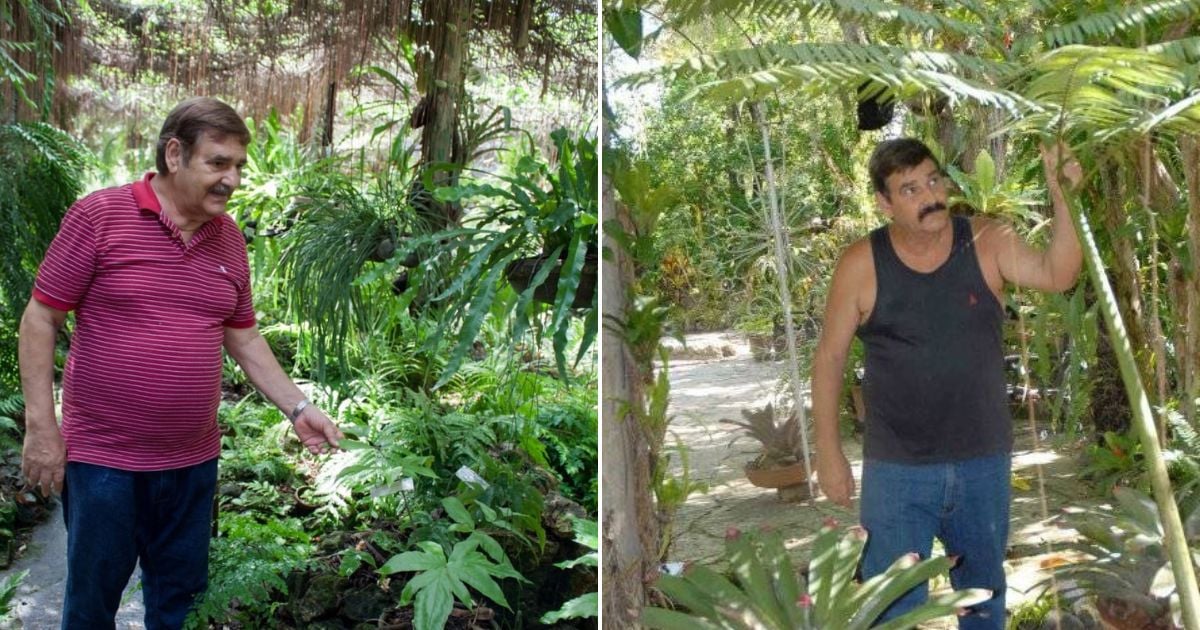
Manuel García Caluff, researcher, botanist, and artist, passed away in Santiago de Cuba at the age of 79, leaving an invaluable legacy to Cuban science as the creator of the Garden of Ferns, a green sanctuary that he directed for four decades in El Caney, solidifying his status as one of the most important figures in the study of the national flora.
The news was confirmed by the Eastern Center for Ecosystems and Biodiversity (Bioeco), where Caluff developed a vast and passionate scientific career.
Botanist by passion, lover of flora, and passionate about nature, stated the institution on Facebook, which had publicly honored him in February 2024 on the occasion of Cuban Botanist Day.
Manolito, as he was affectionately known, was a self-taught expert in the study of ferns and related plants, in which he made significant contributions: he described 27 new species for science, as well as a new Notogenus, and four plants bear his surname in tribute—three ferns and one orchid—discovered by him and formally described by other researchers, both Cuban and foreign.
Designated Honorary Researcher of Bioeco and Honorary Associate Researcher at the Ministry of Science, Technology, and Environment, Caluff received numerous national and international accolades, leaving an indelible mark on the Cuban scientific community and in his hometown, Santiago de Cuba.
In addition to his research work, he was the author of numerous specialized publications, including the books "The Cultivation of Ferns," "Conservation of Lycophytes and Ferns in the Antilles," and "Invasive Lycophytes and Ferns in Cuba."
He also ventured into outreach, sharing his passion for botany with clear language and aesthetic sensitivity.
"The Fern Garden," founded in 1976, was not only a life project but also a natural work of art created with science, patience, and love, and rebuilt after the devastation of Hurricane Sandy in 2012.
In the words of Caluff himself: “The plants and the ecosystems that inhabit them are the masterpiece of evolution, and everything complements each other harmoniously, like in the painting of the most renowned artist.”
Since his retirement in 2022, his legacy has continued to be present in the Bioeco institution and in the hearts of those who knew him.
Today, colleagues, students, family members, and friends in Cuba and abroad mourn the loss of a man whose life was a testament to dedication to knowledge and the preservation of our natural heritage.
Frequently asked questions about Manuel García Caluff and his legacy in Cuba
Who was Manuel García Caluff and what was his main contribution to Cuban botany?
Manuel García Caluff was a prominent researcher, botanist, and Cuban artist, primarily known for being the creator of the Fern Garden in Santiago de Cuba. His work in studying the national flora left an invaluable legacy, notably through the description of 27 new species for science and the creation of a new Notogenus. Furthermore, his surname is part of the names of three ferns and one orchid that he discovered.
What is the Fern Garden and why is it important?
The Fern Garden, founded in 1976 by Manuel García Caluff, is a green sanctuary located in El Caney, Santiago de Cuba. It is considered a natural work of art, created with science, patience, and love. This garden has been a center for research and preservation of biodiversity, and an example of Caluff's legacy in Cuban botany, establishing itself as a unique space for the study and conservation of ferns.
How has Manuel García Caluff been recognized in the scientific field?
Manuel García Caluff was recognized as an Honorary Researcher of Bioeco and as an Honorary Adjunct Researcher of the Ministry of Science, Technology, and Environment of Cuba. He received numerous national and international awards for his contributions to the study of Cuban flora. Additionally, his work and specialized publications on ferns and related plants have left an indelible mark on the scientific community.
Filed under: