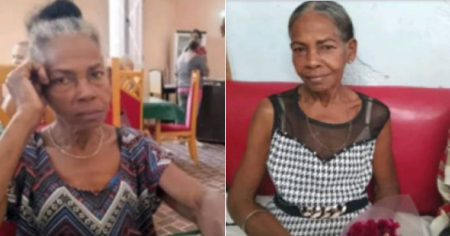
A 94-year-old Cuban shared with the Spanish press the ordeal of her life in Cuba amidst blackouts, food shortages, and a lack of medicine.
Teresa García, interviewed by the Efe agency, confessed to the "terrible sense of hopelessness" that comes with living in Cuba at her age.
The elderly woman assured that she had never experienced a situation like this even during the so-called Special Period.
"After so much anguish in life, and at the end of the road having to go through this," said the woman in a heartbreaking testimony.
The Cuban woman, who welcomed the Spanish agency into her apartment in the center of Pinar del Río, cannot recall the last time she drank cold water or slept through the night.
"If she comes now in the morning, it’s two or three hours. And then she doesn’t come until the evening, if they allow it," said Teté, as she prefers to be called.
At the time she was interviewed, García had been without electricity for more than 24 hours.
"This is for when the power comes back: to fill them with water for cooking. The water is gone too because there's no electricity to pump it. It's worth mentioning that the firefighters (from the station across from your building) help us carry water," he remarked while showing empty buckets to the Spanish journalists.
"I have two nieces in Havana who are eager for me to go live with them, but that won’t happen. I've always lived here, and I’m not going anywhere," said this woman who is unafraid of living alone.
Teté was left alone because much of her family died and the rest emigrated.
"I know the bad, the good, and the mediocre of all those governments because I lived through them, and this one is unlike anything else. It is a constant struggle with everything: the bread that comes one day but not the next; beans, incredibly expensive; there is no milk, no meat, nothing," said the woman, who was born in the 1930s.
"That doesn't freeze anymore, and my food goes bad with how expensive everything is." "There was not as much misery even during the special period," she added, referring to her refrigerator.
Elderly People in Cuba
According to the latest official figures, more than two million Cubans are 60 years old or older (25.7% of the total population). The rapid demographic aging is due to a combination of multiple factors such as the decline in birth rates, the increase in life expectancy, and the uncontrollable migratory exodus of the past four years.
The elderly are the only demographic group that is growing in Cuba. Experts believe that this demographic dynamic is characterized by a high incidence of poverty, severe social inequity, low coverage of social security, and a likely trend towards the deterioration of family support networks.
According to official data, 39% of Cuban retirees receive the minimum pension of 1,528 pesos per month, putting them at high risk of extreme poverty.
Especially complicated is the situation of those who do not have relatives abroad to send them dollars in order to access a balanced diet in the final stage of their lives. They depend exclusively on what arrives at the stores, marked by rationing, shortages, and delays in the distribution of basic food items.
The uncontrolled inflation resulting from the failed Tarea Ordenamiento has driven up the prices of basic necessities, while wages remain stagnant and the purchasing power of Cubans erodes, exhausted by long queues, blackouts, hunger, and despair.
People in the third age are also facing the crisis of medication shortages, along with difficulties due to the technical unavailability of medical equipment, lack of supplies, and disposable materials necessary for the proper functioning of hospitals and health centers.
Patients with chronic diseases such as hypertension, diabetes, and asthma, mostly elderly, face serious difficulties in accessing their treatments, which jeopardizes their health.
Frequently Asked Questions about the Energy and Social Crisis in Cuba
How do blackouts affect the daily lives of Cubans?
Blackouts in Cuba severely affect daily life, interrupting basic activities such as cooking, preserving food, and getting adequate rest. Many testimonies from Cubans illustrate how these prolonged power outages cause physical and emotional strain, as they must adjust to a survival routine defined by improvisation and uncertainty.
What is the situation of the elderly in Cuba in light of the economic and energy crisis?
The elderly in Cuba face a particularly complicated situation due to the economic and energy crisis. Many survive on minimal pensions that do not meet their basic needs, and without relatives abroad sending remittances, they rely exclusively on a deficient rationing system. Moreover, the lack of medication and the deterioration of health services worsen their vulnerability.
What measures has the Cuban government taken to address the energy crisis?
The Cuban government has implemented insufficient measures to address the energy crisis, such as providing firewood in some areas, but these actions have not resolved the shortages affecting the majority of the population. Blackouts and fuel shortages continue to impact the entire country, with no visible long-term solutions in sight.
How has the Cuban population adapted to the energy crisis?
The Cuban population has been compelled to adapt to the energy crisis by using rudimentary methods for cooking, such as coal and firewood, and seeking creative ways to preserve food. This forced adaptation has resulted in significant emotional wear and tear, as living conditions have deteriorated considerably, forcing many to live in a constant state of survival.
Filed under: