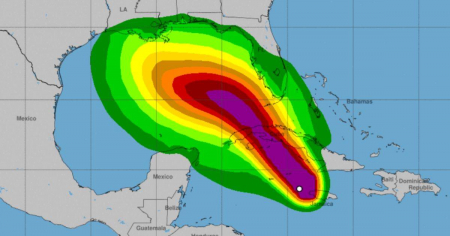
The renowned meteorologist John Morales, a respected figure among thousands of viewers in South Florida, issued a strong warning that has raised concerns among residents of vulnerable areas, especially as it suggests that the ability to accurately predict hurricanes is at risk due to severe budget cuts in key U.S. government agencies.
During a live broadcast on NBC 6, Morales warned that the National Weather Service (NWS) and the National Oceanic and Atmospheric Administration (NOAA) are facing critical limitations in their operations, which could jeopardize early warnings during the hurricane season.
"This year, the predictions could fail. We are facing a very dangerous situation", said Morales, visibly worried, directly appealing to his audience, largely composed of Latino and Cuban families settled in Florida.
According to the meteorologist, the cuts, driven by the so-called Office of Government Efficiency (DOGE), created under the administration of Donald Trump, have left regional offices operating with a staff deficit of 20 to 40%, and have reduced the launching of weather balloons by 20%, which are essential for gathering atmospheric data that helps predict the development of cyclones.
But the most alarming thing, he stated, is the possibility that NOAA's hurricane hunter planes may not be able to operate this year. Without those flights, meteorologists lose a key tool to accurately measure the intensity, trajectory, and speed of these phenomena, which are increasingly hitting the Caribbean and the southeastern coast of the United States with greater force.
In statements following his interview with The Guardian, Morales reaffirmed his message. "Science is science", he stated firmly, asserting that he fears no political backlash for criticizing the cuts. "The message was clear to the viewers".
What is at risk?
According to the NOAA forecasts, the 2025 hurricane season, which officially began last Sunday, could result in up to five major hurricanes, with sustained winds of 179 km/h or more. This is a particularly alarming scenario for a region densely populated by Cubans and Caribbean residents who have already experienced the devastation of storms like Andrew or Katrina.
However, the National Meteorological Service is currently in "degraded operation," after losing 600 employees due to layoffs and early retirements.
Although this week it received special permission to hire 100 new technicians, meteorologists, and radar specialists, the general hiring freeze imposed by the government continues to severely limit its response capacity.
True to his ethical and committed style, Morales urged the audience to take action. “What you need to do is call your representatives and make sure these cuts are stopped,” he said on Monday during his segment.
His message has quickly gone viral among Latino communities and climate experts, who agree that the United States is not prepared to face extreme events without a solid and well-funded alert system.
The cuts are part of President Trump's efforts to reduce the size of the federal government. However, their impact on scientific institutions has generated criticism among experts, especially considering that climate change is intensifying the frequency and strength of hurricanes. Trump, for his part, has repeatedly dismissed climate science, calling it “a big hoax.”
Frequently asked questions about the weather warning and budget cuts
Why might hurricane forecasts fail this year?
Budget cuts in key agencies such as the National Weather Service (NWS) and the National Oceanic and Atmospheric Administration (NOAA) could compromise the accuracy of hurricane forecasts. These cuts have resulted in staff shortages and a reduction in the launch of weather balloons, which are essential for collecting atmospheric data.
How do budget cuts affect NOAA and NWS?
The budget cuts have resulted in a significant loss of personnel and resources, affecting the responsiveness and accuracy of weather forecasts. The number of employees has been reduced by 10%, as well as the frequency of weather balloon launches, which are essential for data collection.
What risks are communities in Florida facing due to these cuts?
Communities in Florida, especially those made up of Latino and Cuban families, may face an increased risk of not receiving early hurricane alerts, which would undermine their ability to adequately prepare for these natural events. This is due to weaknesses in the early warning system and forecasting capacity.
What measures are being taken to reverse the cuts in the NWS and NOAA?
Democratic congress members from Florida have sent a letter to the government of Donald Trump, warning about the risks of these cuts and urging that they be reconsidered to ensure that agencies maintain the personnel and resources necessary to protect lives and property in the face of natural disasters.
Filed under: