
Related videos:
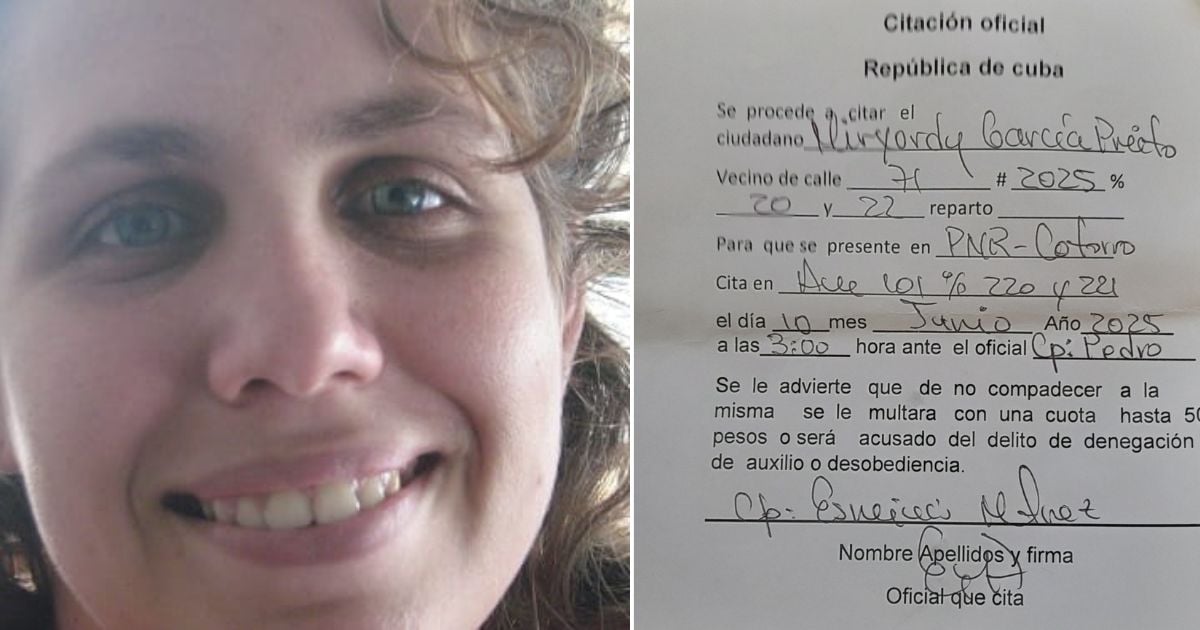
Cuban intellectual Miryorly García reported that State Security attempted to impose a warning notice on her following a summons that took place this Tuesday, which she refused to sign, considering the document to be "full of falsehoods."
"The purpose behind the citation I received on June 10 was to issue a warning notice against me, the text of which, filled with falsehoods, I did not agree with and of course, I did not sign," he wrote on his Facebook profile after leaving the interrogation.
On a day when the young Cuban activist Raymar Aguado Hernández suffered a new episode of harassment and intimidation, García recounted that she was accused of replicating posts on social media that “incite public disorder”, as well as spreading content whose accuracy was questioned by the authorities.
The intellectual denied these accusations and stated that her messages promote civic responsibility and action in response to the government's unjust decisions, particularly those affecting university students.
"The only falsehood here is such an accusation, because what I have published only promotes the responsibility and civic action of a people (...) against unjust measures taken by the government," he stated.
During the appointment, she was also threatened with being charged with disobedience if she continued to post critical content on social media.
In response to this, he firmly replied: “In moments like those Cuba is experiencing today, being called disobedient is more of a compliment and an honor. (…) There are universal laws that define my rights as a human being, and I intend to exercise those rights, as Martí said, without begging for them or asking for permission.”
Hours earlier, García had reported in another post that he was summoned with just 45 minutes' notice, highlighting the violation of established procedures for these cases.
He also mocked the basic mistakes made by officials: “Learn to spell my name, I know it’s difficult, but it's wrong. And third, I will sit down and look at your faces, I have nothing to hide but also nothing to say. If you want to know what I think, you just have to read me on Facebook.”
The intellectual concluded her message with a strong endorsement of the recent demonstrations by Cuban students, who have raised their voices against the crisis and repression: “Students and everyone who stands up against any injustice will continue to have my support. It is shameful and cynical that while they praise the protests and strikes in other countries, they are repressing in the way that they are here.”
Frequently Asked Questions About Repression in Cuba and Miryorly García's Response
Why did Miryorly García refuse to sign the warning notice from State Security?
Miryorly García refused to sign the warning letter because she believed it was "full of falsehoods." According to García, the document accused her of inciting public disorder and spreading questionable content, allegations that she emphatically denies, stating that her posts promote civic duty and responsible action in response to the unjust measures of the Cuban government.
What arguments did Miryorly García use to defend her social media posts?
García argued that his publications promote the responsibility and civic engagement of the population in response to the government’s unfair decisions, particularly those affecting university students. In his view, the accusations against him are unfounded and manipulative, aimed at silencing critical voices.
How has Miryorly García reacted to the threats from State Security?
Miryorly García has firmly responded to the threats of being accused of disobedience if she continues to publish critical content. She believes that in the current context of Cuba, being called disobedient is a compliment and an honor. Furthermore, she reaffirms her commitment to exercising her human rights without asking for permission, quoting José Martí.
What is the context of the student protests in Cuba and how are they related to Miryorly García?
The student protests in Cuba, which have shaken universities across the country, focus on calls for fairer fees and equitable connectivity, especially following ETECSA's restrictive measures. Miryorly García has expressed her support for these demonstrations, criticizing government repression and endorsing the right of students to raise their voices against injustices.
Filed under: