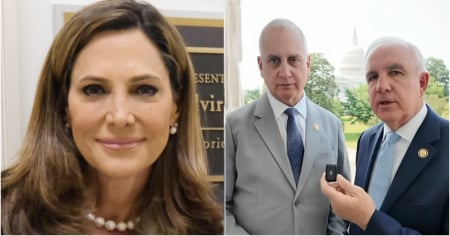
Republican Congresswoman María Elvira Salazar accused the European Union (EU) on Thursday of financing the repression of the Cuban regime, following the resumption of political dialogues between Brussels and Havana under the Political Dialogue and Cooperation Agreement (PDCA) in effect since 2016.
"Every euro sent to Havana finances repression. This is the time to stop funding tyranny and stand with the Cuban people," Salazar wrote on his X account (formerly Twitter).
He added that "the fall of the Cuban regime is inevitable" and asked the EU: "On which side will history remember you? On the side of freedom or the oppressors?"
The comments from the U.S. congresswoman come amid a new round of talks between EU officials and the Cuban government, as social discontent grows on the island, marked by student protests, widespread blackouts, and a worsening food crisis.
Organizations such as Prisoners Defenders and the Cuban Observatory for Human Rights have described the agreement as a "failure," as it has not produced tangible advances in human rights.
It is reported that the Cuban regime uses the pact as a tool for international legitimacy, while not allowing the free participation of independent actors in the dialogue.
In April, Prisoners Defenders raised the number of political prisoners in Cuba to 1,155, including well-known dissidents José Daniel Ferrer and Félix Navarro, whose arrests have been heavily criticized in Europe and the U.S.
The activist Carolina Barrero, exiled in Europe, also questioned Brussels' stance in an interview with Deutsche Welle, denouncing that the EU is inflexible with dictatorships allied with Russia in other contexts, yet maintains a "condescending" approach towards Havana, despite its strategic alliance with Moscow.
"If Europe defends democracy in Ukraine, it cannot turn a blind eye to a dictatorship that sends mercenaries to that country," Barrero stated.
From Brussels, the Vice-President of the European Commission, Kaja Kallas, defended the continuation of the agreement in a debate before the European Parliament.
He denied that the EU is funding the regime and stated that European funds in Cuba are channeled through UN agencies and NGOs, not through the Cuban state apparatus.
However, their position has been questioned by both conservative MEPs and Cuban activists, who are urging the EU to adopt a firmer stance.
Frequently Asked Questions about María Elvira Salazar's Accusation Against the European Union
Why does María Elvira Salazar accuse the European Union of funding repression in Cuba?
María Elvira Salazar accuses the European Union of financing repression in Cuba as she believes that every euro sent to Havana, within the framework of political dialogues and cooperation, supports the Cuban regime instead of the people. Salazar criticizes that these funds internationally legitimize the regime without improving human rights on the island.
What is the European Union's position on the agreement with Cuba?
The European Union, represented by Kaja Kallas, defends the continuation of the agreement with Cuba, arguing that European funds in Cuba are channeled through UN agencies and NGOs, not directly to the Cuban government. The EU maintains that the agreement provides a framework for addressing sensitive issues such as human rights, despite the criticisms received.
What do human rights organizations say about the agreement between the EU and Cuba?
Organizations such as Prisoners Defenders and the Cuban Observatory of Human Rights have labeled the agreement a "failure," arguing that it has not produced tangible progress in human rights. They denounce that the Cuban regime uses the pact to gain international legitimacy while not allowing the free participation of independent actors in the dialogue.
What criticisms has the EU received regarding its treatment of Cuba in comparison to other countries?
The EU has been criticized for its "condescending" approach towards Cuba, despite its alliance with Russia, while maintaining a stricter stance towards other dictatorships allied with Moscow. Activists like Carolina Barrero have pointed out that this attitude contradicts the values of freedom and democracy that Europe upholds in other contexts, such as in Ukraine.
Filed under: