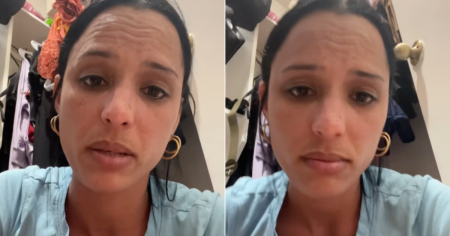
The Cuban influencer Brayan el Joker (@brayan_eljoke), based in the United States, has sparked a wave of reactions on social media after posting a video in which he humorously and sarcastically questions a common practice among emigrated Cubans: asking each other how long they have been in the country.
"I wonder why every time I meet a Cuban, they ask me how long I've been here, as if I were in prison," says the content creator in his TikTok post, which has gathered thousands of views and comments. In his monologue, he criticizes the symbolic weight that many Cubans assign to the length of residency in the United States, as if it were a rank or medal, and ridicules the idea that those who have been here longer deserve special respect.
"I'm free, brother. I'm not counting. I'm here for good, I'm not going anywhere," he adds. With a mix of irony and resignation, Brayan laments that this recurring question seems like a form of control among migrants about who has been here longer and, therefore, deserves more recognition.
The post has sparked a flood of comments, mostly supportive and understanding. “The old-timers think they’re better than the newcomers,” one user commented. Another joked that it seemed like the influencer was “in the military service, with people painting,” referring to the hierarchy that develops between those who are newly arrived and those who have been established for years. Some suggested humorous responses: “You have to drop the line ‘I was born here,’ that one never fails,” advised a follower. Meanwhile, others recognized themselves in the situation: “I relate to this from every angle. A very good and funny reflection, my friend.”
Beyond humor, Brayan's video touches a sensitive chord within the Cuban exile community: the tendency to rank migration experiences based on the duration or the means of arrival.
This phenomenon had already been addressed by fellow Cuban Carelis Conde in a video published last November, where she urged to stop the comparisons between migrants. “Is your migratory situation less painful than mine?” Conde questioned at that time. In her message, she advocated for a more empathetic and less competitive perspective, reminding everyone that those who emigrate, regardless of the means, face an emotional struggle and a challenging process of adaptation.
Conde also denounced the disparaging judgments and comments among migrants: “Those who entered with parole don’t know what it means to struggle” or “I was a balsero; I don’t know what these people coming in now on a plane are complaining about.” His reflection was widely shared and celebrated by those who agree that comparisons between migration stories only deepen the divisions within a community that, due to its origins, already bears enough shared challenges and pains.
Both Brayan and Carelis highlight, from different perspectives, an ongoing conversation among Cubans in exile: the necessity to replace competition with empathy, and to understand that each person is dealing with their own process.
Frequently asked questions about the Cuban migration phenomenon and its dynamics in exile
Why do Cubans in exile ask about the length of residence in the U.S.?
According to influencer Brayan el Joker, this question has become a "military service of migration" where special respect is expected for those who have been in the country longer. For many Cubans, the length of residence in the United States has turned into a sort of rank or medal, reflecting the hierarchy of migratory experiences.
How does the hierarchy of migratory experiences affect the Cuban community?
The hierarchization of migratory experiences can deepen divisions within the Cuban exile community. Comparing migratory stories based on the time or means of arrival can create tensions and diminish empathy among those who share a common background but face different challenges and adaptation processes.
What difficulties do Cubans in exile face when communicating with their family members in Cuba?
A common difficulty is the feeling of emotional isolation when they attempt to share their problems and are ignored or invalidated by their family members in Cuba. Emigrants feel that their concerns are minimized compared to the issues faced by those living on the island, which can widen the emotional gap between both groups.
What role do social media play in the discussion of Cuban identity abroad?
Social media has become a key space for showcasing and discussing issues related to Cuban identity abroad, the dynamics of the diaspora, and the personal experiences of migrants. Platforms like TikTok allow for the sharing of reflections and testimonies that spark debates about collective identity, cultural differences, and tensions within the Cuban community.
Filed under: