
Related videos:
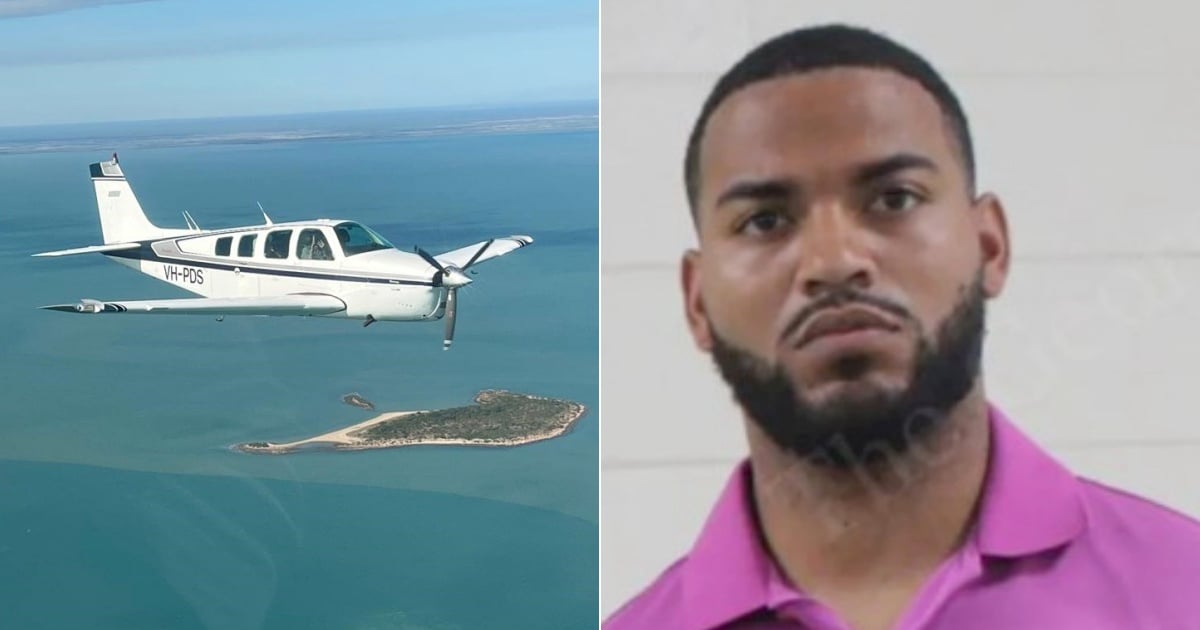
Rufus Crane, a 27-year-old from Coconut Creek, Florida, has become the central figure in a story that is as unusual as it is alarming.
Last Wednesday, Crane pleaded guilty in a federal court to stealing a private aircraft in Georgia and flying it across several states without a license to do so, in a reckless maneuver that has shaken the U.S. civil aviation system.
Robbery, takeoff, and a dangerous air journey
On May 4, 2024, Rufus Crane, who only had a student pilot certificate, unlawfully entered a hangar at the Perry airport in Georgia.
There, he took a Beechcraft Bonanza A-36, a high-performance single-engine aircraft.
Despite not having the necessary training or permits, Crane managed to take off and fly in the middle of the night to Waxhaw, North Carolina, landing at JAARS-Townsend Airport around 12:42 a.m.
His journey didn't end there.
Just a few hours later, on May 5 at 3:14 a.m., it took off again, this time heading south.
He tried to refuel in South Carolina before embarking on the journey back to Georgia.
However, upon arriving in Perry around 5:47 a.m., adverse weather conditions—particularly thick fog—prevented him from landing safely.
Flight in IFR conditions without certification
The situation worsened when Crane chose to continue flying despite the weather conditions that required an IFR (Instrument Flight Rules) certification, a qualification he did not possess.
Instead of relying on visual signals, he should have depended on the aircraft's instruments and navigation systems, a complex procedure reserved for properly trained pilots.
The fog forced him to divert to the Municipal Airport of Cochran, Georgia, where he managed to land, refuel, and later return to Perry Airport, where he finally placed the aircraft back in the hangar around 11:01 a.m.
Transponder off: a risk to air safety
During this perilous incursion, Crane kept the aircraft's transponder switched off, which meant that the Bonanza A-36 did not emit signals to air traffic control.
This action prevented authorities from knowing the location, altitude, and speed of the aircraft during its flight, significantly increasing the risk of collisions and coordination failures in the airspace.
The statement from the Department of Justice emphasized the seriousness of this act:
"During these flights, which took place in the middle of the night, he also kept the transponder of the Bonanza turned off, meaning that the plane did not send signals to air traffic control to provide information about its location, altitude, and speed."
Charges and legal consequences
Rufus Crane was formally charged with interstate transportation of stolen aircraft, a federal offense that carries a maximum penalty of ten years in prison, in addition to three years of supervised release and a fine of up to $250,000.
The judge in charge of the case is Marc Treadwell, and the sentencing is scheduled for September 17.
Federal and local authorities have not held back in condemning Crane's actions.
"By choosing to steal a single-engine aircraft and fly to North Carolina, landing at several regional airports along the way, the defendant endangered his own life and that of others, despite lacking complete training and a pilot's license," said interim U.S. Attorney C. Shanelle Booker.
“The theft and unauthorized operation of an aircraft is not just a crime against property, but a serious threat to public safety. Mr. Crane's reckless actions endangered countless lives across multiple states,” asserted Captain James Jones of the Perry Police Department.
For his part, Joseph Harris, special agent in charge of the Office of the Inspector General of the Department of Transportation, warned:
"A situation like this can quickly worsen when crucial air safety laws and regulations are blatantly ignored."
The case of Rufus Crane highlights how a combination of negligence, recklessness, and gaps in oversight can lead to high-risk events for national security.
Awaiting his sentence, the young man now faces the full weight of federal law for an act that not only compromised private property but also jeopardized the safety of airspace in a year that has been marked by a significant number of various aerial incidents in the United States.
Frequently asked questions about the airplane theft and Rufus Crane's aerial journey
Who is Rufus Crane and why is he in the news?
Rufus Crane is a young man from Florida who pleaded guilty to stealing a small plane and flying it without a license a través de varios estados, lo que ha causado conmoción en el sistema de aviación civil estadounidense.
What were the legal consequences for Rufus Crane following this incident?
Rufus Crane faces charges of interstate transportation of stolen aircraft, a federal offense that carries a maximum sentence of ten years in prison, along with three years of supervised release and a fine of up to $250,000.
What risks did Rufus Crane's flight with the stolen plane pose?
The flight of Rufus Crane was extremely dangerous because he kept the transponder off, which prevented authorities from monitoring the location, altitude, and speed of the aircraft, increasing the risk of collisions and coordination failures in the airspace.
Why is the case of Rufus Crane relevant in the context of air safety in the United States?
The case of Rufus Crane highlights negligence and gaps in control that can lead to high-risk events for national security, in a year marked by an increase in aerial incidents in the United States.
Filed under: