
Related videos:
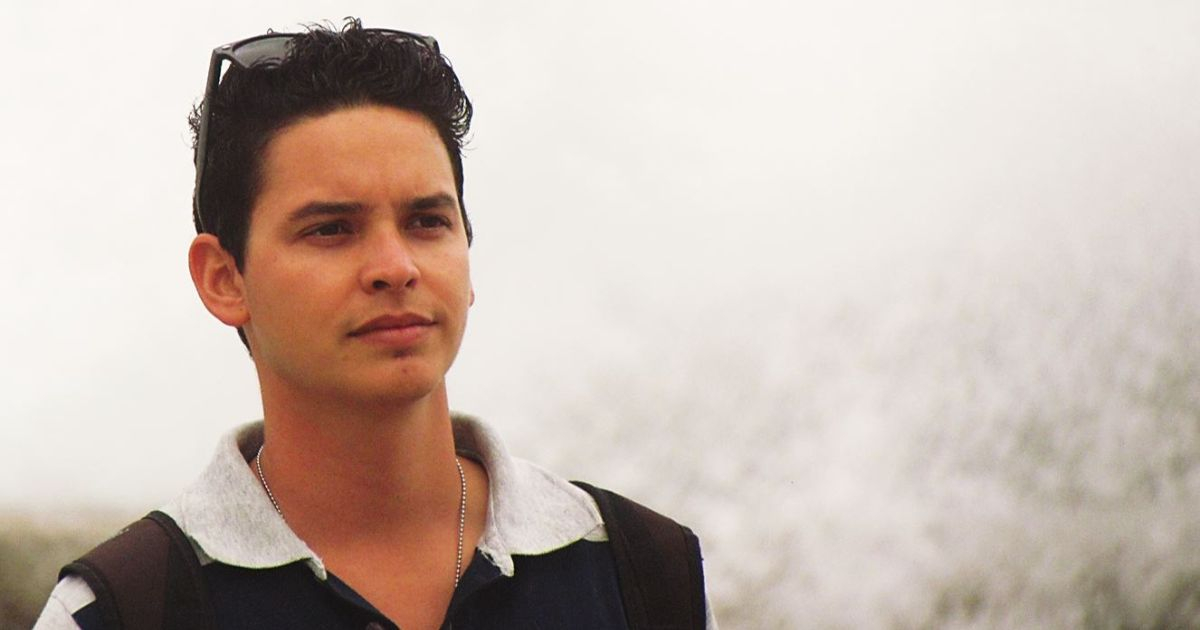
The Cuban journalist and writer Yoe Suárez, exiled in the United States, was awarded the "Manuel Márquez Sterling" Non-Fiction Literature Prize for his book "Sickle and Cross: Evangelicals, Nonviolent Resistance, and the Last Totalitarian Regime of the West (2000-2019)", an investigation into the participation of Christian sectors in civic resistance against the Cuban regime in recent decades.
The work was chosen as the winner of the first edition of the competition, organized by the independent publishers Ediciones Memoria and Ediciones Homagno, in a process that took place between April and June of this year.
The results were published this Saturday by the platform Memoria Cívica, an initiative focused on preserving historical memory and contemporary civic thought in Cuba.
According to the judicial report, composed of Rafael Almanza, Waldo Fernández Cuenca, and Mario Ramírez, Suárez's book represents “a detailed investigation of the participation of evangelical Christians in national civics, a topic that has not been researched until now.”
Yoe Suárez (Havana, 1990), holds a degree in Journalism from the University of Havana, is the author of several nonfiction books that have been recognized both on and off the island, and has also been harassed by the Cuban regime due to his sharp rhetoric.
Among them are notable works such as La otra isla (finalist for the Michael Jacobs Scholarship 2016), Charles en el mosaico (Casa de las Américas Mention 2017), El soplo del demonio (2018), and Leviatán. Política policial y terror socialista, which received the Ilíada Prize in 2021.
His career, characterized by denunciation and critical reporting on power, has made him one of the most active voices in independent Cuban journalism, collaborating with various outlets of the free press and directing the publishing house Boca de Lobo Editores.
In 2021, he received the Ilíada Journalism Award, which was awarded for the first time by the publishing house Ilíada Ediciones, along with the cultural project AV Kreativhaus and the literary magazine Otro lunes, for a book on the Cuban State Security.
From Memoria Cívica, the organizers highlighted the overall quality of the submitted manuscripts, which address various aspects of Cuban reality through genres such as essays, reports, and chronicles.
"I wish there were a way to reward more than one," they remarked.
The "Manuel Márquez Sterling" Award pays tribute to the distinguished intellectual and Republican diplomat who dedicated his life to "subjecting the realities of the country to the scrutiny of the written word" and to fostering civic awareness among Cubans. This distinction aims to revive that critical and committed tradition within the realm of non-fiction literature.
Frequently Asked Questions about Evangelical Resistance and Repression in Cuba
Who is Yoe Suárez and why was he awarded?
Yoe Suárez is a Cuban journalist and writer who received the “Manuel Márquez Sterling” Non-Fiction Literature Award for his book on the evangelical resistance against the Cuban regime. The book highlights the involvement of evangelical Christians in civic resistance in Cuba, a topic that has been little explored until now.
What is the main theme of the book "Hoz y cruz" by Yoe Suárez?
The book "Hoz y cruz" by Yoe Suárez discusses the non-violent resistance of evangelical Christians in Cuba against the Cuban regime from 2000 to 2019. Suárez meticulously documents the participation of this religious group in civic resistance, providing a new perspective on the struggle for human rights on the island.
How has Yoe Suárez's work been received in Cuba and outside the island?
Yoe Suárez's work has been recognized both inside and outside of Cuba. His nonfiction books, focused on critiquing the Cuban regime and denouncing its excesses, have been awarded and mentioned in various competitions, establishing Suárez as a prominent voice in independent Cuban journalism.
What other themes of repression are addressed in the recent Cuban context?
The recent Cuban context addresses issues of repression such as the imprisonment of artists and dissidents, the complicity of foreign companies with the regime, and artistic censorship. A notable case is that of Luis Manuel Otero Alcántara, a jailed artist who has been internationally awarded for his creative dissent, symbolizing the struggle for freedom of expression in Cuba.
Filed under: