
Related videos:
The possibility of a U.S. military offensive against Iran has returned to the center of international debate following statements from President Donald Trump, who stated on Wednesday that he has yet to make a final decision regarding a direct intervention in the conflict between Israel and Tehran.
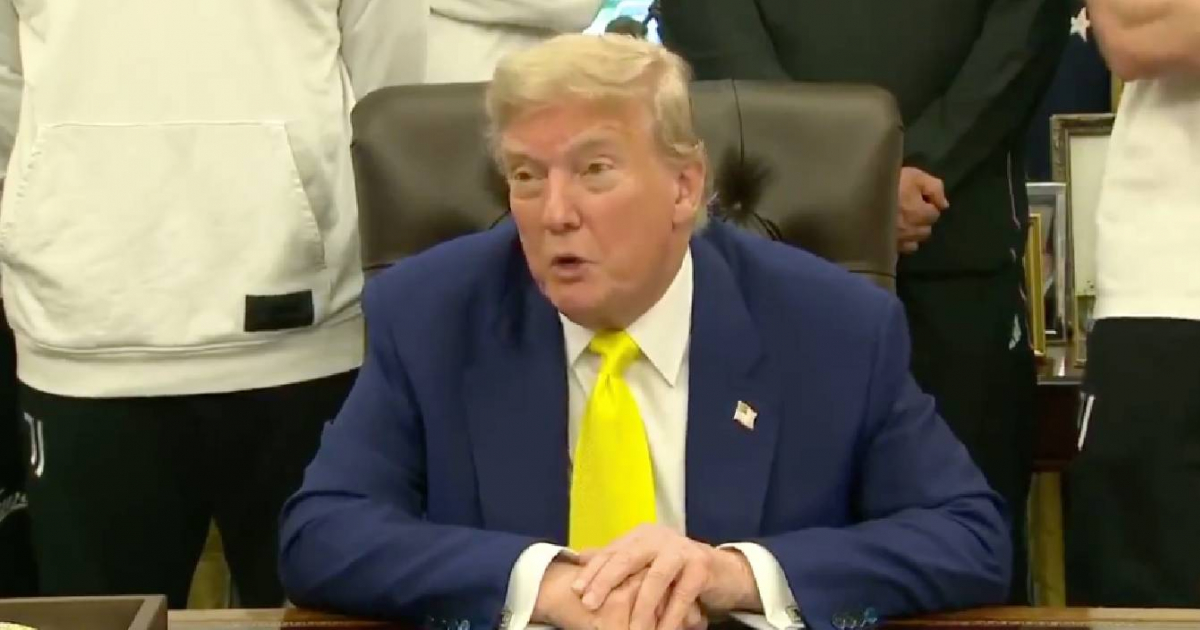
"I have ideas about what to do, but I haven't made a final decision because things are changing," Trump said from the Oval Office during a conference that was scheduled for Tuesday but was postponed until this afternoon pending developments in the Middle East.
During his appearance, the leader made it clear that the military option is on the table, reiterated his longstanding position on the Iranian nuclear program, and added that “I have been saying for 20 years, maybe even more, that Iran cannot have a nuclear weapon... They would use it. I believe they would use it,” he stated.
The president —who the day before affirmed that he had control of Iranian airspace and knew the whereabouts of the Supreme Leader Ali Khamenei— was emphatic in stating that his goal is not a ceasefire, but a "total and complete victory," which implies ensuring that Iran does not develop nuclear capabilities.
In addition, he criticized the Islamic Republic for not accepting what he called "a great deal" during his administration, stating that "they should have made that deal. Now they wish they had."
Hours earlier, when approached by the press outside the White House, Trump hinted that his decision could go in any direction.
"I might do it. I might not do it. No one knows what I’m going to do," he said.
He added that Iran is facing serious difficulties and "wants to negotiate," but lamented that it did not do so weeks ago: "They could have done it well. They would have had a country."
The Secretary of Defense, Pete Hegseth, appeared before the Senate Armed Services Committee, where he was questioned about possible attack plans.
“If I had done it or not, I would not reveal it in this forum,” he replied, in an attempt to divert attention from whether Trump has requested military strategies.
Hegseth emphasized that the Department of Defense is working to keep multiple options ready because "our job is to be prepared with options, and that is exactly what we are doing."
However, the potential involvement of the United States in the Israeli attacks has generated tensions within the Trump movement itself.
Some of its more radical figures oppose any kind of military intervention, marking a visible divide over the direction to take in foreign policy.
The president also explained that he gave Iran a 60-day deadline to negotiate a nuclear agreement. On day 61, Israel began bombing uranium enrichment facilities.
"For 40 years they have said 'Death to the United States,' 'Death to Israel.' They have been bullies. Now they are not... but we will see what happens," Trump stated.
The message "unconditional surrender," which he posted on social media, was interpreted as a call for Tehran to completely abandon its nuclear program.
Iran, for its part, responded that "it is not a nation that surrenders."
Filed under: