
Related videos:
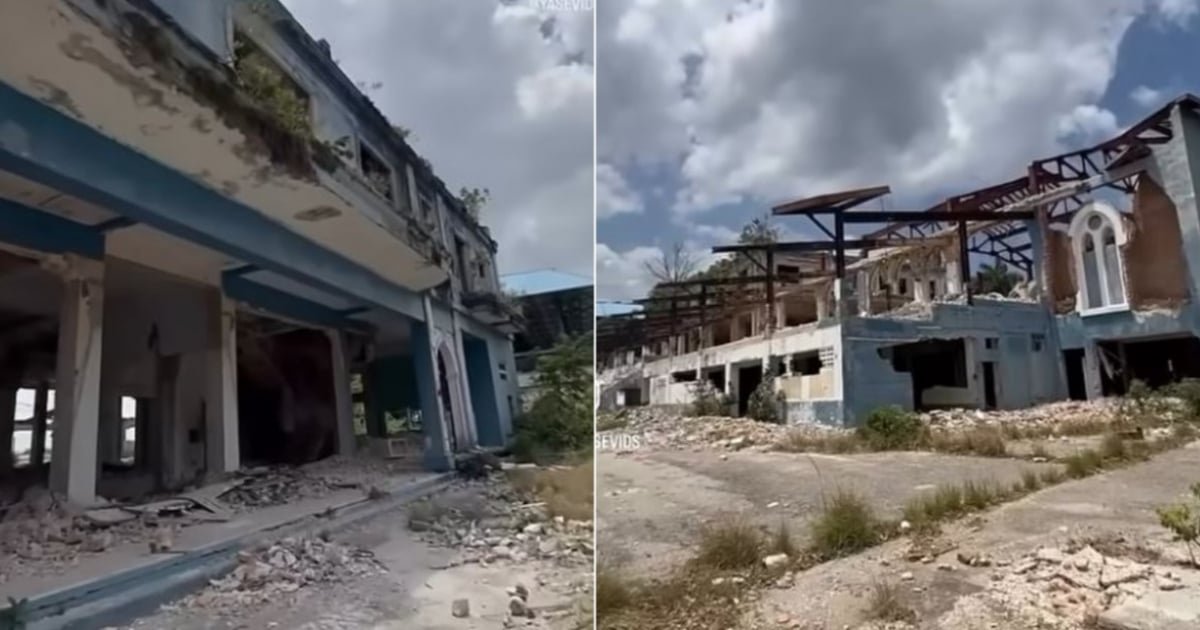
What was once an icon of Havana’s splendor and a symbol of economic and social development in western Cuba now lies in ruins. The Marianao Racetrack, officially known as Oriental Park, is experiencing its decline as a state warehouse, after decades of neglect and decay.
The history of this venue, inaugurated on January 14, 1915, partly reflects the decline of many of the architectural and cultural gems of republican Cuba.
It was the exiled Cuban businessman Miguel Grillo Morales, a horse racing enthusiast, who recently reignited memories of the racetrack by sharing a video from creator Yasevids on Facebook, accompanied by a tough yet heartfelt reflection.
"The cost of the destruction that the loyalist has left on the Island of Cuba is incalculable. Nothing has been spared from that totalitarian whim. Here you have Oriental Park, one of the most beautiful racetracks in America, completely destroyed," wrote the Cuban-American.
A luxurious setting for grand events
Located between 102nd and 114th Streets and from 61st Avenue to the Guanajay train line, the Oriental Park was managed by the Cuban-American Jockey Club. It had a capacity of 8,000 spectators, with stands divided between the main grandstand and the smaller one, along with stables, printing facilities, a blacksmith shop, gardens, and an exclusive social club. Its halls hosted dances, weddings, and quinceañera parties from the neighborhood.
In addition to the thrilling thoroughbred horse races, the racetrack hosted historic events such as the "fight of the century" in boxing in 1915, between Jack Johnson and Jess Willard, a controversial bout in which the first black heavyweight world champion allegedly threw the fight.
The Oriental Park was also a gathering place for movie stars like Rita Hayworth, Kirk Douglas, and Errol Flynn, as well as lesser-known figures such as mobsters Lucky Luciano and Meyer Lansky. Every president of the Republic visited the racetrack at least once, and even the bearded members of the Rebel Army were photographed there in January 1959, just a few days after their entry into Havana.
From a symbol of prosperity to the rubble of oblivion
After the arrival of the late dictator Fidel Castro to power, the racetrack was closed in 1967. Today, its ruins serve as storage for vehicles from the company Transimport, while the visible structures slowly deteriorate, as noted by the site Cubanet.
Very close by, the old Oriental Mansion, which once hosted jockeys and enthusiasts, stands as a dilapidated building, inhabited by residents living in precarious conditions.
What was once a source of employment, an economic driver, and a social hub for Marianao has become a reflection of urban degradation and the neglect of the national heritage. The decline of Oriental Park is also the decline of a modern, vibrant city model that once competed with international capitals.
Today, only memories remain, photos, testimonies... and a silent warning amidst the ruins: when history is abandoned, the country suffers beyond just economic decline.
Frequently Asked Questions about the Deterioration of the Marianao Racetrack and the Abandonment of Heritage in Cuba
What happened to the Marianao Racetrack?
The Marianao Racetrack, known as Oriental Park, is in ruins and has been converted into a state warehouse. Inaugurated in 1915, it was a symbol of prosperity in Cuba, but after its closure in 1967 under Fidel Castro's regime, it fell into neglect. Currently, its structures are slowly crumbling, reflecting the degradation of an important part of Cuban heritage.
Why is the Hipódromo de Marianao important in the history of Cuba?
The Marianao Racetrack was an icon of Havana's splendor and a key social and economic center in western Cuba. It was managed by the Cuban-American Jockey Club and hosted significant sporting and social events, including the famous "fight of the century" in boxing in 1915. It was also a meeting place for famous figures from the cinema and politics of the time.
How does the abandonment of the Marianao Racetrack reflect the current situation in Cuba?
The abandonment of the Marianao Racetrack reflects the decline of Cuba's cultural and architectural heritage under the socialist regime. This case is part of a broader pattern of deterioration of historical infrastructures throughout Cuba, where iconic sites have been left in ruins due to a lack of maintenance, investment, and proper management by the government.
What other structures in Cuba are at risk of similar degradation?
Numerous historic buildings and sites in Cuba, such as the Chinese Cemetery in Havana and the airport in Ciego de Ávila, are also in a state of serious neglect. These sites, which were once symbols of the country's cultural and economic wealth, now face deterioration due to government neglect and a lack of resources for their preservation.
Filed under: