
Related videos:
The Communist Party of Cuba (PCC) issued a dramatic statement this Saturday warning of a supposed threat of "nuclear conflagration" following the recent bombings by the United States against Iranian nuclear facilities.
In an alarmist tone and with the usual rhetoric against Washington, the PCC reiterated its support for the regime in Iran, which it referred to as a “sovereign state” entitled to self-determination, ignoring the recurring international reports of human rights violations in that country and its history of nuclear tensions.
The note, published in state-run media, condemned what it deemed "criminal acts" by the U.S. government against the facilities in Fordow, Natanz, and Isfahan, describing them as "brutal bombings" that allegedly jeopardize world peace.
The PCC's message did not mention the background of the conflict or the reasons put forward by Washington, which has previously pointed out the danger posed by Iran's nuclear program outside the frameworks established by international organizations.
The call for a “union of progressive forces” to “save humanity” aimed to reinforce the Cuban regime's narrative of presenting itself as a defender of global peace, despite its systematic support for authoritarian governments, such as that of Tehran, which has been criticized for internal repression and its involvement in regional conflicts.
In line with its propaganda strategy, the ruling party in Cuba capitalized on the conflict in the Middle East to divert attention from the internal crisis the country is experiencing, characterized by economic collapse, scarcity, and mass exodus.
These types of statements, far from contributing to international détente, seek to sustain an anti-imperialist narrative and unite sympathetic sectors, while the national reality becomes increasingly unsustainable.
Cuba and Iran: An Authoritarian Alliance Backed by Moscow
The relationship between Cuba and Iran transcends diplomatic or situational aspects: it is an ideological alliance between two regimes that share an authoritarian, anti-liberal, and profoundly anti-Western worldview, in which the PCC serves as the ideological axis of power on the island.
Both governments promote a rhetoric of "resistance" against the global liberal order, represented by the United States and Europe, and symbolically align themselves as victims of international sanctions.
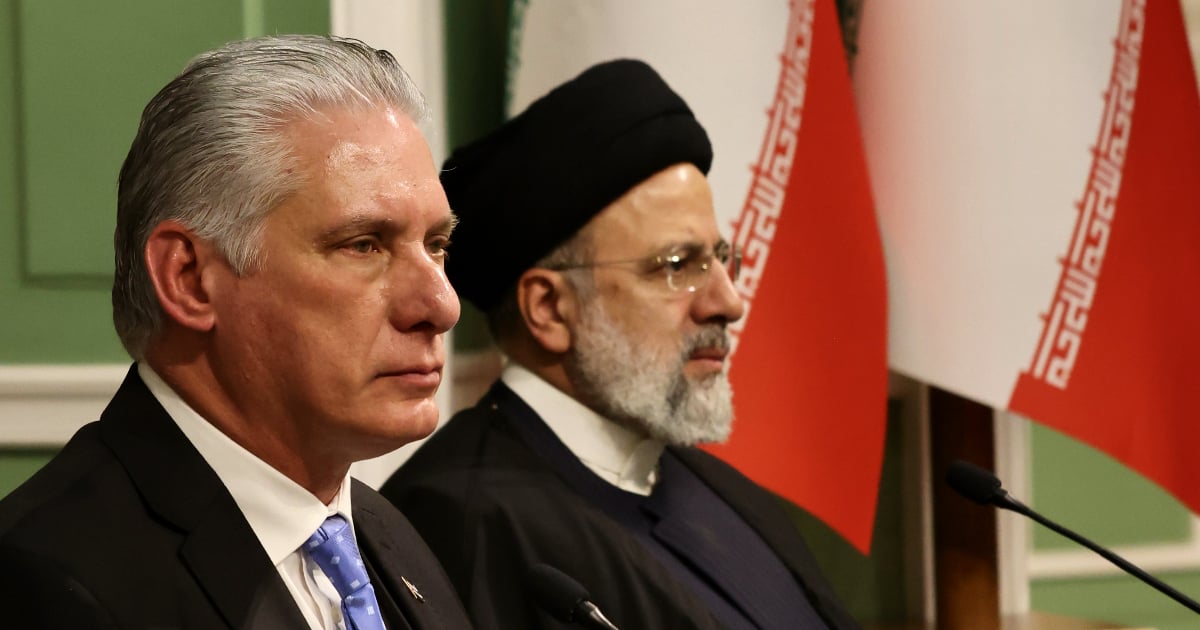
This is evident in the PCC's condemnation of the U.S. bombings of Iranian nuclear facilities, in which the Cuban party invoked "full solidarity" with Tehran and called on leftist forces to unite to prevent a "nuclear conflagration."
This ideological affinity is also expressed in media control and the official narrative, where Cuban media amplify Iranian propaganda and downplay or ignore the abuses of the ayatollahs' regime.
An analysis by CiberCuba revealed how the Cuban state press disseminates biased information about the Iran-Israel conflict, glorifying Iran's offensive capabilities and reproducing headlines such as "Iran launches undetectable missiles" while silencing Israel's tactical achievements.
Another revealing example is the cybersecurity agreement signed by Cuba, Iran, Russia, and other authoritarian regimes, which, under the banner of "digital sovereignty," promotes mechanisms for surveillance, censorship, and online repression.
This convergence in digital control, propaganda, and repression reflects a common vision: the State above the individual, silence regarding internal dissent, and the legitimization of strategic alliances with powers such as Russia, which provides technical, military, and diplomatic support to both regimes.
Both Havana and Tehran are part of international forums such as the Group of Friends of the UN Charter, used as platforms to criticize the Western order and defend their authoritarian model.
Ultimately, both the PCC and the Iranian regime not only share common enemies; they share a vertical power structure, the persecution of opponents, and a narrative of "sovereignty" that justifies internal repression. The alliance is not merely tactical, but deeply ideological.
Filed under: