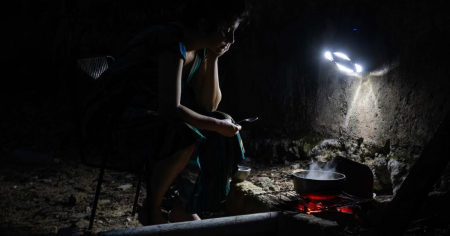
"We have been without electricity in Cuba for over 30 hours. This is specifically in the province of Matanzas… look at how the children are getting water, my goodness, because with this many hours without electricity, there is no cold water anywhere, and with the heat we have, this is truly unbearable."
This is how young Cuban Sheyla described on TikTok (@sheyreyes032) the impact of prolonged blackouts on the daily lives of thousands of families on the island. From her home, she shows defrosted refrigerators, children drinking water from a pile, the inability to preserve food, and the resignation with which her family faces the lack of basic services. “All the frozen food has thawed, the food has gone bad,” she lamented. “It takes a lot of effort to get these things and they are quite expensive, only for them to go bad afterward.”
In another video posted a few hours earlier, Sheyla documented that they had already been without electricity for 24 hours. “I couldn't sleep at all, and I have a rechargeable fan. I can't imagine how those who have nothing are coping,” she explained. She added that her mother brought her breakfast in bed “because I didn't even have the strength to get up.” The young woman had reheated food from the day before for lunch and showed a tray with spoiled eggs: “We could only save this. It's a disgrace.”
"That's how it is every day until I can't take it anymore," she said calmly, although she was visibly affected.
The blackout has also forced many residents to turn to charcoal as the only option for cooking. “Many have already put away their gas stoves because this is the only method that works,” she said, noting that there has been no gas in her area for more than six months. This is not an isolated case. Days earlier, another young Cuban posted a viral video showing how she was forced to cook on the floor with charcoal after a power cut that occurred earlier than expected. “We had to resort to charcoal because otherwise, we wouldn't have had lunch,” said @meli.cubanita0 on TikTok, reflecting the same mix of resignation and anger that thousands of Cubans share today.
The posts generated an avalanche of reactions. Several users shared survival tips, such as leaving eggs out of the refrigerator to prevent them from spoiling. "Don't put the eggs in the fridge because once the cold goes out, they spoil," recommended one internet user. Other users suggested using coolers or making ice in plastic bottles to mitigate the long hours without power.
Many expressed empathy: "What sadness, they can only try to stay positive," "Admirable how you face all this with strength," "What resilience the Cuban people have, it’s already too much."
There were also comments filled with indignation and criticism of the regime. “They have no government,” said one user. “That country can’t take it anymore,” wrote another. “And why don’t they protest?” someone asked, to which another person replied, “Because if they go out, it’s a noose around their neck.”
Some questioned his lifestyle, suggesting that he lived better than others or received help from abroad. “And be grateful, you live much better than most,” commented one user. Another wrote: “He always complains, but he never goes without ice cream.”
This testimony adds to a series of citizen complaints about the worsening electrical crisis in Cuba. On Saturday, June 29, the island reached a record low with a deficit of 1,936 megawatts, according to data from the Electric Union. The situation has deteriorated with the shutdown of several key thermoelectric plants, as well as with a fuel shortage, leaving hundreds of generator engines inactive.
In Matanzas, the second province with the highest consumption in the country, power outages can exceed 30 hours, despite promises of relief and the incorporation of solar parks. A recent study revealed that up to three-quarters of the provincial population can be without electricity at the same time, even while adhering to the approved legal limit.
Last March, Miguel Díaz-Canel himself acknowledged during a visit to Matanzas that residents had endured power outages of up to 32 consecutive hours. However, instead of offering immediate solutions, the leader repeated his usual rhetoric about promises of future investments in photovoltaic parks and agricultural recovery. “I know you have suffered,” he admitted, while justifying the crisis with familiar arguments and avoiding taking concrete responsibilities.
Meanwhile, voices like Sheyla's continue to gain traction on social media. "Share the little video so that more people can see this situation," she requested at the end of her most recent post.
Frequently Asked Questions about Blackouts in Cuba and Their Impact on Daily Life
What are the main consequences of prolonged blackouts in Cuba?
Extended blackouts in Cuba have serious consequences for the daily lives of citizens. These include the loss of food due to the lack of refrigeration, the inability to access cold drinking water, and the need to resort to alternative cooking methods, such as using charcoal stoves. Furthermore, they affect people's rest and health due to heat and lack of ventilation, and have a devastating economic impact as expensive and hard-to-obtain products are lost.
How do power outages in Cuba affect food preservation?
The lack of electricity hinders proper food preservation. This leads to perishable goods that require refrigeration, such as meats and dairy products, going to waste. Many families are forced to consume their food supplies quickly or lose them, which is a significant economic blow due to the high cost of food on the island.
What alternatives do Cubans use for cooking during power outages?
In the absence of electricity and gas, many Cubans are turning to charcoal stoves for cooking. This is one of the few alternatives available for preparing food amidst power outages, even though charcoal is neither as efficient nor as easy to use as gas or electricity. This situation reflects the precariousness in which many Cuban families live due to the energy crisis.
What measures can be taken to mitigate the effects of blackouts in Cuba?
To mitigate the effects of blackouts, Cubans are exploring alternatives such as the use of electric generators, portable chargers, and LED lamps. Additionally, some practical tips include not storing eggs in the refrigerator to prevent spoilage and using coolers or ice in plastic bottles to preserve food for a longer time. However, these measures are temporary solutions that do not address the underlying problem.
What impact do blackouts have on the quality of life of Cubans?
Prolonged power outages severely impact the quality of life for Cubans by interrupting basic services. The lack of electricity not only affects food preservation but also disrupts the supply of drinking water and halts industrial production, such as that of bread. Furthermore, the heat and lack of ventilation disrupt people's rest and health, leading to a negative impact on their overall well-being and increasing frustration and social unrest.
Filed under: