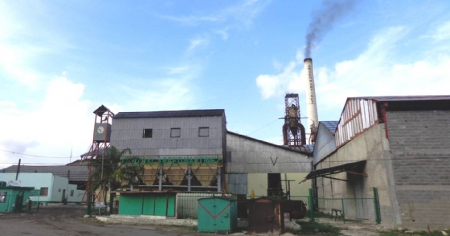
The province of Camagüey produced only 4,000 tons of sugar during the 2025 sugar harvest, a meager 17% of the target, further confirming the slow and agonizing demise of the sugar industry across various provinces in Cuba.
This was acknowledged by the governor of the territory Jorge Enrique Sutil Sarabia in a recent meeting with local journalists, reported the official newspaper Adelante.
The decline of the sugar harvest is further confirmed by serious logistical issues, a shortage of fuel and lubricants, industrial breakdowns, and the loss of qualified personnel. Current production is insufficient to meet even the basic needs or social consumption, the source stated.
The sugar mill Carlos Manuel de Céspedes, located in the municipality of the same name, was the only one in the province responsible for grinding, with a plan for 23,500 tons of sugar, primarily intended for the regulated family basket in the area, emphasized the official newspaper Granma in February.
Sutil, who is preparing to report at the Fifth Ordinary Period of Sessions of the National Assembly of People's Power, starting on July 16, emphasized that "we are not at all satisfied with the results of our management or that of the province."
He also referred to another issue troubling the Agramontino territory, the constant blackouts that “not only burdens everyday life, household chores, or personal matters but also strikes hard at the economy, hinders production, and slows down processes.”
The aging population and demographic decline are also taking a toll. Today, Camagüey has about 653,000 inhabitants, of which 24% are over 60 years old. Furthermore, three-quarters of the population is concentrated in urban areas, which overloads already deteriorated infrastructures and basic services such as water supply, waste collection, and transportation.
He also mentioned that the 2024-205 school year ends with a teacher coverage of 72%, although he stated, “alternatives were sought to ensure that each student received the content.”
In the agricultural sector, although there was a slight improvement in hiring, weaknesses in marketing persist due to a lack of control. "The tenants were given land to produce food for the people, and the state companies are responsible for overseeing these deliveries," the governor stated.
In contrast, sectors such as the food industry are showing some signs of recovery, thanks to linkages with the private sector. This has allowed for the reactivation of idle capacities, job creation, and the maintenance of a certain supply of food, although it remains limited and uneven. Efforts are also being made to incorporate renewable energy sources as part of the response to electrical instability.
The company Pescacam was highlighted as an example of productive effort, but the report itself makes it clear that, in general, state-owned enterprises—especially those under the Ministry of Industries—fail to meet their targets and do not contribute to the budget with a real offer of goods and services.
Amid this situation, Sutil stated that there are partial advancements in the social sector, such as improvements in maternal homes, houses for the elderly, and assistance for vulnerable individuals. However, high prices, the poor condition of the roads, and the deterioration of the water supply system continue to be sources of public dissatisfaction.
Reviewing the shared indicators, the gap between discourse and reality is evident. Despite discussing "well-defined objectives," the governor himself acknowledges that the biggest challenge is mobilizing people.
A report from the Reuters agency predicted that, for the first time since the 19th century, the annual sugar production in Cuba will fall below 200,000 metric tons, according to recent estimates based on official reports and industry sources.
The 2024-2025 sugar harvest in Guantánamo has only reached 38% of the target, which amounts to approximately 2,900 tons of sugar produced. This figure represents a 26% decrease compared to the previous harvest, which had already been deemed the worst in the history of the Argeo Martínez sugar mill. https://www.cibercuba.com/noticias/2025-06-08-u1-e209363-s27061-nid304599-menos-3000-toneladas-zafra-guantanamo-apenas-supera
The Granma Government Council recently acknowledged the productive disaster of the sugar sector in the province, with a production this year of only 26% of the planned sugar, as part of one of the worst sugar campaigns in recent times characterized by organizational chaos, lack of resources, and a long list of unresolved issues.
At the end of April, it was reported that, after 73 days of sugar cane harvest, the Dos Ríos mill, located in the municipality of Palma Soriano and the only facility responsible for producing raw sugar in Santiago de Cuba, had barely accumulated 13% of the projected 20,811 tons.
Las Tunas is not lagging behind in disaster. The Antonio Guiteras central, the largest in the country, was barely surpassing 11% of its target by mid-April. During a visit to the sugar mill, Deputy Prime Minister Jorge Luis Tapia Fonseca "called for an extraordinary effort from his people to achieve a rebound."
The preparation of the industries to commence milling was severely affected by the lack of resources. The energy crisis delayed repairs at power plants, machining workshops, and cleaning centers, in addition to limiting the production of necessary parts and components for the machinery.
With its 350,000 tons of sugar, the 2022-2023 harvest became the worst crop since 1898, when, during the War of Independence, the sugar mills in Cuba produced 300,000 tons.
In December 2023, the government acknowledged that it is “shameful” for the country, traditionally one of the leading sugar producers in Latin America, to be forced to import this product.
Frequently Asked Questions about the Sugar Crisis in Cuba
How much sugar did Camagüey produce in the 2025 harvest?
The province of Camagüey produced only 4,000 tons of sugar during the sugar harvest of 2025, which represents a meager 17% of the initial plan. This result highlights the collapse of the sugar industry in the region, impacted by logistical issues, fuel shortages, and the loss of skilled personnel.
What is the current situation of the sugar industry in Cuba?
The Cuban sugar industry is experiencing one of its worst historical crises, with several mills producing less than 15% of their targets. The lack of resources, outdated machinery, and a shortage of sugar cane are some of the issues that have resulted in, for the first time since the 19th century, sugar production falling below 200,000 metric tons.
How does the sugar crisis affect the Cuban population?
The sugar crisis in Cuba impacts the economy and daily life, as current production is insufficient to meet the basic needs and social consumption. Furthermore, the ongoing failures in sugar production affect food supply and create social unrest due to the increasing economic difficulties faced by the population.
What measures are being taken to address the sugar crisis in Cuba?
Despite the investments and repairs made in some mills, the solutions seem insufficient. Authorities emphasize the need to change methods and improve management, but structural problems, such as a lack of resources and the energy crisis, persist. No concrete and effective measures have been implemented to reverse the critical situation of the Cuban sugar industry.
Filed under: