
Related videos:
On Tuesday, June 24, the Cuban biochemist Oscar Casanella will appear before the immigration court in Miami for a hearing that could determine the fate of his life and that of his family.
That day, which also coincides with his eldest son's birthday, it will be decided whether U.S. authorities grant him political asylum or expose him to possible deportation to Cuba, where he fears for his physical safety.
If I am deported, my life is at risk, Casanella warned in a recent interview. This is not a mere assumption: for years, he has been subjected to surveillance, repression, and threats from the Cuban State Security.
In 2021, after spending almost the entire year under house arrest, isolated and under constant surveillance, he decided to leave the country with his wife, who was then pregnant, and their young child.
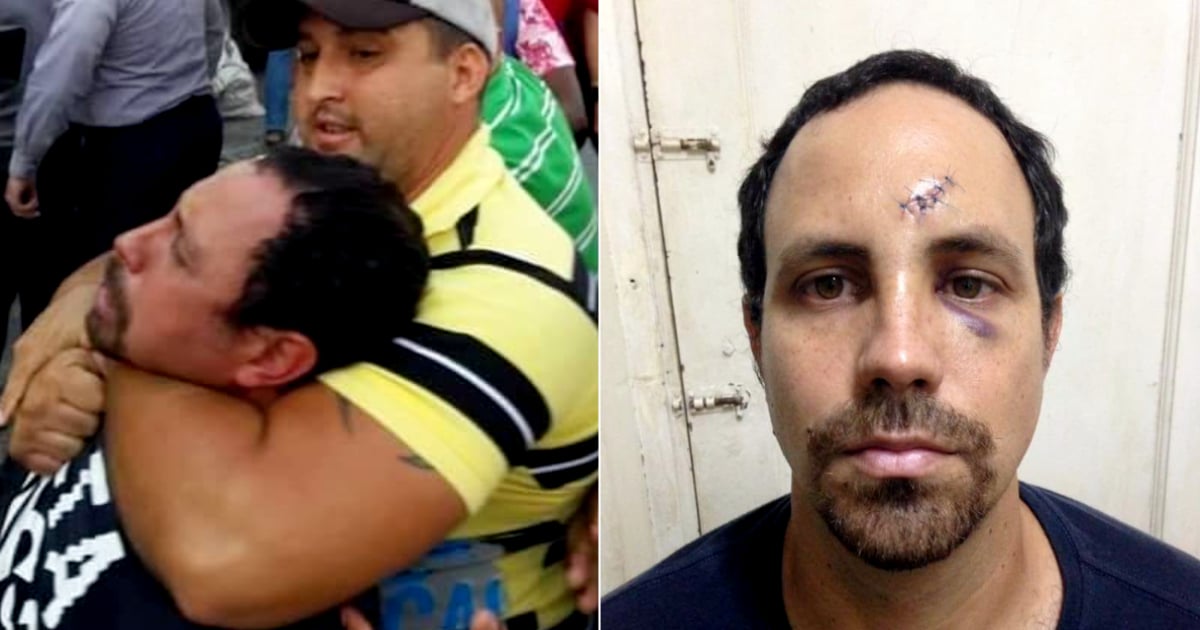
Casanella is a well-known face of activism in Cuba. He was a professor of Immunology at the University of Havana and a close collaborator with other opponents, such as Ariel Ruiz Urquiola and Gorki Águila. His connection with the protest rock group 'Porno para Ricardo' precisely led to an increase in repression against him starting in 2013.
On January 16, 2022, he crossed the southern border of the United States at El Paso, Texas, and requested international protection. However, instead of receiving a parole —like many other Cuban migrants— he was released with a document known as I-220A, which left him in a legal limbo without the right to benefit from the Cuban Adjustment Act.
"They didn’t conduct a credible fear interview with me. They simply let me out of the detention center two days later,” he reported.
Since then, Casanella has gone through an asylum process that has been drawn out over time and which, according to her lawyer Deliane Quiles, could extend for years.
"On that day in court, several things could happen. A motion to dismiss the case could be presented, or the judge could deny it, thus opening the door for an appeal. If the case is processed under expedited removal, a request for a credible fear interview would need to be made," Quiles explained.
Meanwhile, his immigration status prevents him from accessing certain basic rights: he cannot apply for residencies, university scholarships, or certain jobs. He also cannot leave the country or apply for loans to settle with his family. “This process can take 10 years or more. My family and I are trapped in a constant state of uncertainty,” he stated in an interview with CiberCuba.
The activist has also publicly condemned the contradiction that Cuban repressors arrive in the United States with immigration benefits while opponents like him face bureaucratic hurdles. “It is unacceptable that those who repressed us are living freely here while we, their victims, remain unprotected,” he lamented.
In a recent post on Facebook, Casanella recalled with anguish how he was pressured to leave Cuba under the direct threat of imprisonment: “I was told that I had 30 days to leave, and if I stayed, I would be locked up in a closed regime. They could no longer assign 12 agents to watch over my house every day.”
In addition to Cuba, he has been harassed by agents affiliated with the regime in countries such as the Dominican Republic. In 2017, he was interrogated and threatened at the airport in Santo Domingo by alleged officials who criticized him for his ties to other activists.
Now, from South Florida, Casanella has the support of part of the Cuban exile community and hopes that the immigration court will consider his history of persecution. "I just want justice and a chance to rebuild my life in freedom with my family," he concluded.
His case is an example of the complexities of the U.S. immigration system and the challenges faced by genuine Cuban exiles who fled after the repression unleashed by the regime against the demonstrators of the massive and spontaneous protests on July 11, 2021.
Filed under: