
Related videos:
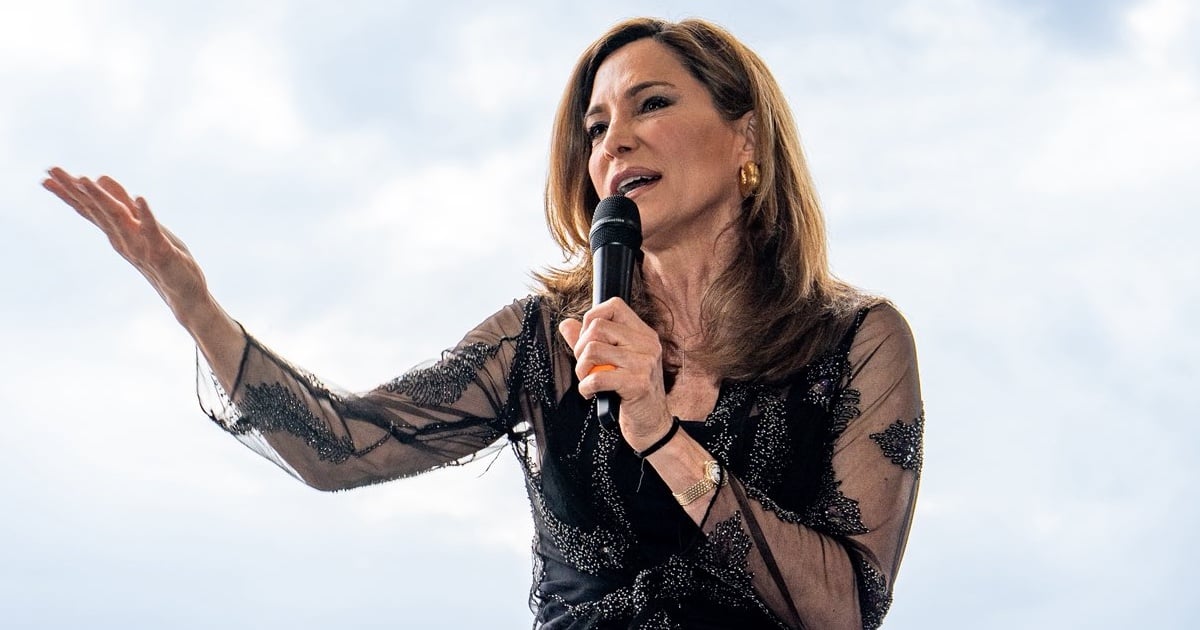
Republican Congresswoman María Elvira Salazar announced on Friday that next week she plans to meet with the Secretary of Homeland Security, Kristi Noem, to discuss immigration measures that are jeopardizing the families of her constituents in Florida's 27th District.
In a two-page document shared on X, Salazar expresses pride in being a republican but clarifies that her loyalty lies with her constituents, and she is currently aware of the uncertainty they face due to "recent immigration actions."
At the meeting with the Secretary of Homeland Security, Salazar will be joined by the other two Republican congressmen from Florida, Carlos Gimenez and Mario Díaz-Balart. The three of them, along with the Secretary of State, Marco Rubio, also Cuban-American and acting advisor to the DHS, have been targets of attacks from the Miami Democratic Caucus, which even went so far as to place a sign on the Palmetto Expressway accusing them of "traitors" for supporting President Trump's immigration policies.
In the letter shared on her social media, María Elvira Salazar has skillfully managed to convey in a single document that she is proud to be a Republican while simultaneously defending her constituents against the measures approved almost weekly by President Trump's administration.
Maria Elvira's new stance becomes significant as many Cubans who voted for the Republican Party have witnessed the deportation of their children and relatives under the I-220A, for whom the congresswoman promised to provide permanent legal status with a new bill.
And although María Elvira Salazar feels "pain in her heart" for what is happening, the reality is that planes loaded with deported Cubans I-220B and I-220A continue to leave the United States, and the only crime they have committed is entering the country at the border, in the vast majority of cases, seeking asylum. Only two Cuban criminals have been deported to Sudan after the Havana regime refused to accept them back to the Island.
The archives do not forgive María Elvira Salazar, who recently recalled that during the previous legislative session she insistently demanded that then-Secretary of Homeland Security of the Biden Administration, Alejandro Mayorkas, fix the issue of the I-220A "in one fell swoop," which, in her opinion, was easy to achieve and depended on political will.
Well, five months of republican government have shown that the stroke of a pen was not as easy to achieve as Salazar believed. She has listed in her letter shared on X "the uncertainty that the immigration actions" of the Trump administration are leaving in District 27, for which she was elected.
"Arrests in Immigration Courts, including individuals with I-220A, those with pending political asylum, and the termination of the CHNV program (humanitarian parole), which has left hundreds of thousands exposed to deportation and other similar measures, jeopardize the respect for due process that any democratic system must guarantee," the congresswoman noted.
María Elvira Salazar also asserts that she continues to advocate for individuals with pending political asylum and status adjustment, emphasizing that their legal processes deserve to be respected. This statement comes after even the daughter of Cuban opposition leader José Daniel Ferrer faced challenges defending her asylum in court, or that two sisters who participated in the 11J protests, one sentenced to 4 years of correctional work and the other to seven years in prison, are now at imminent risk of being deported to Cuba. Not to mention the I-220A Cubans whom the congresswoman vigorously defends, who reach the court only to have their asylum cases dismissed, and upon exiting are detained by U.S. Immigration and Customs Enforcement (ICE) agents.
Well, that not only hasn't happened, but additionally, this Thursday President Trump signed a new executive order imposing travel restrictions on Cubans starting this Monday, June 9. He did this, as he explained, in response to national security concerns, given that Cuba has been placed on the list of state sponsors of terrorism and due to the lack of cooperation from the Havana regime on immigration matters.
The executive order specifically suspends the entry of Cubans holding visas in the categories of business, tourism, students, technical studies, and cultural exchange.
And this seems to be the last straw, prompting Florida's Republican congress members, aware of the significance of their votes, to announce that they will meet with the DHS secretary next week. Before the meeting, María Elvira Salazar clarifies that she agrees with "kicking criminals out" of the United States. "There are still many left, we will continue to focus," she wrote, hinting at the direction her proposal for National Security might take: more criminals deported and fewer Cubans with I-220A. However, the congresswoman does not explicitly say this. We will have to wait for the meeting with Kristi Noem to see which way the discussions will go.
Filed under: