
Related videos:
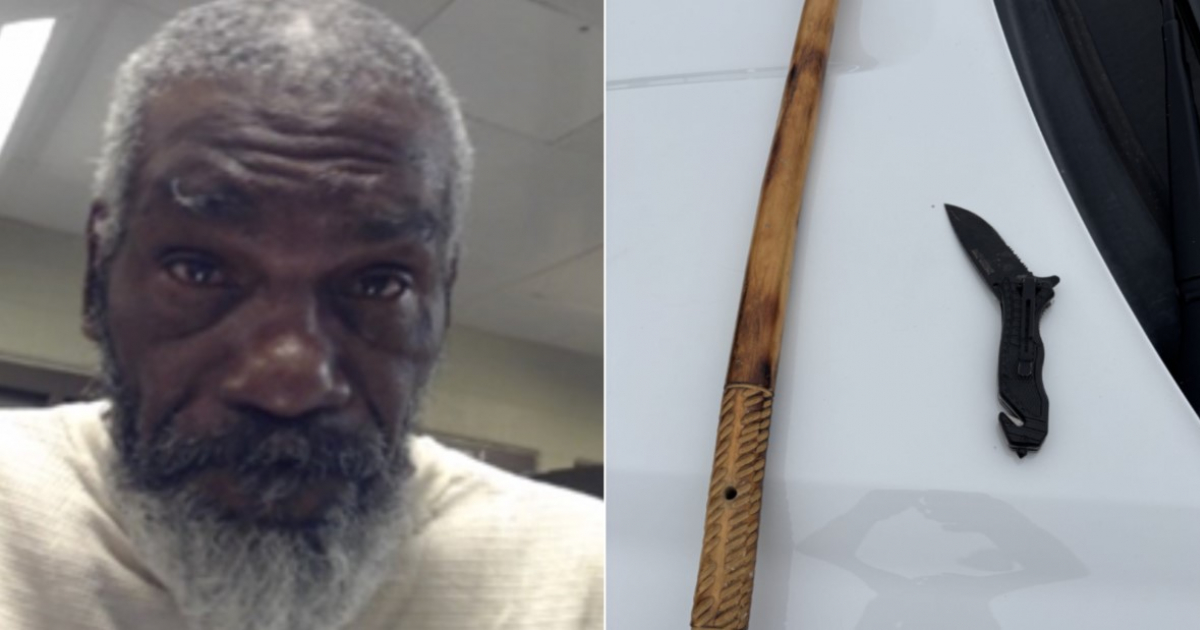
The United States Immigration and Customs Enforcement (ICE) arrested the Cuban Fidel Portuondo Martínez in Salt Lake City, Utah, who has a prior conviction for illegal possession of a dangerous weapon.
The arrest of Portuondo was announced last Thursday by ICE on social media X, where the agency warned that it will continue "arresting and deporting criminal foreigners, one by one, to protect our nation."
In March of this year, officers from the Homeless Resource Center (HRC) squad of the Salt Lake City Police Department arrested Portuondo, 66, accused of breaking the windshield of a car.
According to a press release issued by authorities, at 12:45 p.m. on Wednesday, March 5, the Salt Lake police received a 911 call about an act of vandalism that occurred near 1300 South State Street.
The agents who arrived at the scene found Portuondo on Harvard Avenue and State Street, armed with a knife and a stick, and commanded him to drop the weapons, but the Cuban refused to comply. Ultimately, the police used de-escalation tools to disarm him and arrested him without incident.
Portuondo was incarcerated in the Salt Lake County Metro jail charged with property damage and destruction, interference with a law enforcement officer, and possession of drug paraphernalia.
The announcement of Portuondo's recent arrest by ICE does not specify the sentence he received for these charges.
The detention and imminent deportation of the Cuban individual is part of the strict immigration strategy implemented by the Trump administration, which aims to capture and expel immigrants without legal status or those deemed a threat to public safety.
In this context, the U.S. government is implementing more aggressive immigration measures, which include ongoing operations by ICE and other federal and state agencies to arrest undocumented foreigners with criminal records and facilitate mass deportations to their countries of origin, or to third countries if they are not accepted in their own.
In this last case, Cuba is mentioned, whose government frequently refuses to accept its citizens with final deportation orders.
At the end of May, the U.S. government stated that it followed all protocols to manage the deportation to the island of two Cubans with extensive criminal records, who were ultimately transferred to South Sudan.
Following the controversial decision to deport eight immigrants convicted of serious crimes - including two Cubans - to the African country, one of the most unstable in the world, the Trump administration faced a wave of sharp criticism.
But that was not the first time Washington relocated immigrants to third countries. Since January 2025, Trump negotiated agreements with several presidents in the region, including El Salvador's Nayib Bukele, to accept migrants of other nationalities, including dangerous criminals, as part of "safe third country" agreements.
The deportation in March of around 250 Venezuelan migrants to El Salvador, many of whom were sent directly to the mega prison CECOT, escalated legal and political tensions to a new level.
Federal Judge James E. Boasberg, of the District of Columbia, stated that with this decision, the government defied his order issued on March 15, which prohibited the deportation of migrants under the Alien Enemies Act of 1798, an 18th-century statute historically reserved for times of war and which has been invoked only three times in the country's history.
In April, the U.S. Supreme Court issued a temporary restraining order to prevent the government from continuing the expulsion of Venezuelan immigrants based on the Foreign Enemies Act.
In May, Judge Brian Murphy of the Federal Court for the District of Massachusetts ruled that the deportations of eight foreigners to South Sudan had violated a federal court order issued in April, which stated that immigrants must have the opportunity to contest their transfer to third countries, arguing that they could be tortured or killed.
However, a week ago, the Supreme Court paved the way for the government to resume deportations to third countries. With a 6-3 vote, the Supreme Court justices endorsed Trump's immigration agenda by authorizing the resumption of immigrant deportations to countries other than their countries of origin.
The highest U.S. court overturned the previous court order requiring the government to provide migrants with a "meaningful opportunity" to explain to authorities the risks they would face if deported to a third country.
Frequently Asked Questions about the Detention of Cubans and ICE Immigration Policies
Why was Fidel Portuondo Martínez arrested by ICE in Utah?
Fidel Portuondo Martínez was arrested by ICE in Utah for illegal possession of a dangerous weapon. Additionally, he had a history of vandalism and resisting authorities. His arrest is part of the immigration strategy of the Trump administration, which aims to arrest and deport immigrants with criminal records.
What is Cuba's stance on the deportation of its citizens?
The Cuban government frequently refuses to accept its citizens with final deportation orders. This refusal has led the United States to seek third countries for the deportation of Cuban criminals, as was the recent case of relocating two Cubans to South Sudan.
How does Trump's immigration policy affect Cuban immigrants in the U.S.?
Trump's immigration policy has intensified the detention and deportation of Cuban immigrants with criminal records. ICE has carried out operations in cities across several states, aiming to arrest undocumented individuals and those with pending charges, increasing pressure on the Cuban community in the United States.
What does deportation to third countries mean for Cuban immigrants?
The deportation to third countries implies that Cuban immigrants are sent to nations other than Cuba, due to Havana's refusal to accept them. This has been criticized for posing a risk to those being deported, as seen in the case of Cubans sent to South Sudan, one of the most unstable countries in the world.
Filed under: