
Related videos:
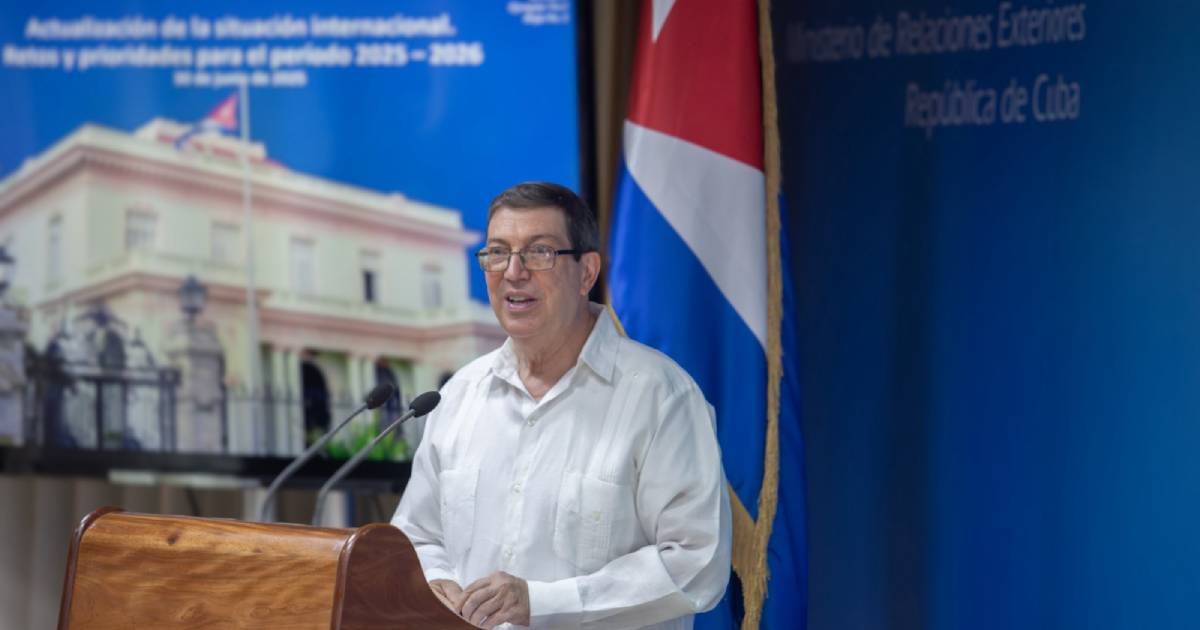
Despite the fact that the Cuban regime keeps hundreds of political prisoners incarcerated, represses dissent, and restricts basic freedoms on the island, Foreign Minister Bruno Rodríguez Parrilla described this Monday as “criminal conduct” and a violation of human rights the new U.S. policy towards Cuba announced by President Donald Trump.
Through his official account on the social media platform X (formerly Twitter), Rodríguez reacted to the Presidential Memorandum on National Security (NSPM) announced by the White House, which reinforces the economic pressure measures on the Cuban government and reinstates the restrictive policy adopted by Trump during his first term.
“The Presidential Memorandum against Cuba announced today by the U.S. government reinforces the aggression and economic blockade that punishes the entire Cuban population and is the main obstacle to our development. It is a criminal behavior that violates the human rights of an entire nation,” wrote the head of Cuban diplomacy.
What does the new memorandum from Trump establish?
The document signed by Trump on June 30, 2025, seeks to reverse the relaxations introduced during the Biden administration and reinstate a tougher approach toward the Cuban regime.
Among the main measures of the NSPM are:
- Total prohibition of financial transactions, direct or indirect, with entities controlled by the Cuban armed forces and security apparatus, including the GAESA conglomerate.
- Reinforcement of the economic embargo and explicit opposition to any attempts to lift it in international forums such as the United Nations.
- Reestablishment of controls on travel from the U.S. to Cuba, including periodic audits and mandatory records of transactions related to tourism.
- Maintenance of the "Wet Foot, Dry Foot" policy, abolished by Obama, to discourage irregular migration.
- Commitment to promoting internet access, freedom of the press, and support for independent civil society on the island.
- Call for review of human rights violations in Cuba, including reports on political prisoners, inhumane treatment, and fugitives from American justice allegedly sheltered on the island.
A new chapter of tension
The hardened policy has been presented by Trump as a way to support the Cuban people against the "communist regime," which he accuses of repressing dissent, violating fundamental freedoms, and maintaining practices that infringe upon human rights.
However, from Havana, the government views these actions as an aggression that suffocates the population and hinders the country's economic development.
Rodríguez's statements are set against the backdrop of a protracted conflict between Washington and Havana, which has experienced many fluctuations depending on the political alignment of each U.S. administration.
At a time when the island is facing one of its most severe crises in decades, with blackouts, food shortages, inflation, and an unprecedented wave of migration, the announcement from the Trump administration adds a new layer of uncertainty regarding the future of bilateral relations and the internal situation in the country.
Frequently Asked Questions about U.S. Policy Toward Cuba and Its Implications
What is the objective of Donald Trump's new memorandum towards Cuba?
The new memorandum from Donald Trump aims to reestablish a tougher approach towards the Cuban regime by prohibiting financial transactions with entities controlled by the Cuban armed forces, reinforcing the economic embargo, and opposing its lifting in international forums. Additionally, it reinstates travel controls and seeks to promote press freedom and internet access in Cuba.
How does the ban on transactions with GAESA affect Cuba?
The ban on transactions with GAESA directly affects key sectors of the Cuban economy, such as tourism and remittances, by limiting the Cuban government's access to foreign currency and restricting foreign investment on the island. GAESA is a military conglomerate that controls large sectors of Cuba's dollarized economy.
Why does the Cuban regime consider U.S. policy to be "criminal"?
The Cuban regime describes the U.S. policy as "criminal" because it believes that the economic pressure measures and the embargo directly affect the Cuban people and hinder the country's development. From Havana, these actions are seen as aggressions that suffocate the population and exacerbate the internal economic crisis.
What implications does the reinstatement of the "Wet feet, dry feet" policy have?
The reestablishment of the "Wet Foot, Dry Foot" policy aims to discourage irregular migration of Cubans to the U.S. This policy, which was abolished by Obama, allowed Cubans who managed to reach U.S. soil to stay in the country, while those intercepted at sea were returned to Cuba. Its reinstatement could significantly impact the migration dynamics between the two countries.
How does the new U.S. policy impact Cuban civil society?
The new U.S. policy includes a commitment to promote internet access and press freedom, as well as support for independent civil society in Cuba. This could strengthen independent media and human rights organizations on the island, although the tightening of economic sanctions could also exacerbate the situation for the Cuban people in general.
Filed under: