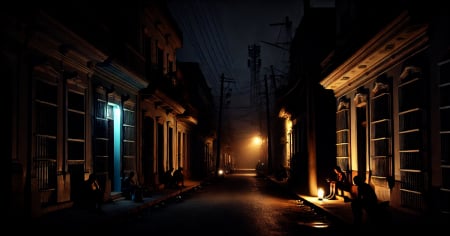
There is no food, the blackouts are endless, and despair is growing. When a common Cuban is asked if they still have hope for their country, most lower their heads, sigh, or respond with resignation: "There is none."
A recent report by the independent outlet Cubanet gathered testimonies from the streets of Havana that starkly reflect public sentiment. One woman shared that her children had to have bread soaked in water with sugar for dinner because there was nothing else. Another mentioned that the situation worsens every day: “It's every man for himself.”
Most of the people interviewed shared similar opinions. "Hope? We are lost," said a young man. Another pointed out that power outages in provinces like Cienfuegos, Oriente, and Sancti Spíritus can last up to 40 hours. "What hope can one have like this?" he asked.
"This is every man for himself," commented another visibly distressed woman, while a young man summed up his feelings with a terse, "there's no hope." Only one interviewee expressed a different sentiment, though she acknowledged the seriousness of the situation: "I cling to God and leave everything in His hands," she said, hopeful that something might improve one day.
These statements occur in a context marked by the accelerated deterioration of living conditions in Cuba. In Havana, power outages have extended up to eight hours a day, even during the early morning, according to the new schedules published by the Electric Company. In other provinces, interruptions can exceed 30 consecutive hours.
Although the authorities insist that the impacts are equitable and urge the public to obtain information solely from official channels, everyday reality contradicts these statements, creating an atmosphere of distrust and social exhaustion.
For many ordinary Cubans, like those featured in the Cubanet video, hope is nothing more than an empty word in the face of an uncertain present and a future that seems increasingly distant.
Frequently Asked Questions about the Crisis in Cuba and the Despair of its Population
What are the main causes of hopelessness in Cuba?
The despair in Cuba is mainly due to the energy crisis, prolonged blackouts, and food shortages. Citizens are facing blackouts that can last over 30 hours, exacerbating the lack of resources and severely affecting the quality of life. Furthermore, there is a growing distrust in the government's promises regarding future improvements, which generates skepticism and frustration among the population.
How do prolonged blackouts affect daily life in Cuba?
Prolonged power outages severely affect daily life in Cuba by interrupting food preservation, access to drinking water, and proper rest. The lack of electricity also increases the proliferation of mosquitoes, raising the risk of diseases. Power outages hinder the operation of basic medical equipment and have a negative impact on the mental health of citizens, causing anxiety and hopelessness.
What measures has the Cuban government proposed to address the energy crisis?
The Cuban government has proposed a plan to recover 500 megawatts of capacity over the next three years, focusing on thermal generation and renewable sources. However, the government's promises have not inspired confidence among the population, which continues to face daily blackouts and increasingly challenging living conditions. The lack of concrete results has heightened frustration and skepticism among citizens.
What is the impact of the energy crisis on public health in Cuba?
The energy crisis in Cuba poses a serious threat to public health, impacting both the physical and mental well-being of the population. The lack of electricity prevents the use of fans and air conditioning in a tropical climate, making it difficult to get adequate rest and increasing the risk of mosquito-borne diseases. Furthermore, the constant uncertainty and lack of concrete solutions create anxiety and hopelessness, affecting the mental health of citizens.
Filed under: